
Construction Dust Control and Silica Compliance: OSHA Table 1, Wet Methods, and Vacuums | Projul
If you have been in construction for any length of time, you have seen crews cutting concrete, grinding mortar joints, or drilling into stone with nothing but a bandana over their face and a cloud of dust billowing across the site. That used to be normal. It is not anymore, and for good reason.
Respirable crystalline silica is one of the most dangerous substances your crews encounter on a daily basis. It is found in concrete, stone, brick, mortar, sand, and dozens of other common construction materials. When these materials are cut, ground, drilled, or crushed, they release microscopic silica particles that can lodge deep in the lungs and cause silicosis, a serious and incurable disease.
OSHA’s updated silica standard has been in full effect since 2018, and enforcement is not slowing down. This guide walks you through the practical side of compliance: what the rules actually require, how Table 1 works, which dust control methods to use for specific tasks, and how to build a silica program that protects both your workers and your business.
Why Silica Dust Matters
Silica is not just another regulatory headache. The health effects are real and severe.
Silicosis is caused by inhaling respirable crystalline silica particles. These particles are so small (under 10 microns) that they bypass the body’s natural defenses and penetrate deep into the lungs. Once there, they cause inflammation and scarring that progressively destroys lung tissue.
There are three forms of silicosis:
- Chronic silicosis: Develops after 10 or more years of exposure to lower concentrations. This is the most common form.
- Accelerated silicosis: Develops within 5 to 10 years of higher exposure levels.
- Acute silicosis: Can develop within weeks or months of extremely high exposure. This form is rare but can be fatal.
There is no cure for silicosis. Once the lung damage occurs, it is permanent. Silica exposure also increases the risk of lung cancer, chronic obstructive pulmonary disease (COPD), and kidney disease.
This is not abstract risk. Construction workers are among the most heavily exposed occupational groups in the country. Every time a saw blade hits concrete without dust controls, someone is breathing in particles that can end their career and shorten their life.
The OSHA Silica Standard: What You Need to Know
OSHA’s construction silica standard (29 CFR 1926.1153) sets the rules for controlling silica exposure on construction sites. Here are the key numbers:
- Permissible Exposure Limit (PEL): 50 micrograms per cubic meter (µg/m³) as an 8-hour TWA
- Action Level (AL): 25 µg/m³ as an 8-hour TWA
The action level triggers additional requirements like medical surveillance and written exposure control plans. The PEL is the maximum allowable exposure.
Two Paths to Compliance
OSHA gives you two options for complying with the silica standard:
Option 1: Follow Table 1. This is the simpler path. Table 1 lists 18 common construction tasks and specifies exactly which engineering controls and respiratory protection to use for each one. If you follow the table to the letter, you are considered compliant without needing to do air monitoring.
Option 2: Measure and control. If your task is not on Table 1, or if you choose not to follow the table’s specifications, you must conduct exposure assessments (air monitoring), implement controls to keep exposure below the PEL, and demonstrate compliance through ongoing monitoring.
For most contractors, Option 1 is the practical choice. It is more straightforward, requires less technical expertise, and avoids the cost and complexity of air sampling.
OSHA Table 1: A Practical Breakdown
Table 1 covers the tasks that generate the most silica dust on construction sites. For each task, it specifies:
- The equipment or tool being used
- The required engineering controls (usually water or vacuum)
- The required respiratory protection (if any)
Here are some of the most common Table 1 entries that affect general contractors:
Cutting Concrete and Masonry with Handheld Saws
Required controls: Use a saw with integrated water delivery that supplies a continuous stream of water to the blade.
Respiratory protection: None required for outdoor work if water controls are used properly. For indoor work, a half-mask respirator with N95 or better is required.
Practical tips:
- Make sure the water flow is adequate. A trickle is not enough. The water should visibly suppress dust at the cut.
- Check water delivery nozzles regularly for clogs
- Position the work so that slurry drains away from the operator
- Have extra water on hand. Running dry mid-cut defeats the purpose.
Grinding Concrete and Mortar with Handheld Grinders
Required controls: Use a grinder with a shroud and dust collection system (vacuum with HEPA filter).
Respiratory protection: None required if the vacuum system is functioning properly.
Practical tips:
- Match the shroud size to the grinder and wheel size. Gaps in the shroud let dust escape.
- Use a vacuum rated for the dust volume your grinder produces
- Clean or replace vacuum filters according to the manufacturer’s schedule
- The vacuum must be running before you start grinding and continue until you stop
Core Drilling Concrete
Required controls: Use a drill with integrated water delivery.
Respiratory protection: None required if water controls are used properly.
Practical tips:
- Core drills generate significant slurry. Plan for water containment, especially on finished floors.
- Use a slurry vacuum or containment dam to manage runoff
- Ensure water reaches the bit throughout the drilling process
Jackhammering and Demolition with Handheld Tools
Required controls: Use a tool with integrated water delivery that supplies a continuous stream of water to the point of impact. Alternatively, use a tool equipped with a commercially available shroud and dust collection system.
Respiratory protection: A half-mask APF 10 respirator is required regardless of whether water or vacuum controls are used.
Practical tips:
- Jackhammering is one of the dustiest operations on a construction site. Even with water controls, respiratory protection is mandatory.
- Wet down the work area before starting
- Keep the water flowing continuously during operation
- Contain debris and slurry to prevent it from drying and becoming a secondary dust source
Mixing Dry Materials (Mortar, Grout, Concrete)
Required controls: Use a mixer with a dust-tight enclosure or continuous water feed during mixing.
Respiratory protection: A half-mask APF 10 respirator is required.
Practical tips:
- Open bags downwind of other workers
- Cut bags rather than tearing them to reduce dust release
- Add water to the mixer before adding dry materials when possible
- Stay upwind of the mixing operation
Wet Methods: How They Work and When to Use Them
Water-based dust suppression is the most common and often the most practical control method for construction silica. The principle is simple: water binds to dust particles and prevents them from becoming airborne.
Types of Wet Methods
Integrated tool water delivery is the gold standard. Saws, drills, and grinders with built-in water feeds apply water directly at the point of dust generation. This captures dust before it ever reaches the air.
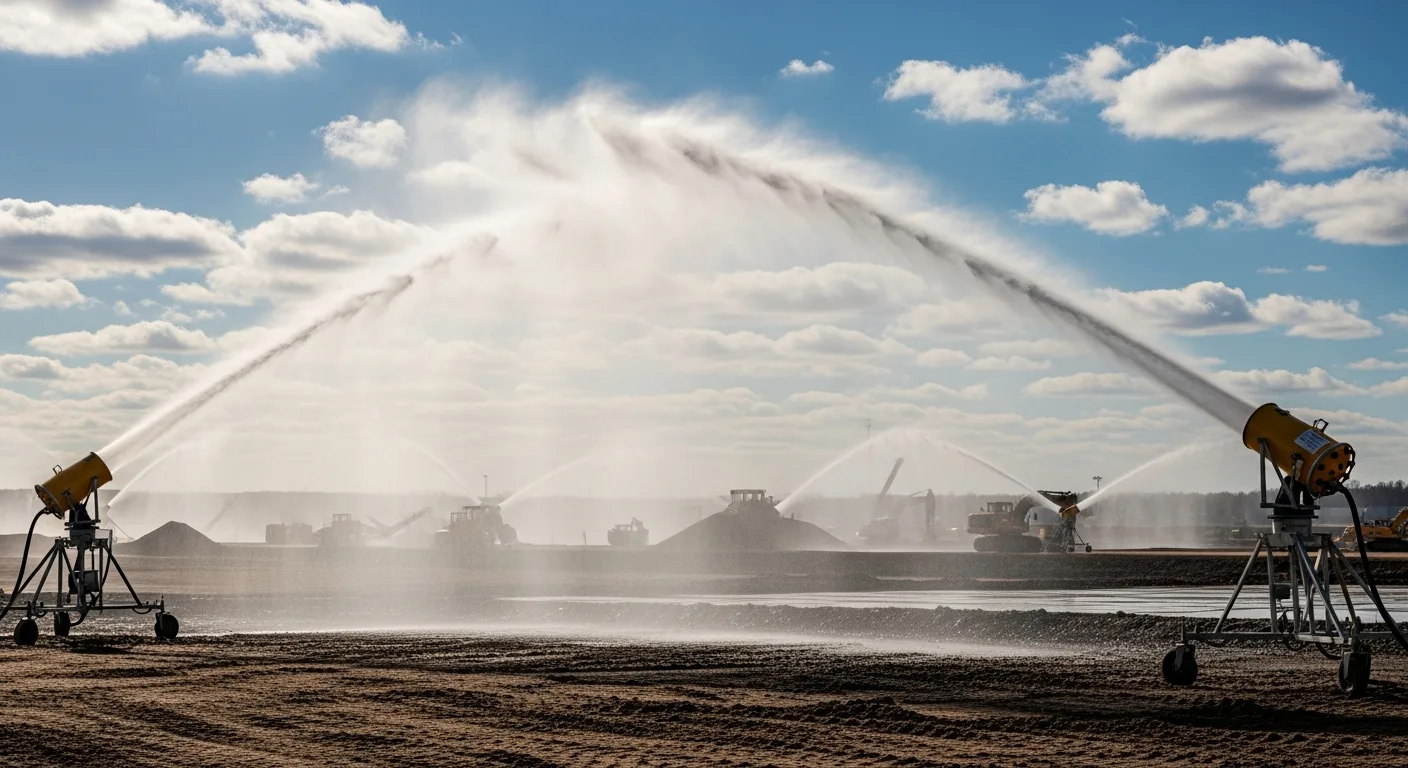
Misting and fogging systems create a fine water mist in the work area. They are useful for demolition, earthmoving, and other operations where dust is generated over a large area. Misting is less precise than tool-integrated water but effective for area control.
Pre-wetting involves soaking materials before cutting, grinding, or demolishing them. Wet concrete generates significantly less dust than dry concrete. This is particularly useful for demolition work.
Slurry management is the follow-up to wet methods. All that water has to go somewhere, and it takes the silica with it. Plan for slurry containment, collection, and disposal. Do not let slurry dry on site, because it becomes a secondary dust source.
Wet Method Limitations
Water is not always practical:
- Cold weather can make water controls difficult or impossible. Water lines freeze, surfaces become slippery, and wet materials are harder to work with in below-freezing temperatures.
- Some interior work cannot tolerate water. Finished spaces, electrical rough-in areas, and elevator shafts may not be suitable for wet cutting.
- Water supply may be limited on some sites.
When wet methods are not feasible, vacuum-based dust collection is the alternative.
Vacuum Dust Collection Systems
Vacuum systems capture dust at the source using negative pressure and HEPA filtration. They are the primary alternative to wet methods and are required by Table 1 for several common tasks.
What Makes a Compliant Vacuum
Not all vacuums are created equal. For silica compliance, your vacuum must:
- Have a HEPA filter (99.97% efficient at 0.3 microns)
- Be rated for the volume of dust your tool generates. An undersized vacuum will not capture all the dust.
- Have a filter cleaning mechanism. Silica dust loads filters quickly. Without self-cleaning or easy manual cleaning, suction drops and dust escapes.
- Match the tool’s dust port. Use the manufacturer’s recommended shroud and hose connection.
Maintaining Vacuum Performance
A vacuum is only as good as its maintenance:
- Check and clean filters at the start of every shift
- Replace filters when cleaning no longer restores suction
- Inspect hoses for cracks, kinks, and blockages
- Empty the collection container before it is full (suction drops as the container fills)
- Test the system before starting work each day
Cost Considerations
Compliant dust collection vacuums typically cost between $500 and $2,500 depending on capacity and features. HEPA filter replacements run $50 to $200 each. Compared to the cost of OSHA fines (up to $16,000 per serious violation), medical surveillance programs, and the human cost of silicosis, the investment is straightforward.
Writing Your Silica Exposure Control Plan
OSHA requires a written exposure control plan for any employer whose workers are exposed above the action level. The plan must be specific to your work and must be reviewed and updated regularly.
Your plan should include:
-
Description of tasks that involve silica exposure. Be specific about what your crews actually do. Cutting concrete block, grinding mortar joints, drilling anchor bolts into concrete, mixing grout.
-
Engineering and work practice controls for each task. Reference Table 1 where applicable. Specify the tools, attachments, and methods you will use.
-
Respiratory protection program. Identify which tasks require respirators, what types, and how your program meets OSHA’s respiratory protection standard (29 CFR 1910.134).
-
Housekeeping procedures. How you will clean up silica-containing dust and debris without creating secondary exposure. Dry sweeping and compressed air are not allowed for silica cleanup.
-
Medical surveillance program. Who is covered, how exams are scheduled, and how records are maintained.
-
Competent person designation. Name the individual responsible for implementing the plan on each jobsite.
-
Training program. What workers are taught, how often, and how training is documented.
Store your exposure control plan where it is accessible to workers and OSHA inspectors. Your project management software is a good place to keep the digital version, along with training records, medical surveillance schedules, and equipment maintenance logs. Projul’s document management features make it easy to organize and access compliance documents across all your projects.
Training Your Crews
Every worker who may be exposed to silica must receive training that covers:
- Health effects of silica exposure
- Tasks that create silica exposure on your jobsites
- The engineering controls and work practices you use
- How to properly use and maintain dust control equipment
- When and how to use respiratory protection
- The medical surveillance program and their rights under it
- How to recognize signs and symptoms of silica-related illness
Training should happen during onboarding and be refreshed at least annually. Document all training with dates, topics covered, and attendee signatures.
Make it practical. Show crews how to set up the water feed on a concrete saw. Let them practice connecting the vacuum to a grinder shroud. Walk through the steps for checking and cleaning HEPA filters. Hands-on training sticks better than a PowerPoint presentation.
Respiratory Protection: When and What
Table 1 specifies respiratory protection requirements for each task. Even when engineering controls are in place, some tasks require a respirator as an added layer of protection.
Respirator Types
- N95 filtering facepiece (dust mask): Minimum protection for low-dust tasks. Must be NIOSH-approved.
- Half-mask elastomeric respirator with N95 or P100 filters: Required for several Table 1 tasks. More comfortable for extended wear and provides a better seal than disposable masks.
- Full-face respirator or powered air-purifying respirator (PAPR): For high-exposure tasks or workers who cannot get a good seal with half-mask respirators.
Respiratory Protection Program Requirements
If any of your workers wear respirators, you must have a written respiratory protection program that includes:
- Medical evaluation to confirm workers can safely wear a respirator
- Fit testing (annually) for tight-fitting respirators
- Training on proper use, maintenance, and storage
- Procedures for cleaning, inspecting, and replacing respirators
- Program evaluation
Fit testing is not optional. An ill-fitting respirator provides little to no protection. Each worker must be tested with the specific make, model, and size of respirator they will wear on the job.
Housekeeping and Cleanup
How you clean up silica dust matters just as much as how you control it during the work. Improper cleanup can re-suspend settled dust and create secondary exposure.
Prohibited methods:
- Dry sweeping or dry brushing silica-containing dust
- Using compressed air to blow dust off surfaces, clothing, or equipment
Acceptable methods:
- HEPA-filtered vacuuming
- Wet sweeping (using water to dampen dust before sweeping)
- Wet wiping surfaces
Clean work areas at the end of each shift. Do not let silica dust accumulate. Pay attention to horizontal surfaces, ledges, scaffolding platforms, and the insides of partially enclosed spaces where dust settles.
Subcontractor Compliance
If you are a general contractor, your silica responsibilities extend to the subcontractors on your site. You are required to:
- Coordinate silica control efforts between trades
- Ensure that one sub’s work does not expose another sub’s workers
- Include silica compliance requirements in subcontractor agreements
- Verify that subs have their own exposure control plans and trained workers
Address silica compliance during your preconstruction meeting and include it in your site-specific safety plan. Make expectations clear before work begins.
Common Mistakes and How to Avoid Them
Running out of water mid-cut. Always have extra water containers on site. A dry saw is an out-of-compliance saw.
Using the wrong vacuum. Standard shop vacs are not HEPA-rated and will blow fine silica particles straight through the exhaust. Use only vacuums rated for silica dust collection.
Neglecting filter maintenance. A clogged filter kills suction. Clean or replace filters on schedule.
Forgetting indoor vs. outdoor requirements. Table 1 has different respiratory protection requirements for indoor and outdoor work. Indoor work almost always requires a respirator even when engineering controls are in place.
No written plan. Having the right equipment but no written exposure control plan is still a citable violation.
Dry sweeping. It is fast and easy, but it is prohibited for silica-containing dust. Train crews to use wet methods or HEPA vacuums for cleanup.
Putting It All Together
Silica compliance does not have to be overwhelming. The framework is straightforward:
- Identify which tasks on your jobsites generate silica dust
- Follow Table 1 for those tasks (or conduct air monitoring if Table 1 does not apply)
- Write an exposure control plan specific to your work
- Train your crews on the plan, the equipment, and the health risks
- Provide medical surveillance for eligible workers
- Enforce proper housekeeping
- Document everything
The documentation piece is where many contractors fall short. Training records, medical surveillance schedules, equipment maintenance logs, and exposure control plans all need to be organized and accessible. This is where having a solid project management system pays off. When everything lives in one place, you can pull up compliance records in seconds instead of digging through filing cabinets.
Schedule a demo with Projul to see how our platform helps contractors stay organized, compliant, and focused on the work that matters. Or check our pricing to find the right fit for your team.
Protecting your workers from silica is not just about avoiding fines. It is about making sure the people who show up every day to build something go home healthy at the end of it. That is worth getting right.
Frequently Asked Questions
What is the OSHA permissible exposure limit for respirable crystalline silica?
What is OSHA Table 1 and how does it work?
Do I need air monitoring if I follow OSHA Table 1?
What are wet methods for silica dust control?
What type of vacuum is required for silica dust collection?
Who needs a written silica exposure control plan?
What medical surveillance is required under the silica standard?
What are the penalties for silica standard violations?
Related Articles

OSHA Compliance for Contractors: What You Need to Know in 2026
OSHA fines hit record highs heading into 2026, and new rules are changing how contractors handle everything from heat...
Read More →
Construction Safety Meeting Topics: 20 Toolbox Talk Ideas for 2026
Running out of toolbox talk ideas? These 20 construction safety meeting topics cover everything from fall protection...
Read More →
Construction Site Safety Inspections: Complete Checklist and Process
A practical safety inspection checklist and process that actually prevents accidents instead of just checking boxes.
Read More →