Construction Equipment Rental vs Purchase: Making the Right Financial Decision | Projul
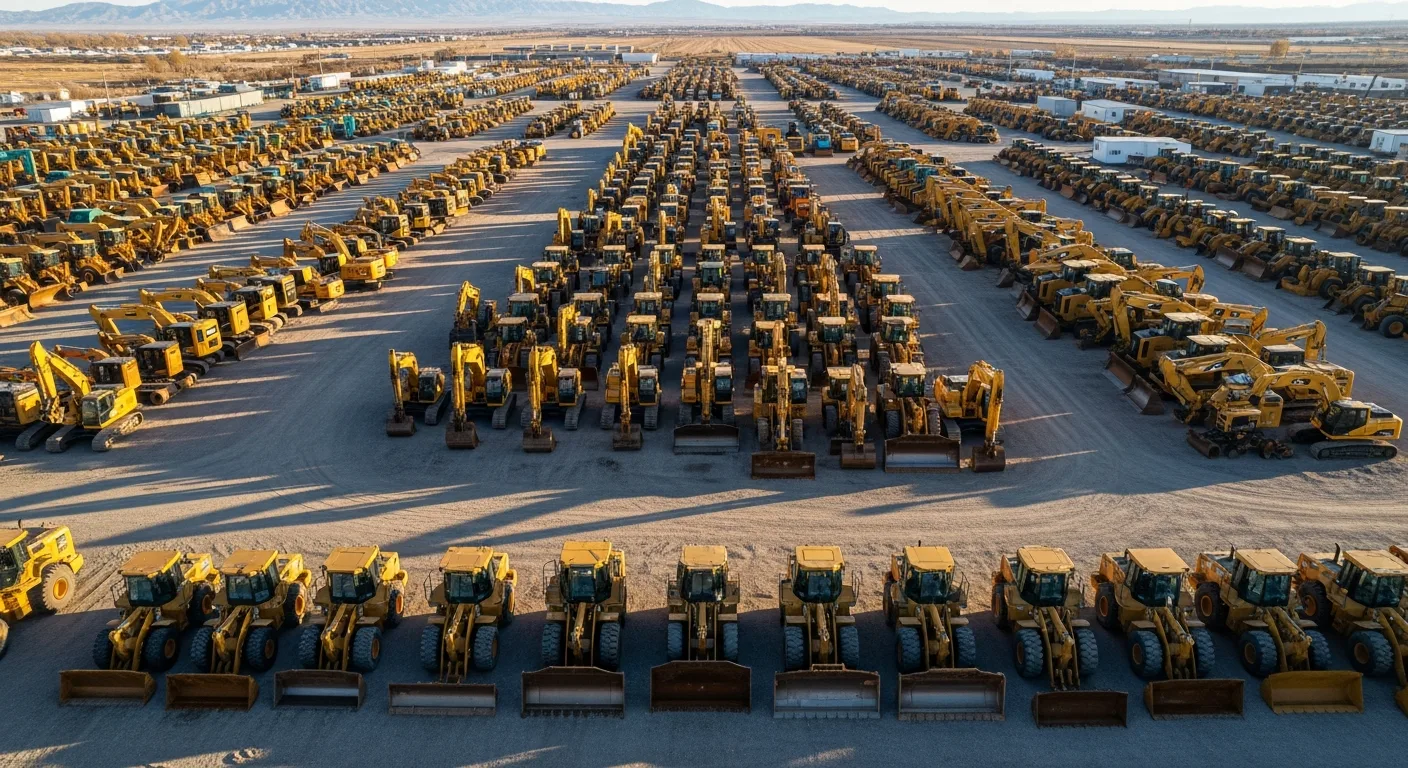
Every contractor hits this decision eventually. You’re standing at the rental counter for the third time this month, writing another check for that skid steer, and the math starts nagging at you. “I could have bought one by now.” Maybe you’re right. Maybe you’re not. The answer depends on a lot more than the sticker price.
The rent-vs-buy question is one of the most consequential financial decisions in construction. Get it right and you free up cash, reduce overhead, and keep your operation lean. Get it wrong and you’re either bleeding money on rentals you don’t need or sitting on depreciating iron that collects dust half the year.
This guide breaks down the real numbers behind both options so you can make decisions based on your actual business, not gut feeling.
The True Cost of Owning Construction Equipment
Most contractors think about the purchase price when they consider buying equipment. That number is just the starting point. Ownership cost includes everything that happens after you drive it off the lot.
Purchase price and financing. A new compact excavator runs $30,000 to $90,000 depending on size and brand. Finance that over five years at 7% interest and you’re adding thousands in interest charges on top of the sticker. A $60,000 machine financed over 60 months at 7% costs you roughly $71,000 total. That extra $11,000 is real money.
Maintenance and repairs. Equipment breaks. Hydraulic lines fail, tracks wear out, engines need rebuilding. Budget 5-10% of the purchase price per year for maintenance on equipment that’s working regularly. On that $60,000 excavator, that’s $3,000 to $6,000 annually. Older equipment costs more. A machine past its useful life can eat you alive in repair bills.
Insurance. Equipment insurance varies by value and type, but expect to pay 1-3% of the equipment value per year. On $60,000, that’s $600 to $1,800 annually.
Storage. Equipment needs to live somewhere. If you’ve got a yard, that’s square footage you’re paying for whether the machine is working or not. If you don’t have a yard, you’re paying for offsite storage or leaving it on a jobsite where theft and vandalism are real risks.
Depreciation. Construction equipment loses value every year. Heavy equipment typically depreciates 20-40% in the first year and continues declining from there. That $60,000 excavator might be worth $38,000 after year one and $20,000 after five years. Depreciation isn’t a cash expense, but it affects your balance sheet and your resale value when you eventually move on.
Opportunity cost. Cash tied up in equipment is cash you can’t use for payroll, materials, or bidding on bigger jobs. This is the cost contractors forget most often. If a $60,000 equipment purchase means you can’t take on a project because you’re short on working capital, that’s a real financial hit.
Add it all up, and a $60,000 machine can cost $90,000 or more over five years of ownership. Knowing that number is the only way to make an honest comparison against rental costs. Your job costing system should be tracking these ownership expenses at the per-job level so you can see what your equipment actually costs you on every project.
The Real Cost of Renting Equipment
Not sure if Projul is the right fit? Hear from contractors who use it every day.
Rental costs are straightforward on the surface. Daily, weekly, or monthly rates. Delivery and pickup fees. Fuel. Done. But there are details that change the math.
Daily vs weekly vs monthly rates. Rental companies price aggressively on longer terms. A skid steer that rents for $350 per day might be $1,200 per week and $3,500 per month. If you need it for three weeks, the monthly rate saves you $100 compared to three weekly rentals. Always do the math on the next tier up.
Delivery and pickup. Depending on the equipment and distance, delivery fees run $150 to $500 each way. That’s $300 to $1,000 round trip. On a short rental, delivery can add 25-50% to the total cost. If you can pick up and return equipment yourself, you save real money.
Damage waivers and insurance. Rental companies offer damage waiver programs, typically 10-15% of the rental rate. You might already have coverage through your own insurance policy, so check before you pay twice. But if you decline the waiver and damage the machine, you’re on the hook for full repair or replacement cost.
Fuel and consumables. Most rentals come with a full tank and need to come back full. Return it low and the rental company charges a premium per gallon. Some equipment burns through consumables like saw blades, drill bits, or grinding wheels that you’ll need to supply or replace.
Overtime and weekend charges. Read the fine print. Some rental agreements charge extra if you run equipment beyond a set number of hours per day. Others charge for weekend days even if the machine sits idle.
Availability risk. The equipment you need might not be available when you need it. During busy seasons, rental yards run low on popular machines. If you’re counting on renting an excavator for a job that starts Monday and every rental company within 50 miles is booked, you’ve got a serious problem.
For a single project, rental costs are easy to calculate and assign. This is where having solid estimating tools pays off. When you’re building a bid, you can plug in exact rental costs and know your margins before you commit to the job.
The Breakeven Formula: When Buying Beats Renting
There’s a straightforward way to figure out when ownership starts saving you money. It comes down to utilization rate.
The utilization threshold. If you’ll use a piece of equipment more than 60-65% of available working days in a year (roughly 150-165 days out of 250 working days), buying generally wins. Below that threshold, renting is usually cheaper.
Here’s how to run the numbers:
Step 1: Calculate annual rental cost. Take the monthly rental rate and multiply by the number of months you’d actually need the equipment. A skid steer at $3,500 per month for 8 months is $28,000 in rental costs per year.
Step 2: Calculate annual ownership cost. Add up your annual loan payment, maintenance, insurance, and storage. Using the excavator example from above: roughly $14,200 per year in loan payments plus $4,500 in maintenance and insurance plus $1,200 in storage. That’s about $19,900 per year.
Step 3: Compare. If annual rental exceeds annual ownership cost, buying wins. In this example, $28,000 in rental versus $19,900 in ownership means purchasing saves $8,100 per year.
Step 4: Factor in resale. When you eventually sell the equipment, you recover some of your investment. A well-maintained excavator might sell for 30-40% of its purchase price after five years. That recovery effectively reduces your annual ownership cost.
The catch. This math only works if your utilization estimate is honest. Contractors consistently overestimate how much they’ll use a piece of equipment. You’re excited about the new machine, you’ve got a full pipeline right now, so you project that forward. Then things slow down, and that excavator sits in the yard burning insurance and depreciation for weeks at a time.
Track your actual equipment usage for a full year before making a purchase decision. If you’re using construction equipment tracking tools, you already have this data. If you’re not, start tracking now so you have real numbers to work with next time the rent-vs-buy question comes up.
Tax Implications and Financial Strategy
The tax treatment of renting versus buying is different, and it can shift the financial advantage in ways that aren’t obvious at first glance.
Renting: Immediate expense deduction. Rental payments are a straightforward business expense. You deduct the full amount in the tax year you pay it. No depreciation schedules, no tracking useful life, no recapture rules. Simple and clean.
Buying: Depreciation and Section 179. When you purchase equipment, you generally depreciate it over its useful life (5-7 years for most construction equipment under MACRS). That means you spread the tax deduction across multiple years. However, Section 179 lets you deduct the full purchase price in the year you buy it, up to the annual limit ($1,250,000 for 2026). Bonus depreciation is another option that lets you write off a percentage of the cost in year one.
Cash flow implications. Even with Section 179, buying equipment requires a significant cash outlay or loan commitment upfront. Renting preserves cash and keeps your debt-to-equity ratio lower, which matters when you’re applying for bonding or bank financing for larger projects.
Talk to your accountant. The best rent-vs-buy decision for your tax situation depends on your overall income, your current equipment portfolio, your state tax rules, and your growth plans. A good construction accountant can model both scenarios and show you the after-tax cost of each option.
Whatever you decide, make sure you’re tracking the financial impact accurately. If you’re running your books through QuickBooks, a QuickBooks integration that syncs your job costs and equipment expenses automatically saves you from manual data entry and keeps your accountant happy with clean numbers.
Hybrid Strategies: The Best of Both Worlds
The smartest contractors don’t pick one approach and stick with it. They run a hybrid strategy, owning the equipment they use constantly and renting everything else.
Own your core fleet. Identify the equipment you use on nearly every job. For a general contractor, that might be a skid steer, a dump trailer, and a set of power tools. For a concrete contractor, it’s your mixer truck, vibrators, and finishing tools. These are the items where utilization is high enough to justify ownership.
Rent for specialty work. When a job calls for a piece of equipment you’ll use once or twice a year, rent it. Trenchers, boring machines, large cranes, specialty saws, and similar items usually make more financial sense as rentals unless you’ve built a niche around that work.
Rent to test before you buy. Not sure if you’ll use a compact track loader enough to justify the purchase? Rent one for a few months and track your actual hours. If utilization is consistently high, buy. If it drops off after the initial project, you just saved yourself a bad purchase.
Rent during growth spurts. When your business is scaling up and you’re taking on more projects than your current fleet can handle, renting lets you add capacity without long-term commitment. If the growth sticks, convert those rentals to purchases. If things normalize, you just return the equipment and move on.
Negotiate rental purchase options. Many rental companies offer rent-to-own or rental purchase option (RPO) agreements. A portion of your rental payments applies toward the purchase price if you decide to buy. This gives you flexibility to test utilization before committing, with the safety net of credited payments if you do pull the trigger.
Fleet management matters. Whether you own, rent, or mix both, you need to know where your equipment is and what it’s costing you on each job. A contractor running three owned machines and two rentals across five active jobsites needs a system that tracks all of it in one place. That’s where your project management software earns its keep. Check out Projul’s pricing to see how the platform handles equipment and cost tracking across your entire operation.
Making the Decision: A Practical Framework
When you’re staring at a specific rent-vs-buy decision, walk through these questions:
How often will I use it? Be honest. Not optimistic, honest. If you’ll use it on most jobs throughout the year, buying is probably right. If it’s for one project or one season, rent.
Can I afford the cash outlay? Buying equipment when you’re cash-strapped puts your whole operation at risk. If the purchase would drain your reserves to the point where a slow month could hurt you, renting keeps you safe.
What’s my pipeline look like? A full backlog for the next 12 months supports a purchase decision. A pipeline that’s uncertain or project-based leans toward renting.
Do I have the infrastructure? Owning equipment means maintaining it, storing it, insuring it, and eventually selling it. Do you have (or can you build) the systems to handle that? If not, you’re adding hidden management cost on top of the financial cost.
What’s the technology curve? Some equipment categories are evolving fast. GPS-guided grading equipment, battery-powered tools, and telematics-enabled machines are improving every year. If you buy today’s model, you might be stuck with outdated technology in three years. Renting lets you always use the latest version.
What does my accountant say? Seriously. Run the numbers with a professional before you sign anything. The tax implications alone can swing the decision by thousands of dollars.
Here’s a simple decision matrix to guide your thinking:
Buy when:
- Utilization exceeds 60-65% of working days
- You have stable cash flow and reserves
- The equipment holds its value reasonably well
- You have storage, maintenance, and tracking systems in place
- Your accountant confirms the tax benefit
Rent when:
- You need the equipment for a specific project or short season
- Utilization would fall below 50% of working days
- Cash is tight or needed for other priorities
- The equipment is specialized or rapidly evolving
- You want to test demand before committing capital
Consider rent-to-own when:
- You think utilization will be high but want to prove it first
- You want to spread the financial commitment over time
- The rental company offers favorable RPO terms
The bottom line is that there’s no universal right answer. The right answer depends on your business, your cash position, your project mix, and your growth trajectory. Contractors who treat this as a financial analysis rather than an emotional decision consistently come out ahead.
See how Projul makes this easy. Schedule a free demo to get started.
Build the discipline of running these numbers every time you face an equipment decision. Track your equipment costs at the job level. Review your utilization data quarterly. Over time, you’ll develop an instinct for which equipment belongs on your balance sheet and which belongs on a rental agreement. That instinct, backed by real data, is what separates contractors who build wealth from contractors who just stay busy.
Frequently Asked Questions
When does it make more sense to rent construction equipment than buy it?
What is the breakeven point for buying vs renting construction equipment?
Can I deduct rented construction equipment on my taxes?
How do I track equipment costs accurately across jobs?
Should small contractors rent or buy heavy equipment?
Related Articles
Construction Payroll: How to Handle Payroll for Field Crews
Construction payroll is nothing like running payroll for an office. Between prevailing wage, certified payroll,...
Read More →
Construction Company Debt Management Strategies: A Contractor's Guide
Debt is a tool, not a trap. Learn how construction companies can manage equipment loans, lines of credit, and...
Read More →
Construction Workers' Comp Insurance: What Contractors Need to Know
A practical guide to construction workers comp insurance for contractors. Covers how premiums are calculated,...
Read More →