
HVAC Ductwork Installation Guide: Sizing, Sealing, Insulation, and Balancing | Projul
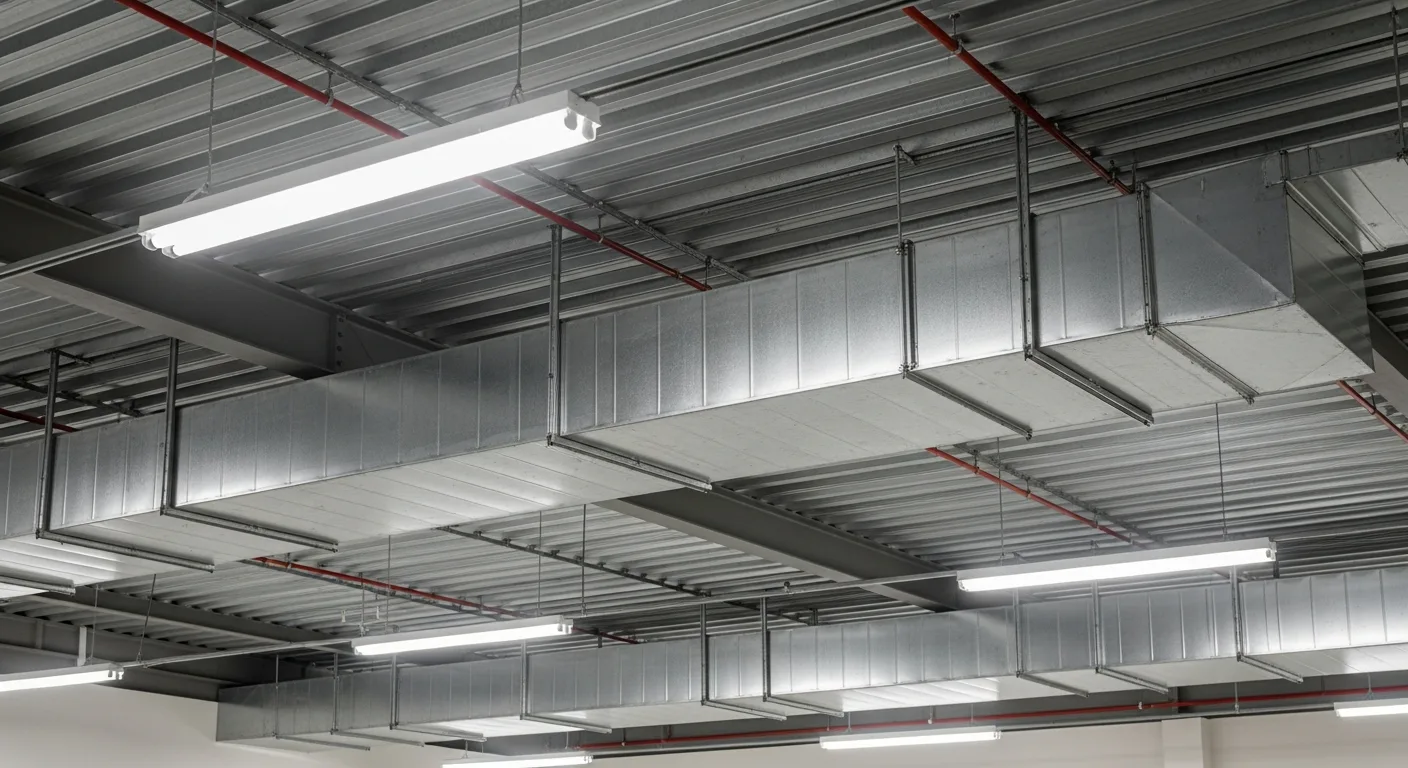
Ductwork is the circulatory system of any HVAC installation. You can put in a top-of-the-line furnace and air conditioner, but if the ducts are undersized, leaking, or poorly insulated, the system will never perform right. Rooms will be too hot or too cold, energy bills will climb, and the equipment will work harder than it should.
This guide covers the full scope of ductwork installation, from sizing calculations through sealing, insulating, and balancing the finished system. Whether you are roughing in new construction or replacing ductwork in an existing building, these fundamentals apply.
Duct Sizing: Getting the Airflow Right
Undersized ducts are probably the most common HVAC installation problem in residential construction. When ducts are too small, air velocity increases, static pressure rises, noise gets louder, and the equipment cannot deliver its rated capacity. Oversized ducts waste material and space but cause fewer performance problems.
The Manual D Process
The Air Conditioning Contractors of America (ACCA) Manual D is the industry standard for residential duct design. The process works like this:
- Start with the load calculation (Manual J). This tells you how many BTUs of heating and cooling each room needs.
- Select equipment (Manual S). This determines total system CFM and available static pressure.
- Design the duct layout. Route trunk lines and branches to reach every room.
- Calculate available static pressure. Start with the equipment’s rated external static pressure, then subtract pressure drops from the air filter, coil, grilles, and other components. What remains is available for the ductwork.
- Size each duct section. Using friction rate charts or duct calculators, size each run to deliver the required CFM within the available static pressure budget.
Friction Rate
The friction rate is measured in inches of water column per 100 feet of duct length. A typical residential system targets a friction rate between 0.05 and 0.10 inches per 100 feet. Lower friction rates mean larger ducts but quieter operation and better performance.
Quick Sizing Reference
For residential systems running at about 0.08 friction rate:
| CFM | Round Duct Size | Rectangular Equivalent |
|---|---|---|
| 75 | 5 inch | 8x4 |
| 100 | 6 inch | 8x6 |
| 150 | 7 inch | 10x6 |
| 200 | 8 inch | 10x8 |
| 300 | 10 inch | 12x8 |
| 400 | 12 inch | 14x8 |
| 600 | 14 inch | 16x10 |
| 800 | 16 inch | 20x10 |
These are approximations. Actual sizing depends on your specific friction rate, duct length, and number of fittings.
Equivalent Length of Fittings
Every elbow, tee, transition, and register boot adds friction to the system. A standard 90-degree elbow in a round duct adds the equivalent of 10 to 15 feet of straight duct, depending on size and type. Fittings often account for more total friction than the straight runs.
Use turning vanes in rectangular elbows and long-radius fittings wherever possible. A 90-degree rectangular elbow without vanes has nearly three times the friction of one with vanes.
Trunk and Branch Layout
Extended plenum systems use a constant-size rectangular trunk with round branch takeoffs. Simple to build and common in residential basements. The trunk must be sized for the total CFM at the equipment end and can be reduced in steps as branches take off.
Reducing trunk systems step down the trunk size after each branch takeoff, maintaining more consistent air velocity. Better performance than extended plenum for longer runs.
Radial systems run individual ducts from a central plenum to each register. Common in slab-on-grade homes and attic installations. Each run is independent, making balancing straightforward.
Perimeter loop systems connect all supply outlets in a continuous loop, typically in slab-on-grade construction in cold climates. Provides even heat distribution along exterior walls.
Duct Materials and Installation
Sheet Metal
Galvanized sheet metal is the gold standard. It is durable, fire-resistant, smooth (low friction), and lasts the life of the building. Rectangular sheet metal is fabricated in a shop and assembled on site with S-clips, drive cleats, and standing seams.
Round spiral duct is gaining popularity in residential work. It is stronger than rectangular duct at the same gauge, has lower friction loss, and is less prone to air leakage. The round shape also resists collapse under negative pressure better than rectangular sections.
Gauge selection:
- 8 inches and smaller: 26 gauge
- 10 to 18 inches: 24 gauge
- 20 to 30 inches: 22 gauge
- Over 30 inches: 20 gauge (with cross-breaking or reinforcement to prevent oil-canning)
Flexible Duct (Flex)
Flex duct is a wire helix wrapped in a plastic inner liner, surrounded by fiberglass insulation and an outer vapor barrier. It is cheap, fast to install, and commonly used for residential branch runs from the trunk to individual registers.
Flex duct installation rules:
- Stretch it fully. Compressed flex duct has dramatically higher friction. A flex duct compressed to 70 percent of its full length has roughly double the friction loss.
- Support every 4 feet maximum. Sagging flex creates low spots where condensation collects and airflow drops.
- No kinks. A kinked flex duct might as well be disconnected. Use metal elbows at sharp turns and transition to flex on the straight portion.
- Keep runs short. Flex duct should not exceed 25 feet per run. Shorter is better.
- Seal connections with mastic and a clamp. The inner liner seals to the collar or takeoff with a zip tie or clamp, then mastic over the outer jacket connection.
- Do not use flex for return trunks. The negative pressure on the return side can collapse poorly supported flex duct.
Fiberglass Duct Board
Duct board is rigid fiberglass panels with a foil face, cut and folded into rectangular duct shapes. It provides built-in insulation and sound attenuation. Common in commercial rooftop systems and some residential applications.
It has a rougher interior surface than sheet metal (higher friction), and the fiberglass fibers can deteriorate over time. Proper fabrication with grooved-and-folded corners and taped seams is essential to prevent air leakage and fiber shedding.
Duct Sealing: Stopping the Leaks
Duct leakage is a massive energy waste problem. Studies by the Department of Energy and various utilities consistently find that typical duct systems lose 20 to 30 percent of their air through leaks. On a 3-ton system delivering 1,200 CFM, that is 240 to 360 CFM of conditioned air dumped into your attic or crawl space.
Where Ducts Leak
- Connections between duct sections
- Takeoff collars where branches connect to trunks
- Register boots at the drywall penetration
- The air handler cabinet seams
- Plenums, especially where they connect to the equipment
- Return air platforms and plenums built from building cavities (these are notoriously leaky)
Sealing Methods
Mastic sealant is the primary sealing method. Water-based mastic is applied with a brush, glove, or caulk gun to all joints and seams. It stays flexible, does not crack, and creates a permanent seal. Apply a thick coat that completely covers the joint.
For gaps wider than 1/4 inch, embed fiberglass mesh tape in the mastic to bridge the gap. Think of it like joint tape and mud on drywall.
UL 181-rated foil tape (not regular cloth duct tape) can supplement mastic on longitudinal seams and connections. Make sure the duct surface is clean and dry for good adhesion.
Aerosol-based sealing (Aeroseal) is a technology that seals ducts from the inside by injecting aerosolized sealant particles that collect at leak points. Effective for existing duct systems where access for manual sealing is limited.
What NOT to Use
Standard cloth “duct tape” (the gray tape from the hardware store) should never be used on ductwork. It dries out and falls off within a few years. Testing by Lawrence Berkeley National Laboratory found that cloth duct tape failed on every type of duct material under typical attic temperature conditions. The name is misleading.
Duct Leakage Testing
Many energy codes now require duct leakage testing. The test uses a calibrated fan (duct blaster) connected to the duct system to pressurize it to 25 Pascals and measure the leakage rate in CFM.
Common standards:
- IECC/IRC: Duct leakage no more than 4 CFM per 100 square feet of conditioned floor area (total leakage) or 3 CFM per 100 square feet (leakage to outside)
- ENERGY STAR: Similar limits with third-party verification
- California Title 24: Among the strictest requirements in the country
If you are doing new construction, plan to test and seal before the ducts are buried behind drywall and insulation. Fixing leaks after the ceiling is closed up is much harder and more expensive.
Duct Insulation
Why Insulate
Ducts running through unconditioned spaces (attics, crawl spaces, garages, exterior walls) lose or gain heat through the duct walls. In a hot attic that reaches 140 degrees F in summer, uninsulated supply ducts carrying 55-degree air will warm up significantly before reaching the registers. You are literally air conditioning your attic instead of your house.
In winter, the same ducts lose heat to the cold attic, making the furnace work harder. Either way, uninsulated ducts in unconditioned spaces waste energy.
Insulation Requirements
Most building codes require:
- Supply ducts in unconditioned spaces: R-8 minimum (some codes require R-6 in mild climates)
- Return ducts in unconditioned spaces: R-6 minimum
- Ducts in conditioned spaces: No insulation required by code, though it helps with noise
Insulation Types
Fiberglass duct wrap is the most common insulation for sheet metal ducts. Available in R-6 and R-8 values, it wraps around the duct and is secured with outward-clinch staples, tape, or wire ties. The vapor barrier face must be on the outside (warm side in cooling climates) and all seams must be sealed to prevent condensation.
Fiberglass duct liner installs inside the duct, bonded to the inner surface. Provides both thermal insulation and sound absorption. Used primarily in commercial systems. Must be coated or faced to prevent fiber erosion from air movement.
Closed-cell spray foam can be applied to ducts in accessible areas. Provides excellent insulation and air sealing in one step. Higher cost but very effective for irregular shapes and hard-to-reach areas.
Pre-insulated flex duct comes with built-in fiberglass insulation (typically R-6 or R-8) and an outer vapor barrier. No additional insulation needed.
Condensation Prevention
In cooling climates, condensation on cold duct surfaces is a serious concern. When humid attic air contacts an uninsulated cold supply duct, moisture condenses on the surface. This leads to water damage, mold growth, and degraded insulation.
Proper insulation with a sealed vapor barrier prevents condensation. Pay special attention to:
- All insulation seams and joints (tape every seam on the vapor barrier)
- Penetrations through the insulation
- Register boot connections at the ceiling
- Any exposed metal fittings or transitions
Air Balancing: Making Every Room Comfortable
A perfectly sized and sealed duct system still will not perform right if the air is not balanced. Balancing means adjusting airflow to deliver the correct CFM to each room based on its heating and cooling load.
Why Rooms Are Uneven
Without balancing, rooms closer to the air handler or with shorter, straighter duct runs get more air than rooms at the end of long runs with multiple elbows. Upstairs rooms often get less air because the ducts run farther and fight gravity (in heating mode). The result is the classic complaint: some rooms are too hot, some are too cold.
Basic Balancing Procedure
- Set the system to cooling mode (higher fan speed makes measurement easier)
- Open all dampers fully and remove any register restrictions
- Measure total system airflow at the air handler with a flow plate or by summing all supply register readings
- Measure CFM at each supply register using a flow hood or calculated from velocity readings with an anemometer
- Compare measured CFM to design CFM for each room
- Adjust branch dampers to restrict overfed rooms, which redirects air to underfed rooms
- Re-measure and repeat until all rooms are within about 10 percent of design CFM
Damper Types
Manual balancing dampers are simple butterfly valves installed in branch ducts. They are adjusted during commissioning and left in position. Mark the handle position for reference.
Zone dampers are motorized dampers controlled by a zone control board and multiple thermostats. They open and close automatically to direct air where it is needed. Common in homes with multiple floors or wings.
Register dampers (the little lever on the register face) should be a last resort for balancing. They create noise when partially closed and do not substitute for proper duct dampers.
When Professional Balancing Is Needed
For residential systems, a competent installer can balance the system during commissioning. For commercial systems, a Testing, Adjusting, and Balancing (TAB) contractor performs balancing as a separate scope of work, typically after the mechanical contractor finishes installation.
Commercial TAB work involves measuring and adjusting every supply and return register, verifying fan speeds and static pressures, checking outside air quantities, and producing a written report documenting the measured values versus design values.
Common Installation Mistakes
Running flex duct like a garden hose. Flex duct draped over framing with sharp bends and compressions kills system performance. Support it properly, keep it straight, and use metal fittings for direction changes.
Building return air plenums from wall cavities. Using stud bays or joist bays as return air ducts is a code violation in many jurisdictions and always leaky. Build proper return duct with sheet metal.
Skipping duct sealing. You just installed a brand-new high-efficiency system and are losing 25 percent of the air through leaky connections. Seal every joint with mastic.
Undersizing returns. The return side of the system is just as important as the supply side. Undersized returns increase static pressure, reduce airflow, and stress the blower motor. Total return duct capacity should match or exceed supply capacity.
Not accounting for filter pressure drop. A clean filter might drop 0.1 inches of static pressure, but a loaded filter can drop 0.5 inches or more. Size the filter rack generously and design the duct system assuming a partially loaded filter.
Managing HVAC Installations
HVAC ductwork installation involves coordination with framing, plumbing, and electrical trades. Duct routes need to be planned before framing is complete, and any conflicts with plumbing runs, electrical panels, or structural members need to be sorted out early. Waiting until rough-in day to figure out where the ducts go is a recipe for field modifications that hurt performance.
Projul helps HVAC contractors and general contractors coordinate rough-in schedules, track submittals for equipment and materials, and manage the punch list items that always come up during commissioning. When multiple trades are working in the same space, having a shared schedule and communication platform prevents the conflicts that slow projects down.
Final Thoughts
Ductwork installation is detail work. The individual tasks are not complicated, but doing all of them correctly on every joint, every support, and every connection is what separates a system that performs to spec from one that generates callbacks for years.
Size it right using Manual D. Seal every joint with mastic. Insulate everything in unconditioned space. Balance the airflow to match the load calculation. And track the whole process in a system that keeps your crew and your trades organized.
If you are an HVAC contractor looking for better ways to manage your jobs, materials, and schedules, take a look at Projul’s pricing and see if it fits your operation. Good ductwork and good project management are built the same way: one careful step at a time.
Frequently Asked Questions
What size ductwork do I need for a room?
Should ductwork be sealed with tape or mastic?
Does all ductwork need to be insulated?
What is the most common ductwork material?
How do you balance HVAC ductwork?
What causes noisy ductwork?
How much does ductwork installation cost?
Can flex duct be used for return air?
Related Articles

BIM Clash Detection: How to Catch Conflicts Before They Cost You on the Jobsite
BIM Clash Detection: How to Catch Conflicts Before They Cost You on the Jobsite Every contractor has a story about the...
Read More →
Asphalt Paving and Compaction Guide: Mix Types, Laydown Temperatures, and Quality Testing
Asphalt paving looks straightforward from a distance. A truck dumps material, the paver lays it down, and rollers...
Read More →
Construction Jobsite Wi-Fi & Connectivity Guide: Setting Up Reliable Internet in the Field
A practical guide to getting reliable internet on construction job sites. Learn about cellular hotspots, mesh networks,...
Read More →