
Parking Garage Waterproofing & Deck Coating Guide | Projul
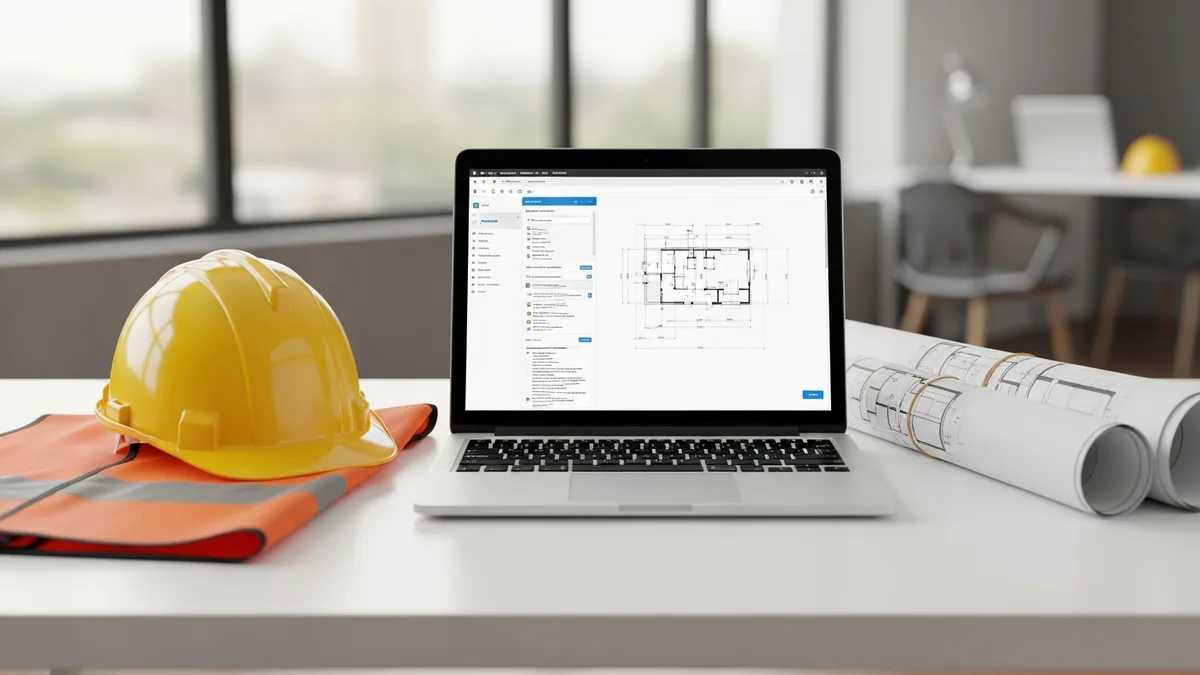
If you have spent any time working on commercial structures, you know that parking garages take a beating. Between constant vehicle traffic, road salt, oil drips, freeze-thaw cycles, and standing water, the concrete in a parking garage faces more punishment per square foot than just about any other building surface. That is exactly why waterproofing and deck coating work on parking structures is one of the most specialized trades in commercial construction.
This guide breaks down what you need to know to bid, plan, and execute parking garage waterproofing and deck coating projects. Whether you are a general contractor managing a restoration project or a specialty coatings contractor looking to tighten up your process, this is the practical stuff that matters on the job.
Why Parking Garage Waterproofing Matters More Than You Think
Water is the single biggest enemy of a parking structure. When water gets into concrete, it finds the reinforcing steel. Once it reaches the rebar, corrosion starts. Corroding rebar expands, cracks the concrete from the inside out, and you end up with spalling, delamination, and structural deterioration that costs ten times more to fix than the waterproofing would have cost in the first place.
Here is what makes parking garages especially vulnerable:
- Improved decks are exposed to weather. Unlike a building interior, upper levels of a parking garage sit out in the rain, snow, and sun with zero protection.
- Vehicles track in salt and chemicals. In cold climates, every car that drives in brings road salt and deicing chemicals that accelerate concrete degradation.
- Flat surfaces hold water. Even with proper slope-to-drain design, parking decks develop low spots over time where water ponds.
- Joints and cracks are everywhere. Expansion joints, control joints, and structural cracks all create pathways for water to migrate through the deck into the levels below.
- Carbon dioxide penetration. Vehicle exhaust introduces CO2 that carbonates the concrete over time, reducing the alkaline protection around the rebar.
The bottom line is that without a good waterproofing system, a parking garage will start showing serious structural problems within 10 to 15 years. With proper waterproofing, that same structure can last 40 to 50 years with routine maintenance. When you are working on concrete projects of any kind, understanding moisture management is half the battle.
Types of Parking Garage Waterproofing Systems
Not every parking garage gets the same treatment. The right waterproofing system depends on whether you are working on a new build or a restoration, the deck location (top level vs. below-grade), traffic volume, climate, and budget. Here are the main categories:
Liquid-Applied Membrane Systems
These are the most common systems for parking garages. You apply them directly to the prepared concrete surface in multiple coats, and they cure to form a easy, flexible membrane. Most are polyurethane-based, though there are also epoxy and methyl methacrylate (MMA) options.
Advantages: Easy application means no laps or seams for water to exploit. They conform to irregular surfaces and bridge hairline cracks. Fast application compared to sheet systems.
Best for: Top decks, exposed improved decks, and restoration projects where you need to coat over existing concrete.
Sheet Membrane Systems
Pre-manufactured sheets (typically rubberized asphalt or modified bitumen) are adhered to the concrete deck. These are more common below-grade or in new construction where the membrane gets covered by a wearing surface or topping slab.
Advantages: Consistent thickness, well-documented performance history, and they work well in below-grade applications where they will not see direct traffic.
Best for: Below-grade plaza decks, new construction under topping slabs, and situations where you want a proven barrier before pouring a separate wearing surface.
Cementitious Waterproofing
Cement-based coatings modified with polymers that bond directly to the concrete substrate. These are rigid, not flexible, so they work best in stable environments without much movement.
Advantages: Easy to apply, bonds well to concrete, good for below-grade vertical surfaces like foundation walls.
Best for: Below-grade walls and surfaces that will not see traffic or significant thermal movement. Not ideal as a standalone system for parking decks. For below-grade work specifically, check out our foundation and excavation guide for related best practices.
Crystalline Waterproofing
These products react with moisture and concrete to form crystals that fill the capillary pores in the concrete. They become part of the concrete itself rather than sitting on top of it.
Advantages: Self-healing properties (crystals reactivate when exposed to new moisture), no membrane to damage, and they work from the negative side.
Best for: New construction where you can add it to the concrete mix or apply it to green concrete. Works well as a supplementary system but most engineers will not rely on it alone for a parking deck.
Surface Preparation: Where Most Failures Start
Ask any waterproofing manufacturer what causes the majority of coating failures and they will tell you the same thing: bad surface prep. You can use the best membrane system on the market, but if the substrate is not right, it will not stick and it will not perform.
Concrete Condition Assessment
Before you quote a restoration job, you need a thorough assessment of the existing concrete. This means:
- Delamination survey. Drag a chain or use a sounding hammer across the entire deck surface. Delaminated areas sound hollow and need to be removed and patched before coating.
- Crack mapping. Document every crack, noting width, length, and whether it is structural or shrinkage. Cracks wider than 1/16 inch typically need routing and sealing before membrane application.
- Chloride testing. Core samples tested for chloride ion content tell you how deep salt contamination has penetrated. If chlorides have reached the rebar level, you may need to remove concrete down to below the contaminated zone.
- Moisture testing. Relative humidity testing (ASTM F2170) or calcium chloride testing (ASTM F1869) tells you if the concrete is dry enough for coating. Most polyurethane systems need the concrete below 5% moisture content or 75% relative humidity.
Understanding concrete mix design and testing gives you a better foundation for evaluating what you are working with on a restoration project.
Mechanical Surface Preparation
Once you know what you are dealing with, the concrete surface needs to be profiled to accept the coating system. The International Concrete Repair Institute (ICRI) defines Concrete Surface Profiles (CSP) from 1 to 10. Most parking garage waterproofing systems call for a CSP of 3 to 5.
Common methods include:
- Shot blasting. The workhorse of parking garage prep. Self-contained, dust-controlled, and produces a consistent CSP 3 to 5 profile. This is what you will use on 90% of horizontal deck surfaces.
- Scarifying. Rotating cutter drums that remove deteriorated concrete and create a rough profile. Good for removing old coatings or leveling uneven surfaces before shot blasting.
- Diamond grinding. Creates a smoother profile (CSP 1 to 3) and works well for removing high spots or preparing surfaces for thin-film systems.
- Abrasive blasting. Sandblasting or garnet blasting for vertical surfaces, columns, and areas that shot blasters cannot reach.
After mechanical prep, every square inch of the surface needs to be clean, dry, and free of oil, curing compounds, laitance, and loose material. Blow the surface with compressed air, vacuum it, and then inspect it before you open a single bucket of primer.
Traffic Coatings: The Wear Layer That Takes the Punishment
The traffic coating is what vehicles actually drive on. It protects the waterproofing membrane below it from tire wear, turning movements, chemical exposure, and UV degradation. Getting this layer right determines how long the entire system lasts between maintenance cycles.
Polyurethane Traffic Coatings
The industry standard for parking garage traffic coatings. They offer excellent flexibility, abrasion resistance, and chemical resistance. Most systems go down in two to four coats with broadcast aggregate between coats for traction.
There are two main chemistries:
- Aromatic polyurethane. Less expensive, but yellows and chalks with UV exposure. Use this for covered levels where sun exposure is minimal.
- Aliphatic polyurethane. UV-stable, color-retentive, and more expensive. Required for any exposed surface that sees sunlight. Use this for the top deck and any open levels.
MMA (Methyl Methacrylate) Systems
MMA coatings cure fast, sometimes in as little as 30 to 60 minutes, which makes them attractive for projects where downtime is critical. They also cure at temperatures down to 0 degrees Fahrenheit, making them a go-to option for cold-weather applications.
The trade-off: MMA has a very strong odor during application. If the garage is attached to an occupied building (hospital, hotel, office), you need serious ventilation planning and may need to work during off-hours. The material cost is also higher than polyurethane.
Epoxy Systems
Epoxy coatings are hard, chemical-resistant, and bond aggressively to concrete. They work well for ramp areas and high-traffic zones where abrasion resistance matters most. If you have done epoxy flooring and industrial coating work, you already know the prep requirements are similar.
The limitation: Epoxies are rigid. They do not bridge cracks well, and they chalk and yellow with UV exposure. For a full parking deck system, epoxy typically serves as a primer or base coat under a flexible polyurethane topcoat rather than as a standalone system.
Aggregate Broadcast
Regardless of which coating chemistry you use, aggregate broadcast between coats is critical for two reasons:
- Traction. Parking garages get slippery when wet. Broadcast aggregate (aluminum oxide, quartz sand, or polymer beads) provides the skid resistance vehicles need, especially on ramps and turning areas.
- Intercoat adhesion. The aggregate creates a mechanical bond between coating layers, making the system more durable and resistant to delamination.
Broadcast rates and aggregate size depend on the manufacturer’s specs and the slope of the surface. Ramps typically get a heavier broadcast than flat decks.
Joint and Detail Work: The Make-or-Break Items
You can coat 50,000 square feet of deck flawlessly, but if the joints, drains, and penetrations leak, the whole project fails. Detail work is where experienced contractors separate themselves from crews that just know how to roll out a coating.
Expansion Joints
Contractors across the country trust Projul to run their businesses. Read their reviews.
Expansion joints are designed to move. The waterproofing system at these locations has to accommodate that movement without tearing, debonding, or allowing water through. Options include:
- Preformed joint systems. Factory-made assemblies with flexible glands that handle movement in multiple directions. These are the most reliable option for structural expansion joints.
- Liquid-applied joint sealants. Polyurethane or silicone sealants installed in the joint with a backer rod. Suitable for control joints and joints with limited movement.
- Strip-applied membranes. Reinforcing fabric set in liquid membrane material that bridges the joint. Works for smaller control joints but has movement limitations.
Drain Details
Every deck drain needs a membrane collar that ties the waterproofing into the drain body. Water has to travel across the coating, into the drain, and down the pipe without any opportunity to get behind or under the membrane. This means:
- Coating extends into the drain bowl
- Drain ring or clamping collar compresses the membrane against the drain body
- No low spots in the coating that hold water near the drain edge
Penetrations and Terminations
Pipe penetrations, column bases, wall-to-deck transitions, and membrane termination points all need individual attention. Each one gets a detail treatment with reinforcing fabric, additional membrane coats, and sealant as needed. Rushing these details or leaving them to less experienced crew members is the fastest way to create a callback.
Keeping track of all these details across a multi-level garage project gets complicated fast. That is where solid construction project management practices and tools make a real difference in keeping your crews organized and your quality consistent.
Bidding, Scheduling, and Managing Parking Garage Projects
Parking garage waterproofing projects have some unique characteristics that affect how you bid and manage them. Here is what to think about beyond the material and labor costs.
Phasing and Access
Most parking garage owners cannot shut down the entire structure for the duration of the project. You will need a phasing plan that keeps portions of the garage operational while you work. This means:
- Barricades, signage, and traffic control for each phase
- Coordination with the garage operator on timing and traffic flow
- Mobilization and demobilization costs for each phase (you are essentially setting up and tearing down multiple times)
- Extended project duration compared to working with full access
Weather Windows
Coating application is weather-dependent. Most polyurethane systems need:
- Surface temperature above 50 degrees Fahrenheit and rising
- No rain for 24 hours before and after application
- Relative humidity below 85%
- Dew point at least 5 degrees below the surface temperature
On exposed top decks, weather delays are a reality you need to build into your schedule. Smart contractors use construction scheduling tools to plan weather-dependent tasks and keep the overall project on track even when individual days get rained out.
Cost Estimating
Parking garage waterproofing bids need to account for more than material and labor rates. Make sure you are including:
- Concrete repair quantities. Get a realistic estimate of spall repair, crack routing, and patching. On older structures, this can be 20 to 30 percent of the total project cost.
- Surface preparation. Shot blasting, scarifying, and cleanup are labor-intensive. Do not underestimate the time and equipment costs.
- Waste and overage. Coating materials on rough concrete surfaces use more material than the theoretical coverage rate suggests. Add 10 to 15 percent waste factor.
- Mobilization for phased work. Each phase has setup and teardown costs. A four-phase project does not cost the same as an unphased project times one.
- Night and weekend premiums. If the owner needs you working off-hours to minimize disruption, build that labor premium into the bid.
Accurate estimating on specialty projects like this takes experience. Having reliable estimating software that lets you build custom assemblies for waterproofing systems helps you produce consistent, profitable bids without reinventing the wheel every time.
Quality Control
Document everything. Before, during, and after. Take photos of the surface prep, record coating batch numbers, measure wet film thickness during application, and do adhesion pull tests after cure. Manufacturers require documentation for warranty claims, and owners expect it for turnover packages.
Key QC checkpoints include:
- Surface profile verification (ICRI CSP comparators or replica tape)
- Moisture testing before primer application
- Wet film thickness checks on every coat
- Adhesion testing (ASTM D4541) after final cure, minimum 200 psi
- Holiday/pinhole testing on critical waterproofing areas
- Photo documentation of every detail, joint, and drain before topcoat covers them
For general contractors managing these specialty subs, tracking this level of detail across a multi-phase project means you need good systems in place. Projul gives you the tools to track tasks, store documentation, and keep your whole team aligned from estimating through project closeout without the chaos of spreadsheets and email chains.
Wrapping It Up
Parking garage waterproofing and deck coating is not a job you figure out as you go. The materials are specialized, the details are critical, and the consequences of getting it wrong show up as structural damage that costs the owner millions and puts your reputation on the line.
The contractors who do this work well share a few things in common: they invest in understanding the systems they install, they do not cut corners on surface preparation, they treat every joint and drain like it is the most important detail on the project, and they use solid project management practices to keep complex phased work organized and profitable.
Ready to stop guessing and start managing? Schedule a demo to see Projul in action.
Whether you are breaking into parking garage work or looking to tighten up your existing process, the fundamentals covered here will keep you pointed in the right direction. And if you are looking for a better way to manage the estimating, scheduling, and documentation side of specialty projects like these, take a look at what Projul can do for your operation.
Frequently Asked Questions
How long does parking garage waterproofing typically last?
What is the difference between a traffic coating and a waterproofing membrane?
Can you waterproof a parking garage without shutting it down completely?
What causes parking garage waterproofing to fail prematurely?
How much does parking garage waterproofing cost per square foot?
Related Articles
Construction Loading Dock Design and Installation Guide
A practical guide for contractors on loading dock design and installation, covering dock types, structural specs,...
Read More →
Construction Plaster and Specialty Wall Finishes Guide
Plaster and specialty wall finishes are making a serious comeback in both residential and commercial construction. This...
Read More →
Construction Septic System Installation and Inspection Guide
A practical contractor guide to septic system installation and inspection, covering soil tests, permits, tank...
Read More →