
Construction PPE Management Guide for General Contractors | Projul
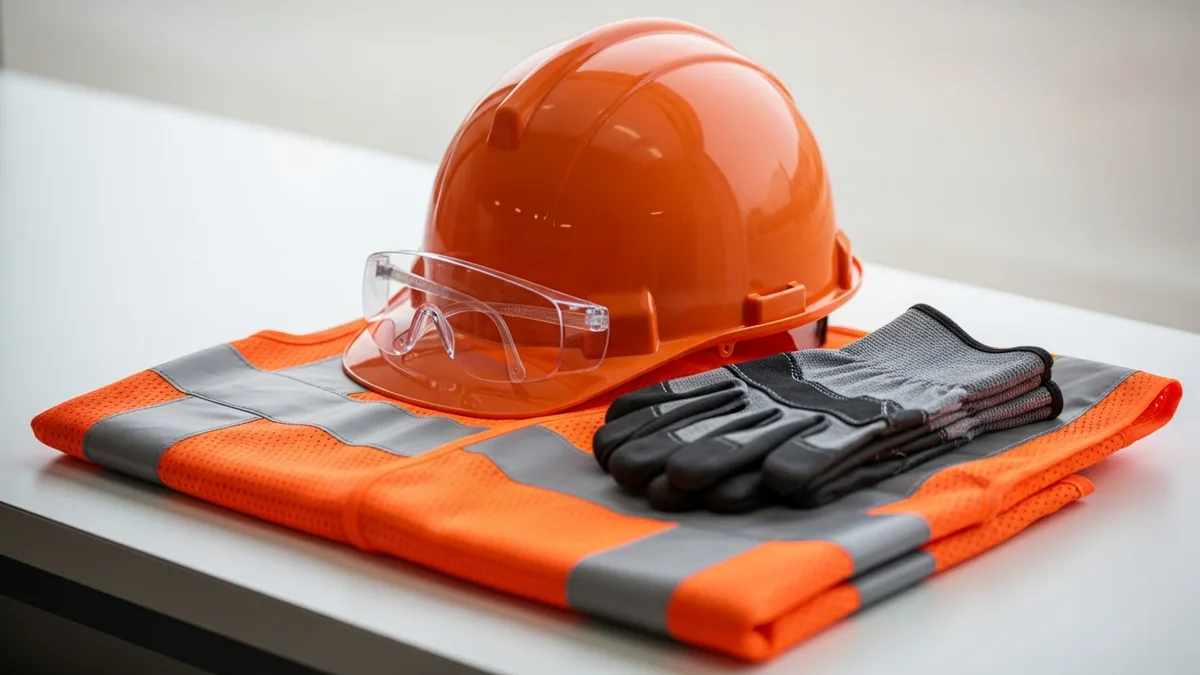
You’ve been on that jobsite. The one where your crew is squared away, hard hats on, vests zipped, safety glasses in place. Then a plumber’s apprentice walks through your work zone in sneakers and a baseball cap. No vest. No eye pro. Nothing.
Now it’s your problem.
PPE management on a construction site isn’t complicated in theory. People wear the right gear, nobody gets hurt, OSHA stays away. But in practice, when you’re juggling multiple crews, a rotating cast of subcontractors, and the daily chaos of actually building something, keeping every single person compliant is one of the hardest parts of running a safe jobsite.
This guide breaks down how experienced GCs handle PPE programs that actually work. Not the textbook version. The version that survives contact with real jobsites, real subs, and real deadlines.
Why PPE Management Falls Apart on Multi-Trade Jobsites
Most GCs don’t have a PPE problem with their own crews. Your people know the rules. They’ve been through your orientation. They understand that showing up without their gear means they’re going home.
The breakdown happens at the edges. Subcontractors bring their own safety cultures, and those cultures range from excellent to nonexistent. A framing crew that’s been with you for years knows your expectations. The new electrical sub who underbid the job by 15%? Their guys might show up with hard hats from 2014 and safety glasses held together with tape.
Here’s what makes it worse: on a busy commercial or multi-family project, you might have eight to twelve different companies on site in a single day. Each one has different training standards, different equipment budgets, and different attitudes about safety. Your site super can’t be everywhere at once, and the moment they turn their back, somebody’s pulling off their gloves because “they can’t feel the fasteners.”
The other piece that trips up GCs is the legal reality. OSHA’s multi-employer citation policy means you can catch a violation even when it’s a sub’s worker breaking the rules. If you’re the controlling contractor and you knew (or should have known) about the hazard, you’re on the hook. That plumber’s apprentice in sneakers isn’t just a safety risk. He’s a potential citation with your company’s name on it.
This is why having a written, enforced, documented PPE program isn’t optional. It’s the foundation of your construction safety plan, and it needs to cover everyone who sets foot on your site.
Setting Up a PPE Program That Covers Every Worker on Site
Thousands of contractors have made the switch. See what they have to say.
A PPE program that works across multiple employers starts with clear, written requirements that leave zero room for interpretation. Here’s what yours needs to include:
Site-specific PPE requirements. Not every site needs the same gear. A ground-up commercial build has different hazards than a tenant improvement. Spell out the minimum PPE for general site access (hard hat, safety glasses, high-vis vest, steel-toe boots) and then layer on task-specific requirements. Concrete cutting? Respirator and hearing protection. Steel erection? Fall protection tap into. Working near silica-generating tasks? Check your silica dust exposure controls.
Subcontractor obligations in writing. Your subcontract agreements should include specific language about PPE compliance. State clearly that the sub is responsible for providing all required PPE to their workers, that their workers must comply with your site safety rules, and that you reserve the right to remove non-compliant workers. Get this in the contract before they mobilize, not after you find a problem.
Orientation for every person on site. Nobody works on your project without going through a site-specific safety orientation. This is where you walk through the PPE requirements, show them the hazard areas, and make sure they understand that your rules apply to everyone. Document who attended, what was covered, and have them sign off. Your training program should include this as a standard module.
PPE inspection standards. Define how often equipment gets checked and what the rejection criteria are. A cracked hard hat gets replaced immediately. A put to work with frayed webbing comes out of service. Safety glasses so scratched you can’t see through them don’t count as eye protection. Make these standards part of your orientation so workers know what’s expected.
Enforcement procedures. This is the part most GCs skip, and it’s the part that matters most. What happens when someone violates the PPE policy? First offense, verbal warning and documentation. Second offense, written warning to the worker and their employer. Third offense, removal from the site. Whatever your system is, write it down, communicate it, and follow it every single time. Inconsistent enforcement is the same as no enforcement.
Tracking PPE Compliance Across Crews and Subs
Here’s where most GCs struggle. You can write the best PPE policy in the world, but if you’re not tracking compliance in a way that creates a paper trail, it won’t protect you when OSHA shows up or when someone gets hurt.
The old-school approach is a clipboard and a foreman who does a morning walkthrough. That works on a small job with one crew. On a busy site with multiple trades, you need something more systematic.
Daily safety walkthroughs. Your site superintendent or safety officer should be doing at least one formal walkthrough per day, specifically looking at PPE compliance. Note who’s in compliance, who’s not, and what corrective action was taken. These observations go into your daily logs so there’s a permanent record.
Photo documentation. When you find a violation, take a photo. When you see a crew working safely with all PPE in place, take a photo of that too. Positive documentation is just as valuable as violation records because it shows OSHA that you’re actively monitoring and that compliance is the norm, not the exception. Store everything in a system that timestamps and organizes it automatically, like a photo and document management tool built for construction.
Toolbox talks with sign-in sheets. Weekly toolbox talks focused on PPE topics keep the issue front and center. Rotate through topics: proper hard hat care, when to replace safety glasses, how to inspect a tap into, the right respirator for the task. Keep sign-in sheets for every talk. These are gold during an OSHA audit because they prove ongoing training and communication.
Sub accountability meetings. On larger projects, hold a weekly or biweekly coordination meeting where safety is the first agenda item. Call out PPE issues by trade (not by individual worker in a group setting). “We’ve seen framers without eye protection three times this week” puts the sub on notice without embarrassing a specific person. Follow up in writing.
The goal of all this tracking isn’t to play gotcha. It’s to build a record that shows you took PPE management seriously, you monitored compliance consistently, and you corrected problems when you found them. That record is your defense if something goes wrong.
Common PPE Violations and How to Fix Them Before OSHA Does
After enough years running projects, you start to see the same PPE violations over and over. Here are the most common ones and what actually works to fix them.
Hard hat non-compliance. Workers take them off when they think nobody’s watching, especially in hot weather. Some guys wear them backward (which voids the protection rating unless it’s a reverse-donning model). Fix: make hard hats a condition of being on site, period. Not just in hazard areas. Everywhere inside the fence line. It’s simpler to enforce “always on” than to argue about whether a specific area has overhead hazards.
Missing or inadequate eye protection. Safety glasses are the most commonly “forgotten” piece of PPE. Workers lose them, break them, leave them in their trucks. Fix: keep a supply of basic safety glasses at the site entrance. They cost a dollar each. Hand them out like candy. It’s cheaper than a citation or an eye injury.
Improper footwear. You’d be amazed how often workers show up in regular boots, running shoes, or even sandals on residential projects. Fix: make footwear part of your gate check. If their boots don’t meet the standard, they don’t enter. Sounds harsh, but one crushed foot from a dropped beam changes the conversation fast.
Glove resistance. Some trades resist gloves because they reduce dexterity. Electricians, finish carpenters, and tile setters are the usual holdouts. Fix: work with them to find gloves that balance protection with feel. There are dozens of options now, from thin cut-resistant gloves to touchscreen-compatible models. The right glove for the task eliminates most complaints.
Fall protection shortcuts. Workers who are supposed to be tied off disconnect to move to a new anchor point and “forget” to reconnect. Or they wear the use but never actually clip in. Fix: this one requires constant supervision and zero tolerance. A fall from height can kill someone. Your fall protection program should treat 100% tie-off as non-negotiable, and enforcement should match that standard.
Hearing protection skipped around loud equipment. Workers get used to the noise and stop noticing it. By the time they realize they have hearing damage, it’s permanent. Fix: post signage at noise hazard areas, include hearing protection in your required PPE for specific tasks (saw cutting, demolition, pile driving), and check compliance during walkthroughs.
Every one of these violations is preventable. The fix is almost never more training. It’s more enforcement combined with making compliance as easy as possible.
Making PPE Compliance Part of Your OSHA Defense Strategy
Let’s talk about what happens when OSHA actually shows up. Whether it’s a programmed inspection, a complaint investigation, or a response to an incident, the compliance officer is going to look at your PPE program as part of a broader safety evaluation.
Here’s what they want to see:
Written PPE hazard assessment. OSHA requires employers to conduct a hazard assessment of the workplace to determine what PPE is necessary. For construction, this should be site-specific and updated as conditions change. Your safety plan should include this assessment, and it should tie directly to your OSHA compliance documentation.
Training records. Proof that workers were trained on what PPE to use, when to use it, how to wear it properly, and how to maintain it. Your orientation sign-in sheets and toolbox talk records cover this.
Evidence of enforcement. This is the big one. OSHA doesn’t just want to see that you have a policy. They want to see that you enforce it. Daily log entries noting PPE observations, photos of walkthroughs, documentation of corrective actions taken with non-compliant workers or subs. All of this builds your case as a controlling contractor who took reasonable steps to ensure compliance.
Equipment inspection records. For specialized PPE like fall protection harnesses and respirators, OSHA expects documented inspection programs. Harnesses need formal, recorded inspections. Respirators require fit testing and medical evaluations. Keep these records organized and accessible.
The pattern here is documentation. OSHA cases are won or lost on paper. A GC who can produce daily logs showing consistent PPE monitoring, photos proving compliance across the site, and records of corrective actions taken against violators has a strong defense. A GC who says “we told everybody to wear their stuff” but can’t prove it has nothing.
This is also why digital tools matter for safety management. Paper forms get lost, coffee-stained, and shoved in a filing cabinet. A system that timestamps entries, attaches photos, and creates searchable records gives you an audit trail that actually holds up. If you’re still managing safety documentation on paper, it’s worth seeing what a purpose-built construction platform can do.
Building a PPE Culture That Outlasts Any Single Project
The best PPE programs don’t rely on one super-motivated safety officer or one GC who happens to care. They become part of how your company operates, project after project, crew after crew.
Here’s how you build that kind of culture:
Lead from the top. If the project manager walks the site without safety glasses, every worker on that jobsite got the message that PPE is optional for important people. Every person in a leadership role wears every piece of required PPE, every time, no exceptions. This isn’t about optics. It’s about credibility.
Recognize compliance, not just violations. Human nature responds to positive feedback. When a sub’s crew is consistently squared away, say something. Mention it in the coordination meeting. Send a note to their project manager. A little recognition goes a long way toward making PPE compliance something crews take pride in rather than resent.
Make it easy. Keep spare PPE on site. Have a PPE station at the entrance with hard hats, vests, safety glasses, and ear plugs for anyone who forgot theirs or needs a replacement. Yes, it costs money. It costs a lot less than a citation, a lost-time injury, or a wrongful death lawsuit.
Involve your subs in the process. Instead of just dictating PPE rules, bring your subcontractors into the conversation during preconstruction. Ask about their safety programs. Discuss site-specific hazards together. When subs feel like partners in safety rather than targets of enforcement, compliance improves across the board.
Debrief after every project. What PPE issues came up? Which subs were consistently non-compliant? What worked to fix problems? Which pieces of equipment got the most complaints? Feed these lessons back into your program so it gets better over time.
Invest in quality gear. This applies to your own crews, but it’s worth mentioning to subs as well. Cheap PPE that’s uncomfortable, poorly fitted, or falls apart after a week creates resistance. Workers are more likely to wear equipment that actually fits well, doesn’t fog up, doesn’t pinch, and lasts more than one project. The difference between a $3 pair of safety glasses and a $12 pair is enormous in terms of comfort and durability. That $9 premium pays for itself in compliance.
The reality is that PPE management is never “done.” There’s no finish line where everyone magically wears the right gear without any oversight. It’s an ongoing effort that requires attention every single day. But the GCs who build real systems around it, who document everything, who enforce consistently, and who make compliance easier than non-compliance, those are the ones running the safest sites in the business.
And safe sites finish on time, stay on budget, keep good workers coming back, and let you sleep at night knowing you did everything you could to send everyone home in one piece.
Book a quick demo to see how Projul handles this for real contractors.
That’s the whole point.
Frequently Asked Questions
What PPE is required on a construction site?
Who is responsible for providing PPE on a construction site?
How often should PPE be inspected on a construction site?
Can a GC remove a subcontractor's worker from a jobsite for not wearing PPE?
What is the OSHA fine for PPE violations on a construction site?
Related Articles
Construction Fire Watch: When You Need One and How to Run It Right
Fire watch is one of those requirements that catches GCs off guard until an inspector shows up or, worse, a fire breaks...
Read More →
Construction Emergency Response Plans: A Contractor's Complete Guide
Every construction site needs a solid emergency response plan before the first shovel hits dirt. This guide walks you...
Read More →
Construction Heat Illness Prevention: How to Keep Your Crews Safe When Temperatures Climb
Heat illness kills more construction workers than any other weather event. Here's what every contractor needs to know...
Read More →