
10 Ways to Prevent Construction Delays
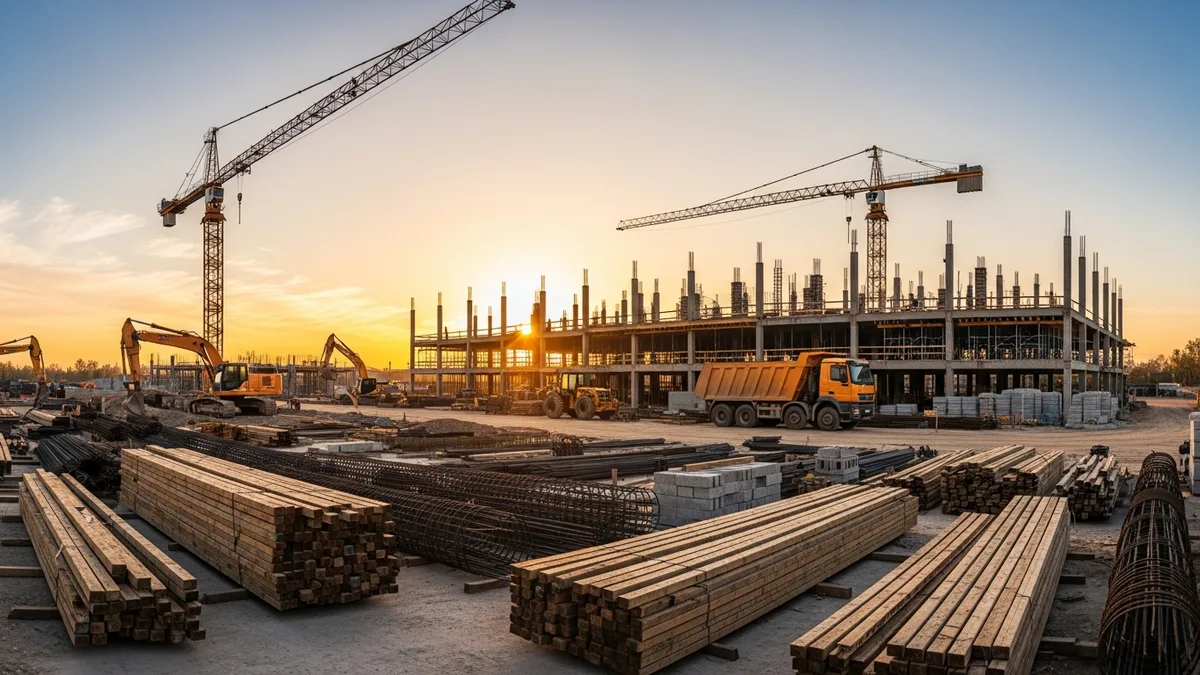
Every contractor has dealt with project delays. Whether it’s a sub who no-shows, a permit that takes three weeks longer than expected, or an owner who can’t pick a tile color, delays are part of construction.
But here’s the thing: most delays are predictable. And the ones that aren’t? You can still plan for them. The contractors who consistently finish on time aren’t lucky. They have systems.
This guide covers the real causes of construction project delays, how to prevent them before they start, and what to do when things go sideways anyway.
The Real Cost of Project Delays
A delayed project isn’t just an inconvenience. It hits your business from every direction.
Liquidated damages are the most obvious hit. If your contract includes an LD clause (and most commercial contracts do), you’re paying a fixed amount for every day you run past the completion date. On a mid-size commercial job, that can be $500 to $5,000 per day. That adds up fast.
Overhead burn is the silent killer. Every extra week on a project means another week of superintendent time, trailer costs, insurance, equipment rental, and porta-john fees. None of that is billable. It just eats into your margin.
Then there’s reputation damage. Owners talk to each other. GCs talk to each other. If you’re the contractor who’s always running behind, you stop getting invited to bid. You’ll never see the RFP that didn’t come because someone remembered your last project.
The domino effect on other jobs might be the worst part. Your crew that was supposed to start the next project on March 1st is still stuck on the current one. Now that project starts late. And the one after that. One delay can ripple through your entire pipeline for months.
According to McKinsey research, large construction projects typically run 20% over schedule. For smaller contractors, it’s often worse because you have less margin for error and fewer crews to shuffle around.
The 10 Most Common Causes of Construction Delays
If you’ve been in the business more than a few years, you’ve probably dealt with all of these. But naming them is the first step to beating them.
1. Permitting and Regulatory Hold-Ups
You can’t start what you can’t permit. And if you’re counting on a two-week permit turnaround in a jurisdiction that’s running six weeks behind, your schedule is already fiction.
Every municipality moves at its own pace. Some are predictable. Some are a black hole where your plans disappear for a month before anyone looks at them. And if your submittal gets kicked back for revisions, you’re starting the clock over.
2. Weather
Rain, snow, extreme heat, wind. You can’t control the weather, but you can plan for it. The contractors who get burned are the ones who build a schedule assuming perfect weather from October through March. That’s not a schedule. That’s a wish.
If you want a deeper look at handling weather delays specifically, check out our guide to construction weather delay management.
3. Material Supply Chain Issues
COVID made everyone aware of supply chain problems, but they didn’t start in 2020 and they didn’t end in 2023. Lead times on switchgear, custom windows, structural steel, and specialty items can still run 12 to 20 weeks or more.
If you’re ordering materials after the project starts, you’re already behind.
4. Labor Shortages
The construction industry needs hundreds of thousands of workers it doesn’t have. Finding skilled labor is hard enough. Finding them when you need them, for the duration you need them, at a price that works? That’s the real challenge.
This is especially tough for specialty trades. Good welders, experienced finish carpenters, and licensed electricians can name their price right now.
5. Design Changes and Scope Creep
“While we’re at it, can we also…” is the most expensive phrase in construction. Design changes mid-project create a chain reaction: new drawings, new submittals, re-review, new materials, and rework of anything that’s already been installed.
Even small changes add up. A new outlet location seems simple until you realize the drywall is hung, the insulation is in, and the framing is inspected.
6. Inspection Delays
You finished the rough-in on Tuesday. The inspector can’t come until next Thursday. Your drywall crew was scheduled for Wednesday. Now they’re sitting idle for over a week, or they move to another job and you have to get back in their queue.
Inspection scheduling is one of the most frustrating sources of delay because it’s largely out of your control. But it’s also predictable enough to plan around.
7. Subcontractor No-Shows
You built your schedule around the plumber starting Monday. Monday morning, you get a text: “Running behind on another job, can’t make it until next week.” Now your schedule has a hole in it.
Sub reliability is a top-three scheduling headache for every GC. And the ripple effects are brutal because every trade depends on the one before it.
8. RFI Bottlenecks
A Request for Information sounds simple enough. You have a question about the plans, you send it to the architect, they answer it, you move on. Except when the architect takes two weeks to respond. Or when the answer creates more questions. Or when nobody tracks which RFIs are still outstanding.
On complex projects, unresolved RFIs can stack up and create a logjam that stops work in multiple areas at once.
9. Owner Indecision
The owner hasn’t picked finishes yet. The owner wants to “think about” the change order for another week. The owner’s rep is on vacation and nobody else can approve the submittal.
Owner-caused delays are tricky because you don’t want to damage the relationship. But every day of indecision is a day of delay, and you need to document that clearly.
10. Poor Scheduling
This is the one that’s entirely on you. If your schedule isn’t realistic from day one, if it doesn’t account for lead times, inspection windows, weather days, and trade sequencing, then you didn’t have a schedule. You had a calendar with some dates on it.
Bad scheduling is the root cause behind many of the other delays on this list. A good schedule anticipates problems. A bad one creates them.
Using actual project scheduling software instead of spreadsheets or gut instinct is the minimum bar for running projects on time.
Prevention Starts at Pre-Construction
The best time to prevent a delay is before you break ground. Most of the heavy lifting happens in pre-construction, and the contractors who invest time here save themselves weeks of headaches later.
Build Realistic Timelines
Start by building your schedule backwards from the completion date. Then add buffer. Not huge amounts, but realistic float for the activities that always take longer than planned: permitting, inspections, owner reviews, and specialty material deliveries.
Talk to your subs before you set dates. Ask them what their current backlog looks like. Ask about crew availability. If your electrician says they’re booked solid for six weeks, don’t schedule them for four weeks out and hope for the best.
Submit Permits Early
If permitting is a known bottleneck in your area (and it almost always is), submit as early as physically possible. Get your plans to the building department before everything else is finalized if you can. Pre-application meetings are available in many jurisdictions and they can flag issues before you do a full submittal.
Track permit status weekly. Don’t just submit and forget.
Pre-Order Long-Lead Materials
Identify every material with a lead time over four weeks and order it during pre-construction. Switchgear, custom doors and windows, structural steel, specialty fixtures, rooftop units. These items should be on order before you mobilize.
Yes, this means spending money before revenue is flowing. But the alternative is a crew standing around waiting for materials that should have been ordered two months ago.
Hold Trade Coordination Meetings
Before construction starts, get your key subs in a room (or on a call) and walk through the schedule together. Let the plumber and electrician talk about who goes first in the ceiling space. Let the HVAC contractor flag conflicts with the structural layout.
These meetings catch problems on paper instead of in the field. A conflict caught in pre-construction costs you a meeting. The same conflict caught during rough-in costs you a week.
Schedule Management That Actually Works
A schedule is only useful if you actually manage it. Printing it out on day one and pinning it to the trailer wall doesn’t count.
The Critical Path Method
Critical Path Method (CPM) scheduling identifies the longest sequence of dependent activities in your project. These are the tasks where any delay directly pushes your completion date. Everything else has float.
Understanding your critical path tells you where to focus. If concrete and structural steel are on your critical path but painting isn’t, you know where to put your best people and your closest attention.
Contractors across the country trust Projul to run their businesses. Read their reviews.
Most project management platforms support CPM scheduling. If yours doesn’t, it’s time to upgrade.
Look-Ahead Schedules
Your master schedule shows the big picture. Your three-week look-ahead shows what’s actually happening next. This is the schedule your supers and foremen should be working from.
Every Monday, update the look-ahead. What’s starting this week? What needs to be ready? What inspections are scheduled? What materials need to be on-site?
The look-ahead is where you catch problems before they become delays. If next week’s drywall start depends on an inspection that hasn’t been scheduled yet, you’ve got time to make a call.
Weekly Coordination Meetings
Get your project team together every week. Superintendent, key subs, project manager. Review the look-ahead. Talk about what went right, what went wrong, and what’s coming up.
These meetings don’t need to be long. Thirty minutes is plenty if you stay focused. The point is to keep everyone aligned and surface problems early.
Keep notes from every meeting. Use your daily logs to document attendance, decisions, and commitments. When a sub says “we’ll have six guys here Thursday,” write it down. That documentation matters later.
When Delays Happen: Recovery Strategies
No matter how well you plan, some delays are unavoidable. What separates good contractors from great ones is how quickly they recover.
Schedule Compression
Compression means adding resources to critical path activities to shorten their duration. If your framing is running behind, you bring in a second crew. If concrete needs to cure faster, you use accelerants or heated blankets.
Compression costs money. But it’s often cheaper than the liquidated damages, overhead burn, and cascade effects of staying behind schedule. Run the numbers before you decide.
Fast-Tracking
Fast-tracking means overlapping activities that were originally planned in sequence. Instead of waiting for all the framing to finish before starting rough-in, you start rough-in on the floors that are already framed.
This works well when activities can safely overlap. But it increases risk. If the framing changes affect the rough-in you’ve already started, you’re doing rework. Use fast-tracking carefully and make sure your subs can coordinate the overlap.
Resource Leveling
Sometimes the problem isn’t the schedule itself but how your resources are allocated. Resource leveling means redistributing labor and equipment across activities to eliminate bottlenecks.
Maybe your best operator is assigned to a non-critical activity while a critical one is understaffed. Moving them to the critical path costs nothing but makes a real difference.
Schedule of Values Adjustments
When a delay hits, review your schedule of values (SOV) and your billing projections. You may need to front-load certain line items or adjust your draw schedule to maintain cash flow during the delay.
Cash flow problems caused by delays have killed more contractors than the delays themselves. Stay ahead of it. Talk to your accountant and your bonding company early if a major delay is going to affect your cash position.
Documenting Delays for Claims Protection
If you take one thing from this entire article, let it be this: document everything.
When a delay happens, your ability to recover costs depends entirely on your documentation. “We got delayed because of the owner” doesn’t hold up in a dispute. “Owner failed to approve submittal #47 within the contractually required 14-day review period, resulting in a 23-day delay to the start of the storefront installation” does.
What to Document
For every delay event, record:
- Date the delay started and ended. Be specific.
- Cause of the delay. Was it owner-caused, designer-caused, weather, unforeseen conditions, or a sub issue?
- Impact on the schedule. Which activities were affected? Did it push the critical path?
- Costs incurred. Extended general conditions, idle labor, re-mobilization, acceleration costs.
- Notices sent. Most contracts require written notice within a specific timeframe. Miss the window and you lose the claim.
How to Document
Daily logs are your best friend here. Every single day, your superintendent should be recording what happened on site: weather conditions, crews present, work performed, delays encountered, and deliveries received or missed.
A good daily log system makes this painless. A bad one (or no system at all) means your super is scribbling notes on the back of a submittal or, worse, trying to remember what happened three weeks ago when the claim gets filed.
Contemporaneous Records Win Disputes
Courts and arbitrators give the most weight to records created at the time the event occurred. A daily log written on March 3rd about what happened on March 3rd is gold. An email written on June 15th trying to reconstruct what happened on March 3rd is suspect.
Build documentation into your daily routine. It takes ten minutes a day and can save you hundreds of thousands of dollars in a dispute.
Photos and videos are powerful too. A timestamped photo of standing water on a foundation on Tuesday morning is worth more than a paragraph explaining why concrete couldn’t be poured.
Notice Requirements
Read your contract’s notice provisions carefully. Most contracts require written notice of a delay within 5 to 10 days of when you knew (or should have known) about it. Some require notice within 24 to 48 hours.
Missing a notice deadline can waive your right to a time extension or delay damages, even if the delay was 100% someone else’s fault. Set up a system to flag notice deadlines and make sure someone is responsible for sending them.
Subcontractor Management: Your Biggest Schedule Risk
Ask any superintendent what keeps them up at night and the answer is almost always subs. Your schedule lives and dies by whether your subcontractors show up, perform, and finish when they said they would. And since most GCs self-perform maybe one or two trades, that means 80% or more of your schedule is in someone else’s hands.
That’s a scary place to be. But you can manage the risk if you’re intentional about it.
Qualifying Subs Before You Need Them
The worst time to find a new subcontractor is when you desperately need one. When your HVAC sub bails two days before their start date and you’re scrambling through Google reviews at 6 AM, you’re not making a good decision. You’re making a fast one.
Build your sub bench before you need it. For every critical trade, you should have at least two qualified subs you’ve worked with before and one backup you’ve vetted but haven’t used yet. Keep their contact info, insurance certs, and any past performance notes in your project management system so you can pull them up fast.
When you’re evaluating a new sub, don’t just look at price. Ask these questions:
- What’s their current backlog? A sub who’s booked solid for three months is going to deprioritize your job when something goes wrong on theirs.
- How many crews do they run? A one-crew operation is a single point of failure.
- Do they have a history of finishing on time? Ask their references specifically about schedule reliability, not just quality.
- Are they financially stable? A sub who’s cash-strapped will pull crews off your job to chase progress payments on another one.
Setting Clear Expectations in Subcontracts
Your subcontract should spell out more than just scope and price. It needs to address scheduling explicitly.
Include a clause that requires the sub to start within a specific number of days after notice to proceed. Include milestone dates for phased work. Include a clause about crew size minimums if appropriate. And include a clear statement about what happens when they miss a date: back-charges for your additional general conditions, the right to supplement their forces, and the right to terminate for cause if they fall too far behind.
This isn’t about being adversarial. It’s about making sure everyone understands the expectations from the start. The subs who push back on reasonable schedule requirements are usually the same ones who cause problems later.
Holding Subs Accountable Without Burning Bridges
When a sub falls behind, you have to address it immediately. But how you address it matters. You can be direct without being hostile.
Start with a phone call. “Hey, I noticed you’re three days behind on your concrete flatwork. What’s going on, and what’s your plan to get back on track?” Most of the time, the sub already knows they’re behind and has a plan. You just need to hear it and document it.
If the phone call doesn’t fix it, follow up in writing. An email that says “Per our conversation today, your crew will increase to six workers starting Monday and you’ll complete the remaining flatwork by March 22nd” creates a record and a commitment.
If written warnings don’t work, you escalate. Send a formal cure notice per your subcontract terms. Bring in supplemental labor and back-charge. Or, in extreme cases, terminate the sub and bring in a replacement. That guide on steps for terminating a subcontractor covers the process in detail.
The key is to act early. A sub who’s one day behind is easy to recover. A sub who’s three weeks behind might be impossible.
Cash Flow and Delay: The Hidden Connection
Most articles about construction delays focus on the schedule. But for contractors running small to mid-size businesses, cash flow is often the bigger threat. A delay doesn’t just push your timeline. It pushes your revenue while your costs keep running.
Understanding this connection is what separates contractors who survive delays from contractors who go under because of them.
How Delays Starve Your Cash Flow
Here’s the math that kills contractors. Say you’re running a $2M commercial project with 10% margin. Your monthly overhead on the job (superintendent, trailer, insurance, equipment) runs about $45,000. Your draw schedule is tied to your schedule of values, which is tied to your construction schedule.
When the project gets delayed by a month, you’ve got $45,000 in overhead costs with no corresponding revenue to cover them. Your next draw doesn’t increase because you haven’t completed additional work. You’re just burning cash.
Now multiply that by two or three projects running simultaneously, all affected by the same labor shortage or weather event. Your monthly overhead exposure could easily hit $100,000 to $150,000 with no way to bill for it.
This is why contractors with thin margins and no cash reserves are so vulnerable to delays. The schedule impact is manageable. The cash impact can be fatal.
For a deeper look at protecting your cash position, read our construction cash flow management guide.
Front-Loading Your Schedule of Values
One defensive strategy is to front-load your SOV, which means assigning higher percentages of the contract value to early activities. Mobilization, site work, foundations, and structural work carry a slightly higher percentage so you build a cash cushion early in the project.
Don’t overdo this. Owners and lenders review SOVs, and a blatantly front-loaded one will get rejected. But a reasonable front-load of 5% to 8% gives you a buffer without raising eyebrows.
The idea is simple: when delays hit (and they will), you want to be billing ahead of your costs, not behind them.
Change Orders and Delay Recovery
When a delay is caused by someone else (the owner, architect, or a force majeure event), your change order is your tool for recovering costs. But too many contractors treat change orders as an afterthought. They wait until the end of the project, try to bundle everything together, and wonder why the owner pushes back.
Submit change orders promptly. Include your actual costs: extended general conditions, idle labor, re-mobilization, and any acceleration costs you incurred. Reference the specific contract clause that entitles you to the adjustment. And tie it to your daily logs and delay documentation.
A well-documented change order submitted within 30 days of the delay event has a much better chance of getting paid than a vague claim submitted six months later. Our construction change order guide walks through the full process.
Retainage and Its Impact During Delays
Retainage compounds the cash flow problem during delays. If 10% of every draw is held back, and your project runs three months longer than planned, that’s three extra months where you’re carrying costs against retained funds you can’t access.
Talk to your owner or GC about retainage reduction at 50% completion. Many contracts allow it, and most owners will agree if the project is going well. Getting retainage dropped from 10% to 5% at the halfway point puts real money back in your pocket when you need it most.
Communication Breakdowns That Cause Delays
You can have the best schedule in the world, but if information isn’t flowing between the right people at the right time, delays are inevitable. Communication failures cause more schedule problems than most contractors realize because they’re invisible until something breaks.
The RFI Problem (and How to Fix It)
RFIs were mentioned earlier as a delay cause, but they deserve a deeper look because the problem is almost always process-related, not technical.
On a typical commercial project, you might generate 200 to 500 RFIs. If the average response time is 10 business days, that’s 2,000 to 5,000 days of total wait time spread across the project. If even 10% of those RFIs are on the critical path, you’re looking at weeks of potential delay.
The fix isn’t to stop asking questions. It’s to manage the flow.
- Batch RFIs by trade and urgency. Don’t trickle them in one at a time. Group related questions so the architect can address them efficiently.
- Flag critical-path RFIs. When you send an RFI that affects upcoming critical work, say so explicitly. “This RFI affects concrete work scheduled to begin March 15. Response needed by March 8 to avoid delay.”
- Track response times. Keep a log showing when each RFI was sent, when it was answered, and the current status of open RFIs. Review this log weekly with your project manager.
- Escalate early. If an RFI has been open for 10 days with no response, don’t wait for 20. Call the architect. Call the owner. Make it clear that the schedule is at risk.
Owner Communication
Owners cause delays when they don’t understand the schedule impact of their decisions. “Take your time picking the tile” feels reasonable from the owner’s perspective. They don’t realize that tile selection drives the submittal, which drives the order, which drives the delivery, which has to happen before the tile setter can start, which has to happen before the grout cures, which has to happen before final clean.
Your job is to make that chain visible. When an owner decision is pending, tell them exactly what depends on it and when you need the answer. Put it in writing. “We need your tile selection by February 15 to maintain our March 20 install date. Delays in selection will push the completion date day-for-day.”
For more on keeping owners in the loop, check out our construction client communication guide.
Internal Communication
Your own team can be the weak link too. If your project manager approves a change but doesn’t tell the superintendent, you’ve got a problem. If the foreman knows about a schedule change but the subs don’t, you’ve got a bigger problem.
Standardize how schedule changes get communicated. Use your project management software to push updates so everyone is looking at the same information. Hold brief daily stand-ups on site. Keep your three-week look-ahead visible in the job trailer.
The goal is simple: no one should be surprised. If a start date changes, every person affected should know about it before they show up on site expecting to work.
Building a Delay-Resistant Culture
Individual tactics matter, but the contractors who consistently deliver on time have something more than good processes. They have a culture where schedule performance is a core value, not just a goal on paper.
Making Schedule Awareness Everyone’s Job
On too many projects, the schedule belongs to the project manager. The superintendent references it when they have to. The foremen work from memory. And the laborers have no idea what the bigger picture looks like.
That’s backwards. Everyone on the project should understand the schedule well enough to know what needs to happen this week, what comes next, and why their work matters for the overall timeline.
Post the three-week look-ahead in the job trailer. Review it at morning huddles. When a crew finishes an activity early, acknowledge it. When something falls behind, talk about it openly. The schedule isn’t a secret document. It’s the playbook.
Running Post-Project Reviews
After every project, spend an hour reviewing what went right and what went wrong with the schedule. Not a blame session. A learning session.
- Which activities consistently ran over? Why?
- Were your original durations realistic?
- Where did delays come from, and could they have been prevented?
- What would you do differently next time?
Document the answers and actually use them on the next project. If your electrical rough-in has run over on the last three projects, maybe your duration estimate is wrong. If material delays hit you every single job, maybe your procurement process needs an overhaul.
Tracking Delay Metrics Across Projects
The most sophisticated contractors track delay data across all their projects, not just individual ones. They know their average delay rate by project type, by trade, by jurisdiction, and by season.
That kind of data lets you build better schedules because you’re working from history, not hope. If your data shows that permit reviews in a particular county average 38 days (not the 21 days the county website claims), you plan for 38 days. If your data shows that your framing sub runs an average of four days over, you build that into the schedule.
You don’t need anything fancy for this. A simple spreadsheet tracking planned vs. actual durations by activity and project will give you useful data within a few projects. But it only works if you’re capturing actual completion dates in your daily logs consistently.
Rewarding Schedule Performance
If you want your team to care about the schedule, show them that you care about the schedule. Recognize superintendents and foremen who deliver projects on time. Consider tying bonuses to schedule performance, not just profitability.
For subcontractors, reward reliability. The sub who shows up on time, every time, and finishes when they say they will? Give them more work. Put them at the top of your bid list. Tell them you appreciate the reliability. Word gets around, and it attracts other reliable subs.
On the flip side, stop rewarding low price over reliability. The cheapest sub who no-shows on three projects costs you far more than the slightly more expensive one who’s never missed a start date.
Putting It All Together
Construction delays are expensive, frustrating, and sometimes unavoidable. But they don’t have to wreck your projects or your business.
The contractors who handle delays best share a few things in common. They plan realistically during pre-construction. They manage their schedules actively, not passively. They have recovery strategies ready before they need them. And they document everything, every day, without exception.
If your current systems make any of that harder than it needs to be, it might be time to look at tools built specifically for how contractors work. Check out Projul’s project management features or take a look at our pricing to see what’s included.
Want to see this in action? Get a live demo of Projul and find out how it fits your workflow.
Frequently Asked Questions
What is the most common cause of construction project delays?
Poor scheduling is the most common root cause, but material supply chain issues and labor shortages are the most frequent triggers. A realistic schedule that accounts for lead times, trade availability, and weather will prevent more delays than anything else.
How do you calculate the cost of a construction delay?
Add up your extended general conditions (superintendent, trailer, insurance, equipment rental), any liquidated damages, idle labor costs, re-mobilization fees, and the opportunity cost of tying up your crew on a project that should be finished. On most commercial projects, delay costs range from $1,000 to $10,000+ per day depending on the project size.
Can you claim damages for construction delays caused by the owner?
Yes, in most cases. If the owner caused the delay through late decisions, design changes, or failure to meet contractual obligations, you can typically claim a time extension and potentially delay damages. But you must follow your contract’s notice requirements and document the delay thoroughly. Miss the notice window and you may lose the right to claim.
What is the difference between excusable and inexcusable delays?
An excusable delay is one caused by factors outside your control, like unusually severe weather, owner-caused changes, or unforeseen site conditions. These typically entitle you to a time extension. An inexcusable delay is your fault, like poor scheduling or insufficient labor. You bear the cost and schedule consequences of inexcusable delays.
How far in advance should you order construction materials to avoid delays?
For standard materials, four to six weeks is generally safe. For specialty items like switchgear, custom windows, structural steel, or imported fixtures, order 12 to 20 weeks in advance or more. Always confirm current lead times with your suppliers during pre-construction since they can change quickly based on market conditions.
Frequently Asked Questions
What are the most common causes of construction project delays?
How much do project delays actually cost a contractor?
How do I prevent material delays from wrecking my schedule?
What should I do when a subcontractor no-shows?
How do I document delays for potential claims?
Related Articles

Construction Team Meetings: A Practical Guide to Meetings That Actually Get Results
Most construction team meetings waste time. Here's how to run weekly check-ins, safety meetings, kickoffs, and...
Read More →
Project Management for Small Contractors: You Don't Need Enterprise Software
You don't need a 50-person company to benefit from project management. Even a 5-person crew loses money without a...
Read More →
Free Construction Schedule Template
A solid construction schedule keeps your jobs on track, your crews busy, and your clients happy. Grab our free...
Read More →