
Construction Stormwater Management: Compliance and Best Practices | Projul
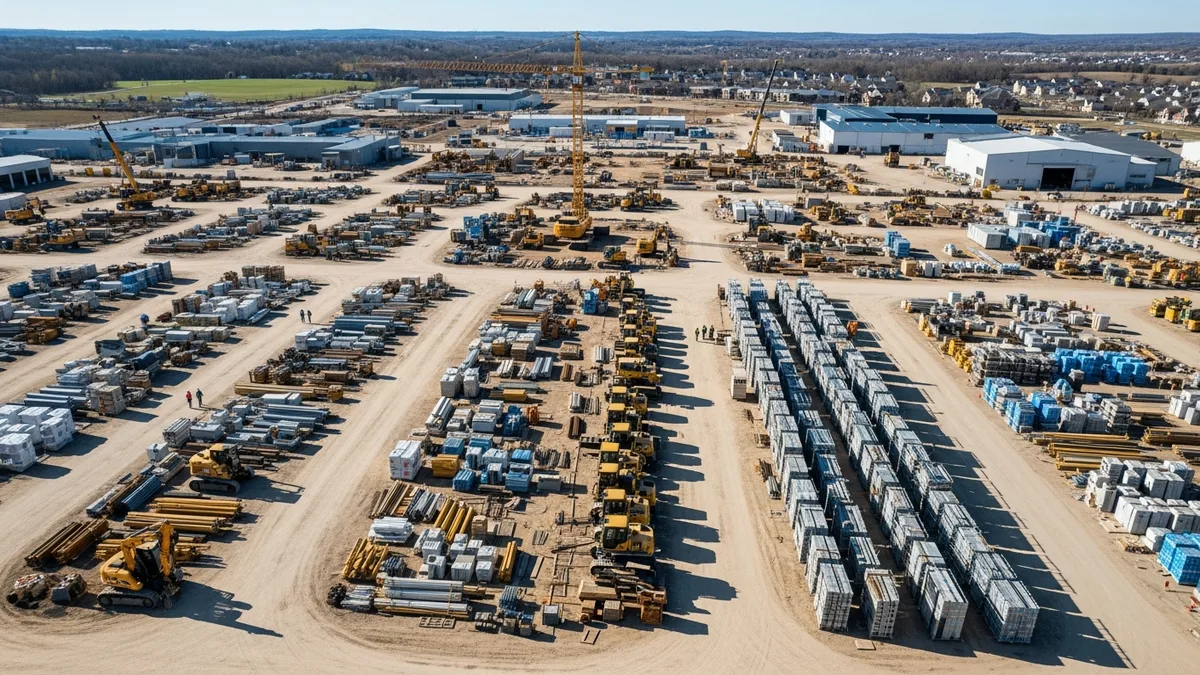
If you have been in construction long enough, you have seen what happens when a site gets hit with a stormwater violation. Work stops. Inspectors show up. Fines start piling up. And suddenly everyone is scrambling to install controls that should have been in place from day one.
Stormwater management is one of those things that’s easy to push to the back burner when you are focused on getting the building out of the ground. There is always something more urgent: the concrete pour is tomorrow, the framing crew needs material, the owner is asking about the schedule. Erosion control doesn’t feel urgent until it becomes an emergency.
But here is the thing: stormwater compliance is not optional, and the penalties for getting it wrong are severe. The EPA can issue fines of up to $64,618 per violation per day under the Clean Water Act. State and local agencies can stack their own penalties on top of that. A single rain event on an unprotected site can trigger violations that cost more than the profit margin on the entire project.
This guide covers what every contractor needs to know about construction stormwater management: the regulations, the planning process, the controls that actually work, and the documentation practices that keep you protected when an inspector comes knocking.
Understanding Stormwater Regulations and Permit Requirements
The federal regulatory framework for construction stormwater starts with the Clean Water Act and the National Pollutant Discharge Elimination System (NPDES) program. The EPA’s Construction General Permit (CGP) covers most construction activity nationwide, though many states have their own permits that are equal to or stricter than the federal version.
The basic trigger is land disturbance. If your project disturbs one acre or more, you need an NPDES permit. That threshold also applies to projects under an acre if they are part of a larger common plan of development. So a half-acre lot in a 20-lot subdivision? That needs a permit because the overall development exceeds one acre.
Getting permitted typically involves filing a Notice of Intent (NOI) before construction begins. The NOI tells the regulatory agency who you are, where the project is, what you are building, and where your stormwater will discharge. In most states, you cannot legally break ground until the NOI is filed and acknowledged.
Your permit will require a Stormwater Pollution Prevention Plan, commonly called a SWPPP. Think of the SWPPP as your playbook for keeping dirty water off neighboring properties and out of waterways. It identifies the pollutant sources on your site, describes the controls you will install, lays out your inspection schedule, and names the people responsible for implementation.
One thing contractors often miss: the SWPPP is a living document. It is not something you write once and file away. Every time site conditions change, your grading plan shifts, or you add new phases, the SWPPP needs to be updated to reflect reality. Inspectors will compare what is written in the plan to what is actually happening on the ground. If those two things don’t match, you have a violation.
State permits can add layers on top of the federal requirements. Some states require certified inspectors, mandatory training for site personnel, or strengthened controls near sensitive waters. Before you start any project, check your state environmental agency’s website for the specific permit conditions that apply.
Developing a Stormwater Pollution Prevention Plan
A solid SWPPP is the foundation of everything else. Without it, your stormwater controls are just random measures with no coordination or accountability. With it, every person on site knows what needs to happen, when, and who is responsible.
The plan starts with a site assessment. Before you draw a single control on the plan, you need to understand the existing conditions. What is the topography? Where does water naturally flow? What are the soil types? Are there streams, wetlands, storm drains, or other receiving waters nearby? What is the drainage area contributing runoff to your site from uphill properties?
Next comes the site map. Your SWPPP needs a detailed plan showing the limits of disturbance, the location of every erosion and sediment control measure, material staging areas, concrete washout locations, construction entrances, and stabilized areas. This map is what your field crews will reference daily, so it needs to be clear enough that anyone can pick it up and understand what goes where.
Contractors across the country trust Projul to run their businesses. Read their reviews.
The plan should address three phases of the project: initial land disturbance and grading, active construction, and final stabilization. Each phase has different erosion risks and requires different controls. During mass grading, you are dealing with large exposed areas and heavy sediment loads. During vertical construction, the risks shift toward chemical pollutants like concrete washout, paint, and fuel. During final stabilization, the focus is on getting permanent vegetation or other ground cover established.
Your SWPPP also needs to identify who is responsible for what. Name the specific individuals who will conduct inspections, maintain controls, and update the plan. Generic titles like “site superintendent” are not enough if you have multiple supers rotating through the project. Use actual names and keep them current.
Using daily logs to track SWPPP-related activities is one of the simplest ways to maintain a running record of compliance. Every time someone installs a control, repairs a silt fence, or cleans out a sediment trap, it should be logged with the date, the person responsible, and a description of what was done.
Best Management Practices That Actually Work
Best Management Practices, or BMPs, are the physical and operational controls that prevent polluted stormwater from leaving your site. There are dozens of BMPs available, but the ones that matter most on a typical construction site fall into a few categories: erosion controls, sediment controls, and good housekeeping.
Erosion controls prevent soil from detaching in the first place. These are always more effective than trying to catch sediment after it is already moving. Key erosion controls include:
- Temporary seeding and mulching. Any disturbed area that will sit inactive for 14 days or more should be stabilized with temporary seed, hydromulch, or erosion control blankets. This is one of the most effective and cheapest controls available, yet it is constantly neglected on active jobsites.
- Slope protection. Steep slopes need extra attention. Rolled erosion control products, turf reinforcement mats, or temporary slope drains can prevent rills and gullies from forming during rain events.
- Soil stockpile management. Stockpiles should be located away from drainage paths and surrounded by perimeter controls. Cover them with plastic sheeting or temporary seed if they will sit for more than a couple of weeks.
Sediment controls capture soil particles after they start moving. These are your backup when erosion controls alone are not enough:
- Silt fence. The most common sediment control on construction sites. When installed correctly with the fabric trenched into the ground and supported by stakes on the downslope side, silt fence is effective for sheet flow across relatively flat areas. It is not designed for concentrated flow or steep channels.
- Sediment basins and traps. For larger disturbed areas, sediment basins collect runoff and allow particles to settle out before the water discharges. Size these correctly based on the contributing drainage area. An undersized basin is almost worse than no basin because it creates a false sense of compliance.
- Inlet protection. Every storm drain inlet on or adjacent to your site needs protection. Filter fabric, gravel bags, or manufactured inlet protection devices prevent sediment from entering the storm sewer system.
- Construction entrance stabilization. A stabilized construction entrance made of crushed stone prevents trucks from tracking mud onto public roads. This is both a stormwater requirement and a public safety issue. Supplement it with a wheel wash station on sites with heavy truck traffic.
Good housekeeping covers everything else: concrete washout areas lined with plastic and bermed to contain slurry, covered dumpsters, proper fuel storage with secondary containment, paint and solvent management, and keeping a clean, organized site overall.
Documenting your BMPs with timestamped photos creates a visual record that proves your controls were installed and maintained. When an inspector asks to see evidence of maintenance, a photo log with dates and locations is far more convincing than verbal assurances.
Inspection and Monitoring Requirements
Installing BMPs is only half the equation. The other half is inspecting and maintaining them on a regular schedule. This is where many contractors fall short, and it is one of the most common reasons for enforcement actions.
Under the federal CGP, you must inspect your site and all stormwater controls at least once every seven calendar days. Alternatively, you can inspect twice within every 14-day period as long as there are at least seven days between inspections. On top of that, you need a post-storm inspection within 24 hours of any rainfall event that produces a quarter inch or more of precipitation.
Each inspection needs to cover specific items: the condition of every BMP on site, any evidence of sediment leaving the site, all discharge points, material storage areas, and any areas where new controls may be needed. You are not just walking around and checking boxes. You are evaluating whether your controls are working and identifying what needs to be fixed.
Inspection reports must be documented and kept with the SWPPP. At minimum, each report should include the date and time of the inspection, the name of the inspector, weather conditions, a description of each BMP’s condition, any corrective actions needed, and the date those corrections were completed.
This is where scheduling tools become valuable. Setting up recurring inspection reminders ensures that inspections happen on time, every time, regardless of how busy the project gets. A missed inspection is a violation, period. It does not matter that you were swamped with a concrete pour or dealing with a subcontractor issue. The permit does not have an exception for being busy.
Corrective actions identified during inspections must be initiated before the next rain event or within seven calendar days, whichever comes first. If a silt fence is torn, fix it now. If a sediment basin needs to be cleaned out, get it scheduled immediately. Documenting the repair is just as important as making it. Record what was wrong, what you did to fix it, and when the repair was completed.
For sites near sensitive waters like streams, rivers, wetlands, or drinking water sources, your permit may require additional monitoring such as turbidity sampling of discharge water. Exceeding turbidity limits can trigger immediate enforcement action, so take these requirements seriously and have a plan for what to do if sampling results come back high.
Documentation and Record-Keeping Strategies
Documentation is what separates a contractor who is compliant from a contractor who is lucky. When an inspector shows up or when a citizen complaint triggers an investigation, your documentation is your defense. If it is not written down, it did not happen.
Your record-keeping system should capture several categories of information:
SWPPP and all amendments. Keep the current version on site at all times, along with every previous version. Inspectors want to see how the plan evolved as the project progressed. Date and initial every amendment.
Inspection reports. Every inspection, whether routine or post-storm, needs a completed report filed with the SWPPP. Include photos, weather data, and notes about every BMP on site. A report that says “all BMPs in good condition” with no details will not hold up if someone challenges your compliance.
Corrective action logs. When an inspection identifies a problem, document the issue, the planned fix, the completion date, and a follow-up confirmation that the repair was made. This creates a clear chain of accountability.
Training records. Many permits require that site personnel receive stormwater awareness training. Keep sign-in sheets with dates, attendee names, and a summary of what was covered. If a new subcontractor joins the project mid-stream, they need to be trained and that training needs to be documented before they start disturbing soil.
Rainfall data. Track precipitation on your site daily. This can be as simple as a rain gauge at the job trailer and a daily entry in your project log. Rainfall data helps you determine when post-storm inspections are required and provides context for your inspection findings.
Going digital with your documentation makes a significant difference. Paper-based systems get lost, damaged by weather, and are difficult to search through when you need a specific record. Using a platform that ties photos and documents to specific dates and log entries gives you an organized, searchable compliance record. When an auditor asks to see your inspection report from October 14th, you want to pull it up in seconds, not dig through a soggy binder in the job trailer.
If you are curious about how other aspects of jobsite protection tie into your overall compliance strategy, our guide on construction site security covers the physical security side of protecting your project.
Common Mistakes and How to Avoid Them
After years of watching contractors deal with stormwater issues, certain patterns show up again and again. Avoiding these common mistakes will keep you out of trouble on the vast majority of projects.
Mistake #1: Treating the SWPPP as a paperwork exercise. Too many contractors pay an engineer to write the SWPPP, stuff it in the job trailer, and never look at it again. The plan only works if your field crews know what is in it and follow it daily. Hold a SWPPP kickoff meeting at the start of every project and review the plan with every foreman and subcontractor who will be disturbing soil.
Mistake #2: Installing controls after grading instead of before. The permit requires erosion and sediment controls to be in place before land disturbance begins. Waiting to install silt fence until after you have already stripped and graded the site defeats the purpose. Get your perimeter controls installed during mobilization, before the first dozer pushes dirt.
Mistake #3: Ignoring maintenance. A silt fence that is been undercut by water, a sediment basin that is full of soil, or a construction entrance that is been pounded flat offers almost no protection. BMPs need regular maintenance to function. Build BMP maintenance into your weekly routine just like equipment maintenance.
Mistake #4: Failing to stabilize completed areas. Once you finish grading an area of the site, get seed or sod down as soon as possible. Every day that soil sits exposed is another day it can wash off site. Final stabilization is the single most important step in ending your permit obligations, and the faster you stabilize, the sooner you can file your Notice of Termination and close out the permit.
Mistake #5: Not budgeting for stormwater. Stormwater management costs money. Silt fence, sediment basins, temporary seed, inspection labor, and BMP maintenance are all real costs that need to be in your estimate. Contractors who do not include stormwater as a line item in their bids end up cutting corners when the budget gets tight. Check out Projul’s pricing plans to see how project management tools can help you track these costs against your budget throughout the project.
Mistake #6: Poor communication with subcontractors. Your subs need to know the stormwater rules on your site. If a concrete sub washes out their chute into the storm drain or a grading sub cuts through your silt fence, you are the one who gets the violation. Make stormwater expectations part of every subcontract and every pre-construction meeting.
Stormwater management is not glamorous work. Nobody got into construction because they love silt fence. But it is a fundamental part of running a compliant, professional operation. The contractors who build stormwater into their standard workflow, who document everything, and who take inspections seriously are the ones who never have to worry about surprise enforcement actions.
Book a quick demo to see how Projul handles this for real contractors.
Get the plan right. Install the controls early. Inspect and maintain them consistently. Document everything. That is the entire formula. It is not complicated, but it requires discipline and follow-through on every single project.
Frequently Asked Questions
When is a stormwater permit required for construction?
What is a SWPPP and who is responsible for it?
How often do stormwater inspections need to happen on a construction site?
What are the most common stormwater violations on construction sites?
Can construction management software help with stormwater compliance?
Related Articles

OSHA Compliance for Contractors: What You Need to Know in 2026
OSHA fines hit record highs heading into 2026, and new rules are changing how contractors handle everything from heat...
Read More →
Construction Safety Meeting Topics: 20 Toolbox Talk Ideas for 2026
Running out of toolbox talk ideas? These 20 construction safety meeting topics cover everything from fall protection...
Read More →
Construction Site Safety Inspections: Complete Checklist and Process
A practical safety inspection checklist and process that actually prevents accidents instead of just checking boxes.
Read More →