
Design-Build vs Design-Bid-Build: Which Delivery Method Is Right for Your Project | Projul
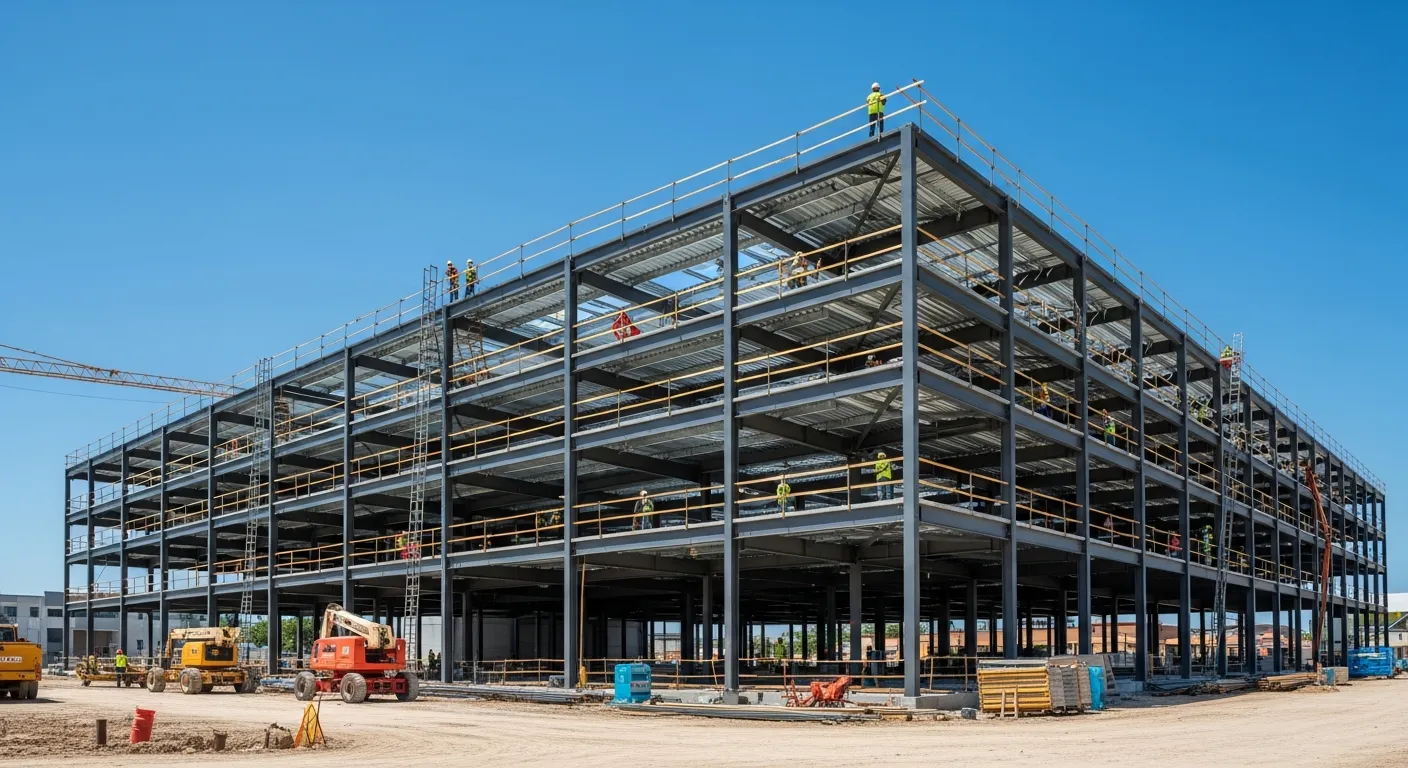
Design-build and design-bid-build are the two most common ways to deliver a construction project. And if you’re a contractor, the delivery method your client chooses affects everything about how you run that job: who you report to, how changes get handled, when you start building, and how you get paid.
Picking the wrong delivery method doesn’t just cause headaches. It causes lawsuits, blown budgets, and projects that drag on six months past their deadlines.
Whether you’re a GC pitching a project approach to an owner, or a specialty contractor figuring out where you fit, you need to understand both methods inside and out. Not just the textbook definitions, but how they actually play out on real jobsites.
What Is Design-Build?
Design-build is a project delivery method where one entity handles both the design and the construction. The owner signs a single contract with a design-build firm (or a contractor who brings an architect in-house or as a partner), and that firm takes responsibility for everything from initial concepts through final closeout.
Think of it this way: the owner has one throat to choke. If something goes wrong with the design, the construction, or the coordination between the two, there’s one team accountable.
How it works in practice:
The owner describes what they want. The design-build team works collaboratively to develop the design while simultaneously planning the construction. Design and construction phases overlap, which is why design-build projects typically finish faster. The architect and the builder are on the same team from day one, solving problems together instead of pointing fingers at each other.
Why contractors like it:
You get involved early. You can flag constructability issues before they end up on a set of drawings that nobody can actually build affordably. You influence material selections, phasing, and sequencing while there’s still time to make changes without expensive redesigns.
You also control the schedule. Since you’re not waiting for a complete set of bid documents before you start, you can begin site work and procurement while design details are still being finalized. On a 12-month project, this overlap can save two to three months easily.
Why owners like it:
One contract. One point of contact. One team that can’t blame the “other side” when problems come up. Owners who’ve been burned by finger-pointing between architects and contractors often switch to design-build and never go back.
Cost certainty comes earlier, too. Because the contractor is at the table during design, they can provide real-time cost feedback. That HVAC system the architect spec’d? The contractor can say “that’ll add $200K to your budget” before it’s locked into the drawings, not after.
What Is Design-Bid-Build?
Design-bid-build is the traditional approach. The owner hires an architect (or engineer) to create a complete set of construction documents. Once those documents are finished, the project goes out to bid. Contractors compete for the job based on those plans, and the owner picks a winner, usually the lowest qualified bidder.
Three distinct phases. Three separate relationships. The designer works for the owner. The contractor works for the owner. And the designer and the contractor? They work next to each other, but not exactly together.
How it works in practice:
Phase one: the owner hires a design team. The architect develops schematic designs, gets owner approval, then produces detailed construction documents. This takes months, sometimes a year or more for complex projects.
Phase two: the completed plans go out to bid. GCs review the documents, solicit sub pricing, and submit their bids. The owner evaluates, negotiates, and awards the contract.
Phase three: construction. The GC builds what’s on the plans. The architect provides oversight through construction administration, reviewing submittals and visiting the site periodically.
Why some contractors prefer it:
The scope is clearly defined before you price it. You know exactly what you’re building (in theory), and your bid is based on a complete set of documents. There’s less ambiguity about what’s included and what’s not.
For subcontractors especially, the competitive bid process can be straightforward. You price the plans, you win or you don’t. No months of pre-construction work with no guarantee of getting the job.
Why owners choose it:
Competition drives pricing down. When five qualified GCs bid the same set of plans, the owner gets market pricing. For public agencies that are legally required to award to the lowest responsible bidder, design-bid-build is often the default (and sometimes the only legal option).
The owner also gets independent design advice. The architect works for the owner, not the contractor. In theory, this means the design is improved for the owner’s interests without being influenced by what’s easiest or cheapest to build.
Head-to-Head Comparison
Let’s break down how these two methods actually compare across the things that matter most.
Timeline
Design-build wins. It’s not close. Because design and construction phases overlap, design-build projects are typically 30-40% faster from concept to completion. A University of Colorado study found that design-build projects were delivered 102% faster than design-bid-build.
With design-bid-build, nothing happens on site until the design is 100% complete and the bidding process wraps up. That sequential approach adds months to the overall schedule.
If your client needs the building open by a certain date, design-build gives you the best shot at hitting it.
Cost Control
Don’t just take our word for it. See what contractors say about Projul.
This one is more nuanced than people think.
Design-bid-build gives you competitive pricing at the bid stage. Multiple contractors pricing the same plans creates real market competition. But here’s the catch: those bid prices are only as good as the documents they’re based on. Incomplete or ambiguous drawings lead to change orders. Lots of them. And change orders during construction are the most expensive way to make decisions.
Design-build gives you earlier cost certainty. The contractor provides budget input during design, which means fewer surprises later. But the owner doesn’t get the benefit of multiple contractors competing on price for the same scope.
Research from the Construction Industry Institute shows design-build projects average 6% less cost growth than design-bid-build. Not because the initial price is always lower, but because there are fewer change orders and rework costs.
Quality
Both methods can produce excellent results. The difference is how quality gets managed.
In design-bid-build, the architect acts as an independent quality watchdog during construction. They review submittals, observe the work, and flag deficiencies. The contractor builds to spec, and the architect verifies.
In design-build, quality depends on the design-build team’s internal standards and the owner’s involvement. There’s no independent third party checking the work. Smart owners hire an independent commissioning agent or construction manager to fill that gap.
The practical difference? Design-build teams tend to catch and resolve quality issues earlier because the designer and builder communicate constantly. Design-bid-build relies on formal processes (RFIs, submittals, field observations) that can be slower but create a clear paper trail.
Risk Allocation
Design-build shifts more risk to the design-builder. The single entity is responsible for both design adequacy and construction performance. If the design has errors, the design-build firm eats the cost of fixing them. The owner’s risk is significantly lower.
Design-bid-build splits risk. The architect is responsible for design accuracy. The contractor is responsible for building per the plans. But when something falls between those two responsibilities? That’s where disputes happen. “The plans were wrong.” “No, you misread the plans.” Sound familiar?
The split responsibility in design-bid-build creates a gray area that feeds an entire industry of construction attorneys. Design-build eliminates most of that gray area.
Owner Involvement
Design-bid-build requires more owner involvement throughout the process. The owner manages the relationship between architect and contractor, makes decisions when conflicts arise, and processes change orders. For owners with experienced project managers on staff, this is manageable.
Design-build requires less day-to-day involvement but demands more trust. The owner delegates significant control to the design-build team. If the owner doesn’t have a clear vision upfront or changes their mind frequently, design-build can go sideways fast.
The best design-build projects have owners who know what they want, communicate it clearly, and let the team execute. The worst ones have owners who hire a design-build firm and then try to micromanage every decision.
When Design-Build Makes More Sense
Design-build isn’t automatically better. But there are situations where it’s clearly the right call.
Tight timelines. If you need the project done fast, overlapping design and construction is the single biggest schedule advantage you can create. Retail tenants with lease deadlines, manufacturers expanding capacity, healthcare systems adding beds during a surge. Time-driven projects belong in design-build.
The owner wants simplicity. Some owners, especially those who don’t build often, don’t want to manage an architect and a contractor separately. They want one team, one contract, and one phone number to call. Design-build gives them that.
Complex or specialized projects. Projects with significant MEP coordination, unusual structural requirements, or specialty systems benefit from having the builder involved during design. A contractor who builds data centers every day will catch design issues that a general-practice architect might miss.
Budget needs to be locked early. When financing requires a guaranteed maximum price before design is complete, design-build accommodates that through phased GMP negotiations. The contractor can price the project progressively as design develops, giving the owner cost commitments along the way.
The owner-contractor relationship is strong. Design-build works best when there’s trust. If you’ve built three buildings for this owner and delivered every time, design-build lets you bring even more value. If it’s a first-time relationship with no track record, the owner might feel more comfortable with the checks and balances of design-bid-build.
When Design-Bid-Build Is the Better Choice
Design-bid-build has survived for decades because it genuinely works well in certain situations.
Public projects with statutory requirements. Many state and local governments require competitive bidding by law. Design-bid-build satisfies those legal requirements clearly and transparently. Some jurisdictions have adopted statutes allowing design-build for public work, but it’s still not universal.
Budget is the primary driver and competition is essential. When the owner’s top priority is getting the absolute lowest construction price, putting a complete set of plans out to bid gets them there. The transparency of the competitive bid process also protects the owner (and their board, investors, or taxpayers) from overpaying.
The owner has strong in-house project management. Organizations with dedicated construction departments, like universities, hospital systems, or large corporations, often have the staff to manage the architect-contractor dynamic effectively. They know how to run a bid process, evaluate contractors, and administer construction contracts.
The project scope is well-defined and unlikely to change. If you’re building a standard warehouse, a shell retail building, or a straightforward renovation with clear scope, design-bid-build works fine. The design can be completed without contractor input because there’s nothing unusual about the construction.
The owner wants independent design advocacy. Some owners genuinely value having an architect who works exclusively for them, with no financial ties to the contractor. In design-bid-build, the architect’s loyalty is unambiguously to the owner. That independence matters for owners who prioritize design quality or have had bad experiences with cost-cutting in design-build.
How Each Method Affects Your Software Needs
Here’s something most contractors don’t think about until they’re knee-deep in a project: the delivery method changes how you need to manage information.
Design-build projects demand more from your pre-construction tools. You’re estimating and re-estimating as the design evolves. Your estimating and change order tools need to handle iterative budgets, not just a single bid number. You’re tracking design changes, owner decisions, and cost impacts in real time.
Scheduling is different, too. Design-build schedules have to account for design milestones and construction activities simultaneously. Your scheduling software needs to show design deadlines alongside procurement and construction tasks so nothing falls through the cracks.
Design-bid-build projects put more pressure on bid-day accuracy and contract administration. Your estimate needs to be right the first time because you’re competing against other contractors who are pricing the same plans. After award, you’re tracking RFIs, submittals, and change orders through formal channels. Your project management platform needs to document everything because that paper trail protects you when disputes arise.
Both methods require solid communication tools. But design-build favors collaboration (shared dashboards, real-time updates, integrated teams), while design-bid-build favors documentation (formal correspondence, logged requests, auditable records).
The takeaway? Your software should support both workflows. If you only do design-build, you might get away with lighter documentation. If you do both, you need a platform flexible enough to handle collaborative pre-construction and formal contract administration.
Not sure what you need? Check out Projul’s pricing to see how one platform covers both workflows without charging you per user.
Choosing the Right Method for Your Next Project
There’s no universally “better” delivery method. Anyone who tells you otherwise is selling something.
The right choice depends on the specific project, the owner’s experience level, the legal requirements, the timeline pressure, and the risk tolerance of everyone involved.
As a contractor, the most valuable thing you can do is understand both methods well enough to advise your clients honestly. Sometimes that means recommending design-build because it genuinely serves the project. Sometimes it means telling an owner that design-bid-build gives them the transparency and competition they need.
The contractors who win the best projects are the ones who can operate effectively under either delivery method. They have the project management systems to handle formal documentation when needed, and the collaborative skills to work alongside designers in an integrated team.
If you’re working across both residential and commercial construction, understanding delivery methods becomes even more important. Residential work is almost always some variation of design-build (the homeowner hires one company to handle everything). Commercial work can go either way, and your ability to advise on that choice sets you apart.
Book a quick demo to see how Projul handles this for real contractors.
Frequently Asked Questions
What is the main difference between design-build and design-bid-build?
The main difference is how many contracts the owner manages. In design-build, the owner signs one contract with a single firm that handles both design and construction. In design-bid-build, the owner signs separate contracts with an architect and a contractor. This single vs. split responsibility affects timeline, cost, risk, and communication throughout the project.
Is design-build cheaper than design-bid-build?
Not necessarily at the bid stage. Design-bid-build often produces a lower initial bid because of competitive pricing. But design-build projects tend to have fewer change orders and less rework, which means the final cost is often lower. Research shows design-build averages about 6% less cost growth over the life of a project. The total cost depends on the project complexity, the team’s experience, and how well the scope is defined upfront.
Why do public projects usually use design-bid-build?
Most public agencies are required by law to award construction contracts through competitive bidding to protect taxpayer money. Design-bid-build satisfies those legal requirements with a transparent, auditable process. Some states have passed legislation allowing design-build for public projects, but it typically requires special authorization or qualification-based selection processes that add complexity.
Can a subcontractor work under both delivery methods?
Yes. Subcontractors work under either method, though the experience is different. In design-bid-build, you price a defined scope from complete drawings and submit to GCs who are bidding the project. In design-build, you might get involved earlier during pre-construction to help with budgeting and constructability reviews. Your contract is still with the GC in both cases, but design-build often means more collaboration and more scope evolution during the project.
How do I decide which delivery method to recommend to a client?
Start with four questions: How fast does the project need to be finished? How well-defined is the scope? Does the owner have experience managing construction projects? Are there legal or regulatory requirements that dictate the process? If the timeline is tight and the owner wants simplicity, point them toward design-build. If they need competitive pricing transparency and have the staff to manage multiple contracts, design-bid-build is probably the right fit. The best advice is honest advice based on the project’s actual needs, not which method is more profitable for you.
Frequently Asked Questions
What's the main difference between design-build and design-bid-build?
Which delivery method is faster for construction projects?
Is design-build more expensive than design-bid-build?
When should a contractor recommend design-bid-build over design-build?
Can a small contractor do design-build projects?
Related Articles
Construction Pile Driving and Deep Foundation Methods Guide
A contractor's guide to pile driving and deep foundation methods. Covers driven piles, drilled shafts, auger cast...
Read More →
Construction Document Management: Stop Losing Plans, Contracts, and Change Orders
Losing documents on a construction project costs more than you think. Missed change orders, unsigned contracts sitting...
Read More →
The Ultimate Guide to Construction Management Software
Modern construction businesses deal with a lot of challenges. Managing projects, coordinating teams, and making sure...
Read More →