
Tenant Improvement (TI) Construction: A Contractor's Guide to Commercial Buildouts | Projul
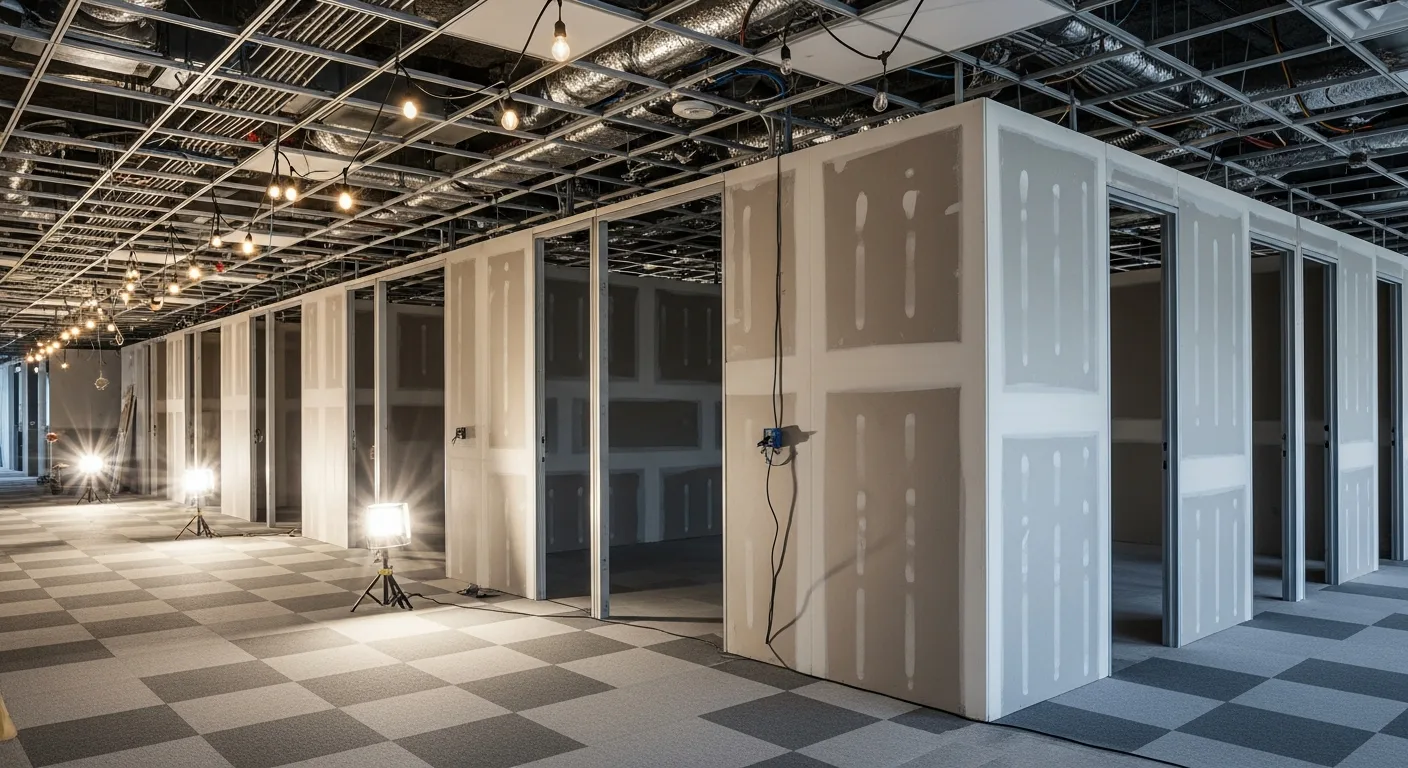
Tenant improvement work is one of the steadiest segments in commercial construction. Businesses lease space, and that space needs to be built out to fit their operations. It happens constantly, in every market, regardless of whether new construction is booming or slow.
But TI work has its own set of rules that are different from ground-up construction or even other types of renovation. You are working inside someone else’s building, on someone else’s schedule, with someone else’s money (at least partially), and often while the rest of the building is occupied and operating.
If you are already doing TI work, this guide will help you tighten your processes. If you are thinking about getting into it, this will tell you what to expect.
Understanding TI Allowances
The TI allowance is the financial foundation of most tenant improvement projects, and misunderstanding it is the source of more contractor-client disputes than almost anything else.
How TI Allowances Work
When a tenant signs a commercial lease, the landlord typically agrees to contribute a set dollar amount toward building out the space. This is the TI allowance, and it is usually expressed as a dollar amount per rentable square foot.
For example:
- A $40/SF allowance on a 2,500 SF space = $100,000
- A $75/SF allowance on a 5,000 SF space = $375,000
The allowance is negotiated as part of the lease and varies based on the market, the building class, the lease term, and how badly the landlord wants the tenant.
What the Allowance Covers (and What It Does Not)
This is where confusion starts. The lease defines what the TI allowance covers, and it varies. Some leases are broad: the allowance covers any construction cost. Others are restrictive: the allowance covers only permanent improvements (not furniture, fixtures, equipment, or signage).
Common exclusions from TI allowances:
- Furniture and movable equipment
- IT infrastructure (cabling, server rooms)
- Signage (interior and exterior)
- Security systems
- Specialty equipment (medical, dental, restaurant)
- Design fees (sometimes)
As the contractor, you need to read the lease (or at least the TI section) so you can help the tenant understand what their allowance will actually pay for. Tenants are often surprised to learn that their $150,000 allowance does not cover the $30,000 worth of data cabling they need.
Over-Allowance Costs
When the buildout costs more than the TI allowance, the tenant pays the difference out of pocket. These over-allowance costs need to be clearly communicated before construction begins. Nothing damages a client relationship faster than surprising them with a $50,000 bill they did not expect.
Best practice: present the estimate in two columns. Column one shows costs covered by the TI allowance. Column two shows over-allowance costs the tenant will pay directly. Get written approval before proceeding.
The Players: Landlord, Tenant, Property Manager, and You
TI projects have more stakeholders than most contractors are used to, and each one has different priorities.
The Tenant (Your Client)
The tenant wants their space built quickly, within budget, and with minimal disruption to their business. They may or may not have construction experience, and they are often overwhelmed by decisions they did not expect to make (outlet locations, finish selections, lighting layouts).
The Landlord
The landlord owns the building and has a financial interest in the quality of the buildout. They want to protect the building’s value, ensure code compliance, and make sure the construction does not disturb other tenants. Depending on the lease, the landlord may have approval rights over plans, materials, and even the contractor selection.
The Property Manager
The property manager runs the building day to day. They control access, loading docks, elevators, utility shutdowns, and communication with other tenants. You will work with the property manager more than anyone else on the landlord’s side. Build that relationship early and maintain it.
The Architect or Space Planner
Most TI projects involve a designer who creates the space plan and construction documents. On smaller projects, this might be a space planner who produces basic layouts. On larger projects, a full architectural and engineering team creates detailed plans.
You (The Contractor)
You are the one who has to keep all of these people aligned while actually building the space. That means managing expectations, communicating proactively, and solving problems before they become disputes.
Landlord Coordination
Working in someone else’s building means following their rules. Every building has different requirements, and learning them at the start of the project saves you headaches later.
Building Rules and Regulations
Most commercial buildings have a set of construction rules and regulations. Get a copy from the property manager before you start. Common requirements include:
- Working hours: Many buildings restrict construction to evenings, nights, and weekends to avoid disturbing other tenants. This affects your labor costs and schedule.
- Access: You may be required to use specific entrances, elevators, and loading docks. Some buildings limit the size of materials that can be moved through common areas.
- Noise and dust: Expect restrictions on demolition hours, requirements for dust barriers, and limits on loud work during business hours.
- Hot work permits: Welding, cutting, and soldering typically require hot work permits and fire watch procedures.
- Insurance requirements: The landlord will likely require you to carry specific insurance coverages and name them as an additional insured.
- Utility shutdowns: Turning off water, power, or HVAC affecting other tenants requires advance notice and property manager approval. These often need to happen outside business hours.
Plan Approval
Many landlords require approval of construction plans before you can start. This is separate from the building permit. The landlord reviews the plans to ensure the work meets their standards and does not negatively affect building systems or other tenants.
Build this approval step into your schedule. It can take anywhere from a few days to several weeks, depending on the landlord and the complexity of the project.
Base Building Systems
Understand what base building systems exist and how your buildout connects to them. HVAC, electrical, plumbing, and fire suppression systems in commercial buildings are often more complex than what you encounter in residential work. You may need to coordinate with the landlord’s preferred mechanical or electrical contractor for connections to base building systems.
After-Hours Work
A large percentage of TI work happens outside normal business hours. If the building is occupied, noisy or disruptive work may be restricted to evenings, nights, or weekends. This is just part of TI construction, but it changes your cost structure and management approach.
Cost Implications
After-hours work typically costs 1.25x to 1.5x more than daytime work due to overtime rates, shift differentials, and reduced productivity. Some subcontractors charge flat premiums for after-hours work. Factor these costs into your estimate from the beginning, not as a surprise later.
Management Challenges
After-hours work creates supervision challenges. Your project manager and superintendent are not always available at 10 PM. You need reliable foremen, clear daily plans, and a communication system that works when the office is closed.
Other considerations:
- Building HVAC may not run during off-hours, making the space hot or cold
- Elevator access may be limited or require a separate request
- Security procedures may be different (key cards, sign-in sheets, escort requirements)
- Material deliveries need to be coordinated with building loading dock hours
Phased Occupancy
Some tenants cannot wait for the entire space to be finished before moving in. They need to start operating in part of the space while you finish the rest. This is called phased occupancy, and it adds complexity to every aspect of the project.
How Phased Occupancy Works
The space is divided into phases, each with its own completion date. The tenant occupies Phase 1 while you build out Phase 2, and so on. Each phase needs to be fully functional with temporary or permanent connections to building systems.
Challenges for the Contractor
- Dust and noise barriers: You need physical separation between the occupied area and the construction zone. This typically means full-height temporary walls with sealed edges, negative air pressure in the construction zone, and restricted hours for noisy work near occupied areas.
- Safety: The tenant’s employees are next door. OSHA requirements still apply, and you need to prevent unauthorized access to the construction zone.
- Temporary systems: The occupied phase needs functional HVAC, lighting, fire protection, and data. You may need temporary connections that will be replaced with permanent ones later.
- Coordination overhead: You are essentially managing two projects: the occupied space and the construction zone. This takes more supervision, more communication, and more planning.
Pricing Phased Occupancy
Phased construction always costs more than building the entire space at once. The temporary barriers, reduced efficiency, after-hours work requirements, and additional supervision add up. Make sure the tenant and landlord understand this before committing to a phased approach.
Fast-Track Schedules
TI projects are almost always time-sensitive. The tenant is paying rent on a space they cannot use until construction is complete, so every day of construction costs them money. This creates constant pressure to compress the schedule.
What Fast-Tracking Means in TI
Fast-tracking in TI typically means:
- Starting demolition before design is 100% complete
- Ordering long-lead materials before plans are finalized
- Overlapping trades that would normally work sequentially
- Performing rough-in inspections in phases rather than all at once
Making Fast-Track Work
- Prioritize design decisions. Identify which design elements have the longest lead times and get those decisions made first. Do not let the client’s inability to choose a countertop hold up the plumbing rough-in.
- Pre-order known quantities. Even before the design is final, some materials are known: standard drywall, electrical panels, HVAC equipment. Order early to avoid delays.
- Communicate the risks. Fast-tracking involves trade-offs. Changes are harder and more expensive once work is underway. Make sure the tenant understands that a fast schedule requires fast decisions on their end.
- Have a change process ready. Fast-track projects generate more changes because design and construction overlap. Your change order process needs to be quick and clear so changes do not stall the project.
Types of TI Projects
Not all tenant improvements are the same. The scope, complexity, and cost vary dramatically based on the tenant’s business.
Office Buildouts
The bread and butter of TI work. Standard office buildouts include partition walls, doors, ceiling grid, lighting, electrical and data outlets, HVAC modifications, and finishes. Complexity ranges from open-plan offices (relatively simple) to law firms and financial offices (higher finish standards, more private offices, conference rooms with AV systems).
Medical and Dental
Medical buildouts are among the most complex TI projects. They require specialized plumbing (gas lines, vacuum systems, compressed air), lead-lined walls for X-ray rooms, specific ventilation requirements, and compliance with health department regulations. Plan for longer timelines and higher costs per square foot.
Restaurant and Food Service
Restaurant buildouts involve commercial kitchen equipment, grease traps, exhaust hoods with fire suppression, specialized plumbing, walk-in coolers, and health department inspections. The mechanical and plumbing scope alone can exceed the cost of a standard office buildout.
Retail
Retail buildouts vary from simple (paint, flooring, and fixtures) to complex (custom millwork, specialty lighting, high-end finishes). Timeline pressure is often extreme because the tenant wants to open for business as soon as possible.
Laboratory and Clean Room
Specialized environments with strict requirements for air quality, pressure differentials, chemical resistance, and safety systems. These projects require specialized subcontractors and extensive commissioning.
Estimating TI Projects
TI estimating requires a slightly different approach than other types of construction.
Assess Existing Conditions
Before you can price a buildout, you need to understand what you are starting with. Is it a warm shell with basic systems in place, or a cold shell with nothing? Is it a second-generation space with existing improvements that need demolition? Are there hazardous materials (asbestos, lead paint) that need abatement?
Always conduct a thorough site visit before estimating. What the plans show and what actually exists are often different, especially in older buildings.
Account for Building-Specific Costs
Every building has costs that are specific to that property:
- After-hours work premiums
- Loading dock and elevator fees
- Required use of building-specific contractors (some landlords require their own mechanical contractor for base building connections)
- Insurance requirements above your standard coverage
- Permits and inspections fees specific to the jurisdiction
Include Soft Costs
TI projects have soft costs that new contractors often miss:
- Permit fees
- Plan review fees
- Architectural and engineering fees (if you are managing the design team)
- Building department plan check corrections
- Project management and supervision time
Build in Contingency
TI projects, especially in older buildings and second-generation spaces, are full of surprises behind the walls and above the ceiling. A 10% contingency is standard for TI work. For older buildings or spaces with unknown conditions, go higher.
Managing TI Projects Successfully
Communication Is Everything
TI projects have more stakeholders than most construction projects, and they all need to stay informed. Set up a communication plan at the start:
- Weekly progress updates to the tenant
- Regular check-ins with the property manager
- Submittals and approvals routed to the right people
- Change orders documented and approved before work proceeds
Document Existing Conditions
Before you demo anything, photograph and video the existing space thoroughly. Document the condition of common area flooring, walls, and ceilings near your work area. This protects you from claims that your construction damaged existing conditions.
Protect the Building
You are a guest in someone else’s building. Protect the floors, walls, and common areas. Use masonite or ram board on corridors, cover elevator cabs, and clean up daily. Property managers remember contractors who trashed their building, and they will not invite you back.
Close Out Properly
TI closeout should include:
- Final inspection and certificate of occupancy
- Punch list completion and verification
- As-built drawings delivered to tenant and landlord
- Warranty information compiled and delivered
- Lien releases from all subcontractors
- Final billing and retention release
A clean closeout leads to referrals. The tenant tells their broker, the broker tells other tenants, and the property manager recommends you for the next buildout in the building. TI work is a referral business, and your reputation on one project directly feeds your pipeline for the next one.
Frequently Asked Questions
What is a tenant improvement in construction?
What is a TI allowance?
Who pays for tenant improvements?
How long does a tenant improvement project take?
Can you do tenant improvements while the building is occupied?
What is the difference between a warm shell and a cold shell?
How do TI allowances affect the contractor?
What software helps manage tenant improvement projects?
Related Articles

BIM Clash Detection: How to Catch Conflicts Before They Cost You on the Jobsite
BIM Clash Detection: How to Catch Conflicts Before They Cost You on the Jobsite Every contractor has a story about the...
Read More →
Asphalt Paving and Compaction Guide: Mix Types, Laydown Temperatures, and Quality Testing
Asphalt paving looks straightforward from a distance. A truck dumps material, the paver lays it down, and rollers...
Read More →
Construction Jobsite Wi-Fi & Connectivity Guide: Setting Up Reliable Internet in the Field
A practical guide to getting reliable internet on construction job sites. Learn about cellular hotspots, mesh networks,...
Read More →