
Construction Earthwork and Excavation Guide
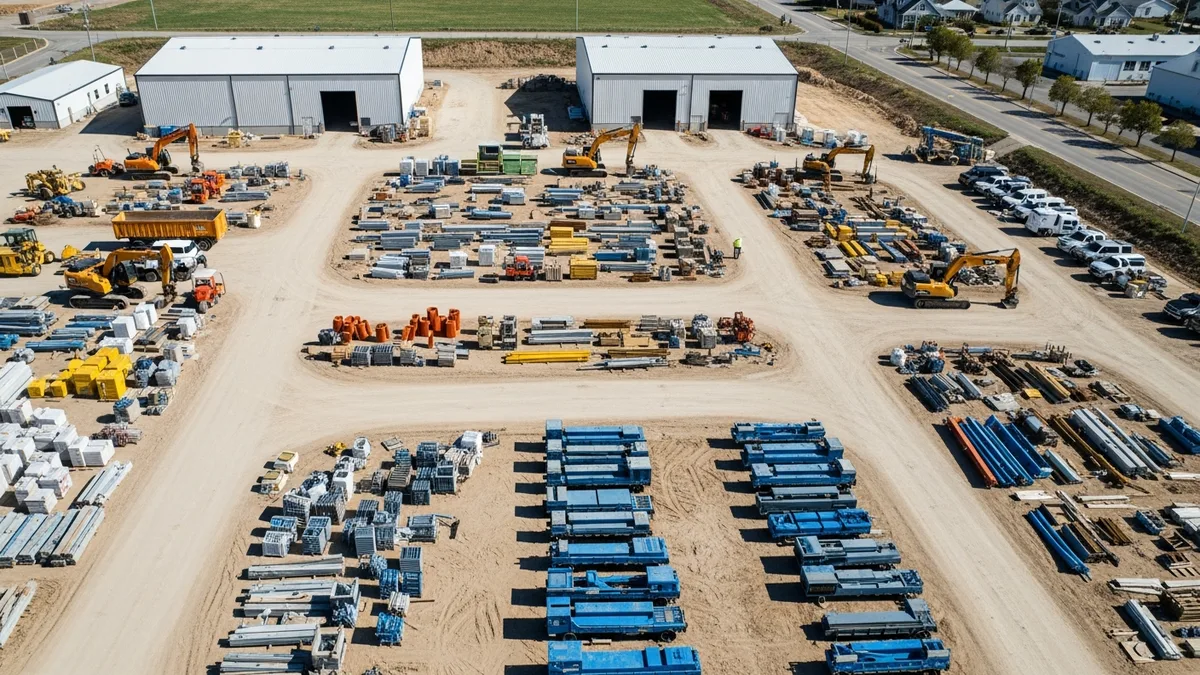
If you have been a GC for more than a few years, you already know this: earthwork is where projects are won or lost. Not at the ribbon cutting, not at the punch list, but in those first weeks when dirt is moving. Get the grading wrong, miss something in the excavation plan, or let your sub fall behind on trenching, and you will feel it for the rest of the job.
This guide is written for general contractors who coordinate earthwork and excavation on commercial and residential projects. We are not going to talk theory. We are going to talk about what actually happens on site, what goes wrong, and how to stay ahead of it.
Understanding Earthwork Scope Before You Break Ground
Every earthwork scope starts with the civil drawings, but the real understanding comes from walking the site. Before you price a job or hand anything to your excavation sub, you need to know what you are dealing with.
Start with the geotech report. If the owner has not commissioned one yet, push for it. The report tells you what kind of soil you are working with, where the water table sits, and whether you are going to hit rock. All of that directly affects your production rates, your equipment needs, and your budget. If you need a deeper understanding of soil conditions before mobilizing, our soil testing guide walks through the process from a GC’s perspective.
Next, look at the cut and fill balance. On a perfectly balanced site, the dirt you cut from high spots fills the low spots, and you do not need to haul material on or off site. That almost never happens. Most sites require either import or export of material, and trucking costs can blow up an earthwork budget fast. A 10,000 cubic yard import that was not in the estimate is the kind of surprise that ruins a project’s margin.
Here is what your earthwork scope typically includes:
- Clearing and grubbing to remove vegetation, stumps, and topsoil
- Mass excavation for building pads, basements, and parking structures
- Rough grading to establish subgrade elevations across the site
- Trenching for utilities, foundations, and drainage systems
- Backfill and compaction around foundations and utilities
- Fine grading to hit finished elevations before paving or landscaping
- Erosion control and temporary drainage during construction
Each of these activities has its own sequencing requirements, equipment needs, and inspection points. Missing any of them in your estimate means you are eating costs later. A solid estimating process catches these line items before they become change orders.
The takeaway here is simple: spend more time on pre-construction earthwork planning than you think you need to. Walk the site with your excavation sub. Review the geotech together. Compare the civil plans to what you actually see on the ground. That upfront investment pays for itself ten times over.
Site Grading: Getting Elevations Right the First Time
Grading is one of those activities that looks straightforward until it is not. You are moving dirt to match a set of elevations on a plan. But between the plan and the finished grade, there are dozens of decisions that affect whether you hit your numbers or spend weeks reworking.
The first thing to lock down is your benchmark and control points. Your surveyor should establish these before any dirt moves, and they need to be protected throughout construction. Lose a benchmark to a careless equipment operator and you are re-surveying mid-project, which costs time and money.
GPS machine control has changed grading dramatically over the past decade. If your excavation sub is not running GPS on their dozers and motor graders, you are leaving efficiency on the table. GPS-equipped machines can grade to within a tenth of a foot without a grade checker on the ground, which means fewer passes, less rework, and tighter tolerances. It is not cheap to set up, but on any site over a few acres, it pays for itself quickly.
Here are the grading issues that trip up GCs most often:
Unsuitable material. You start grading and discover the existing soil cannot support the required loads. Now you are over-excavating and importing structural fill, which was not in anyone’s budget. The geotech report should flag this, but it only tests at boring locations. What is between the borings is anyone’s guess until you start moving dirt.
Drainage conflicts. Finished grades need to drain properly, and that means coordinating with the civil engineer, the landscape architect, and sometimes the structural engineer. If your building pad elevation does not work with the parking lot grades, water ends up where it should not be. Check out our stormwater management guide for more on keeping water moving in the right direction during and after construction.
Compaction failures. You grade to elevation, run a compaction test, and fail. Now you are ripping, re-moisturizing or drying, and re-compacting. Each round of this eats a day or more. The fix is to stay on top of moisture content as you place fill, and run proof rolls before you call for official testing.
Elevation creep. Small grading errors compound. If your subgrade is a half inch high across the building pad, that does not sound like much. But it means your structural fill, your vapor barrier, and your slab are all shifted up, which can create conflicts with door thresholds, ADA ramps, and utility penetrations.
The best GCs treat grading as a coordination exercise, not just a dirt-moving task. Your project schedule should show grading milestones tied to foundation work, utility installation, and paving. When grading falls behind, everything behind it stacks up.
Trenching Operations: Utilities, Foundations, and Drainage
Trenching is where earthwork gets detailed and where the most can go wrong in a short period. You are digging narrow, deep cuts in the ground, often near existing utilities, and you need them at precise locations, depths, and grades.
Before any trench is opened, you need utility locates. Call 811 (or your state’s one-call system) and get every underground utility marked. But do not stop there. Private utilities, abandoned lines, and unmarked services are common on developed sites. Ground-penetrating radar or vacuum excavation (potholing) near known utility corridors is cheap insurance compared to hitting a gas line or fiber optic cable.
Trench safety is non-negotiable. OSHA is clear: any trench five feet or deeper requires a protective system, whether that is sloping, benching, shoring, or a trench box. A competent person must inspect the trench daily and after any rain event. As the GC, you are responsible for site safety even when your sub is doing the digging. Make sure your excavation sub has a written safety plan, and if they do not, hand them a copy of your construction safety plan as a starting point.
Here is how trenching typically sequences on a commercial project:
- Storm and sanitary sewer mains go in first because they are deepest and set the grade for everything else.
- Water mains follow, typically at a shallower depth.
- Electrical and communications conduit runs are installed, often in shared trenches.
- Gas lines go in per utility company specifications.
- Foundation excavation happens in coordination with or after main utility runs.
- Service laterals connect building systems to the mains after foundations are in.
Each of these trenches needs to be at the right depth, the right slope, and bedded with the right material. Pipe bedding is one of those details that gets overlooked until an inspector rejects the installation. Know what your specs call for, whether it is pea gravel, sand, or crushed stone, and make sure your sub has it on site before the trench is open.
Backfill is just as important as the dig. Controlled backfill in lifts, with compaction testing at specified intervals, prevents settlement. Poorly compacted trench backfill shows up months later as cracked pavement, settled sidewalks, and callbacks that cost more to fix than doing it right the first time.
One more thing on trenching: document everything. Photos of pipe bedding, compaction test results, depth measurements, and as-built locations are all critical. When someone comes back in two years asking where a waterline is, your documentation is the answer.
Mass Excavation: Moving Serious Dirt
Mass excavation is a different animal from grading and trenching. You are removing large volumes of material, often to significant depths, and the logistics of getting that dirt off site (or staged for reuse) can dominate your schedule.
The first question in any mass excavation is: where does the material go? If you are lucky, it stays on site as fill in another area. If not, you need a disposal site, a trucking plan, and permits for hauling on public roads. On urban projects, truck routing can be restricted by the city, and haul times during peak traffic can cut your daily production in half.
Projul is trusted by 5,000+ contractors. See their reviews to find out why.
Equipment selection matters here. A mass excavation for a two-story basement needs different iron than grading a parking lot. Track excavators, articulated haul trucks, and dozers all have their place, and your sub should be matching equipment to the job, not just showing up with whatever is available. Undersized equipment on a mass excavation is one of the fastest ways to fall behind schedule.
Dewatering is a common challenge on deep excavations. If the water table is within your excavation depth, you need a dewatering plan before you start digging. Wellpoints, sump pumps, or deep well systems all have different costs and effectiveness depending on soil type and flow rates. Dewatering also requires a discharge permit in most jurisdictions, so plan ahead. Our dewatering and groundwater control guide covers system selection, permit requirements, and monitoring in detail.
Shoring and earth retention are the other big considerations on deep excavations. Soldier pile and lagging, sheet piling, and soil nail walls all serve different purposes depending on the soil, the depth, and what is next to the hole. Adjacent buildings, roadways, and utilities all influence the shoring design, and the structural engineer’s drawings need to match what your excavation sub can actually build.
Here is a reality check on mass excavation scheduling: it always takes longer than you think. Weather delays, unexpected soil conditions, dewatering issues, and truck availability all conspire to push your completion date. Build float into your excavation schedule, because you will need it.
If your earthwork is part of a larger land development project, the mass excavation often sets the critical path for the entire development. Getting it right, and getting it done on time, is the single most important early milestone.
Coordinating Subs, Inspections, and Material Logistics
Earthwork coordination is really about managing a web of dependencies. Your excavation sub needs clear areas to work. Your utility subs need open trenches at the right time. Your inspector needs access and notice. And your material suppliers need to deliver when you are ready, not when they feel like it.
Here is what good earthwork coordination looks like in practice:
Daily huddles with your excavation sub. Not a phone call at 6 AM asking what they are doing today, but a real conversation about what is happening this week, what is in the way, and what they need from you. If they are waiting on a survey stake, a utility locate, or a compaction test result, you need to know about it before it becomes a delay.
Inspection scheduling with lead time. Most jurisdictions require inspection of underground utilities before backfill, compaction testing at specified lifts, and subgrade approval before structural work begins. These inspections need to be scheduled in advance. Calling the inspector the morning you need them is a recipe for sitting idle.
Material staging and access. Structural fill, pipe bedding, and backfill material all need to be on site before the work that requires them. Running out of bedding stone mid-trench means your crew sits while a truck makes a round trip to the quarry. Plan your material deliveries around your production schedule, not the other way around.
Traffic and site logistics planning. On active sites, earthwork equipment and haul trucks conflict with other trades. Establish haul routes, equipment staging areas, and material stockpile locations early. Keep them clear, and communicate changes when they happen.
Weather contingency planning. Rain shuts down earthwork faster than any other trade. Saturated soil cannot be compacted, trenches fill with water, and equipment gets stuck. Have a rain plan that identifies what work can continue (equipment maintenance, layout, material ordering) and what triggers a weather day.
The GCs who run earthwork well are the ones who treat it as a coordination-intensive phase, not just “the dirt guy does his thing.” Your project management tools should track earthwork activities with the same detail you give to concrete pours and steel erection. If you are still tracking excavation progress on a whiteboard, it might be time to look at a better scheduling system.
Protecting Your Budget: Cost Control on Earthwork Projects
Earthwork has more cost variability than almost any other phase of construction. Soil conditions change across the site, weather is unpredictable, and quantities are estimates until the work is actually done. Protecting your margin requires active management, not just a good bid.
Track quantities in real time. Do not wait until the end of the job to figure out how much dirt you moved. Use GPS survey data, truck counts, and daily production logs to compare actual quantities against your estimate. If you are running over on export or import, you want to know in week two, not month three.
Watch the swell and shrink factors. Soil expands when you dig it (swell) and compresses when you compact it (shrink). A cubic yard in the ground is not a cubic yard in a truck, and it is not a cubic yard as compacted fill. If your estimate used a 20% swell factor and actual conditions show 30%, your trucking costs just went up significantly. Your estimating team should use factors based on the geotech report, not rules of thumb.
Manage change orders proactively. Differing site conditions are one of the most common claims on earthwork projects. If you hit rock, encounter contaminated soil, or discover the water table is higher than the geotech report indicated, document it immediately and notify the owner in writing. Taking photos, collecting samples, and getting your engineer on site quickly builds a strong case for a legitimate change order.
Control idle time. Earthwork equipment is expensive, whether it is working or sitting. If your excavation sub has a crew and machines on site waiting for an inspection, a survey layout, or a material delivery, that idle time gets billed to someone. Usually you. Tight coordination (see the previous section) is the best cost control tool you have.
Negotiate unit price contracts carefully. Many earthwork contracts are unit price, meaning you pay per cubic yard of cut, fill, or haul. This can protect you if quantities decrease, but it also means costs rise if quantities increase. Make sure your unit price contract includes clear measurement methods, material classifications, and a process for quantity disputes.
Budget for the unknowns. Experienced GCs carry a contingency specifically for earthwork, typically 10-15% of the earthwork budget. This is not padding; it is realistic planning. On a $500,000 earthwork package, a $50,000 contingency can be the difference between a profitable job and a loss.
Earthwork cost control is not glamorous, but it is where some of the biggest project savings (or losses) happen. The GC who pays attention to dirt quantities, equipment utilization, and change order documentation is the one who actually makes money on the job.
Earthwork and excavation are the foundation of every construction project, literally. The decisions you make in the first few weeks of site work ripple through the entire project timeline and budget. Walk the site before you bid it. Know your soil. Coordinate your subs like your margin depends on it, because it does.
Ready to see how Projul can work for your crew? Schedule a free demo and we will walk you through it.
If you are looking for a better way to manage earthwork scheduling, track excavation progress, and keep your subs coordinated, see how Projul works for general contractors. We built it for the way contractors actually run jobs, not the way software companies think they should.
Frequently Asked Questions
What is the difference between earthwork and excavation in construction?
How do you estimate earthwork quantities for a construction project?
What are the biggest risks during excavation on a construction site?
How deep can you trench without shoring or sloping?
What should a GC look for when hiring an excavation subcontractor?
Related Articles
Construction Electrical Rough-In Guide for General Contractors
The electrical rough-in is where circuit layout, box placement, and wire routing all have to come together before...
Read More →
Interior Finishing for Contractors: The Complete Drywall, Paint, and Trim Guide
Interior finishing is where your project goes from bare studs to a space your client can actually picture living in....
Read More →
Helical Piles and Screw Foundations: The Contractor's Complete Guide
Helical piles are showing up on more and more project specs. This guide covers everything a contractor needs to know...
Read More →