
Heavy Equipment Transport Guide for Builders
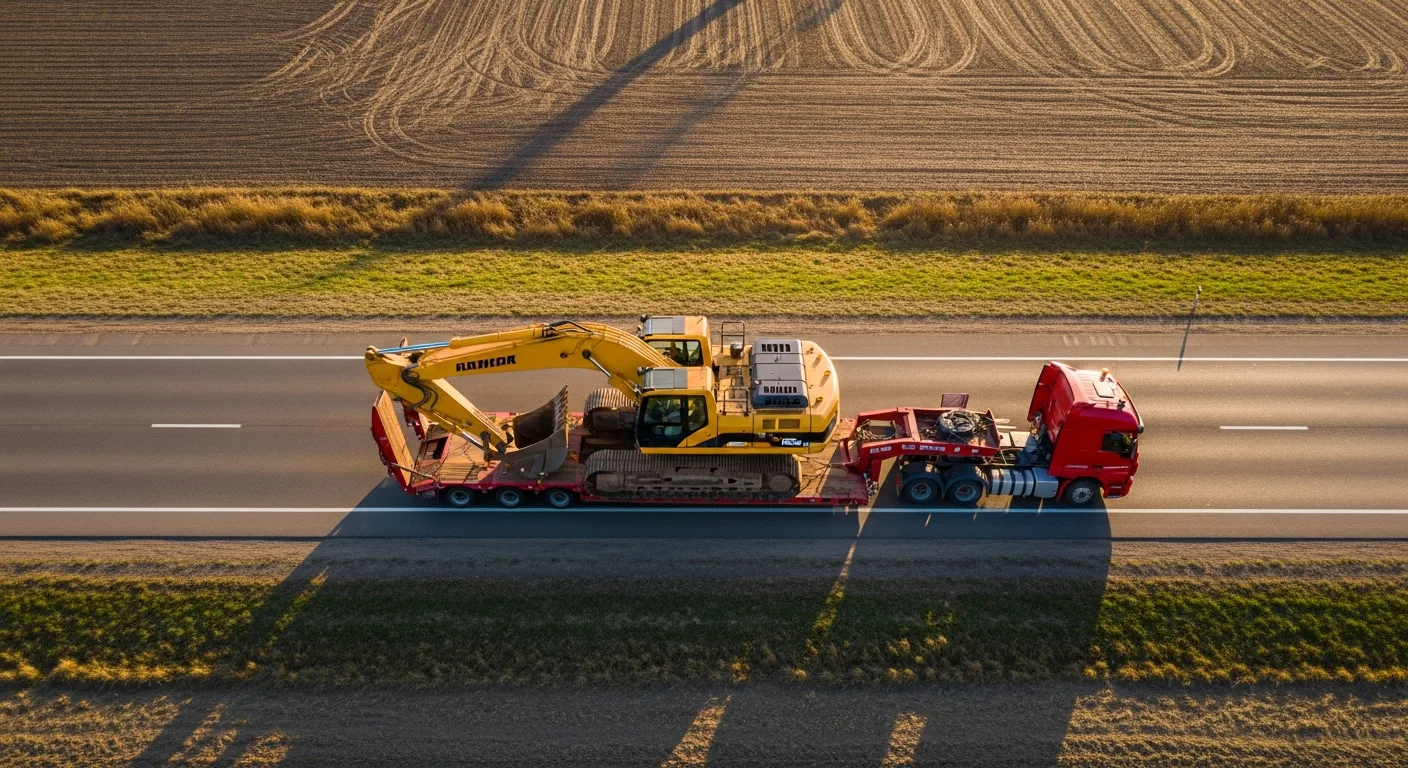
Why Heavy Haul Planning Matters
Moving heavy construction equipment from one job site to another is one of those things that looks simple until it goes wrong. An excavator on a lowboy trailer is a routine sight on the highway, and most moves happen without incident. But when something does go wrong, the consequences are severe: damaged equipment worth hundreds of thousands of dollars, highway closures, bridge strikes that shut down roads for days, and potential injuries or fatalities.
The difference between a smooth equipment move and a disaster almost always comes down to planning. Knowing the load dimensions and weight, choosing the right trailer, securing the proper permits, planning the route, and tying the load down correctly are all straightforward steps. But skip any one of them, and you are rolling the dice.
For contractors who move equipment regularly, heavy haul logistics represent a significant operational cost. A mid-size earthwork contractor might spend $50,000 to $200,000 per year on equipment mobilization. Managing those costs while maintaining safety and compliance requires knowledge of the regulations, relationships with reliable haulers, and good project planning that minimizes unnecessary moves.
Understanding Load Classifications
Legal Loads
A legal load is any vehicle and cargo combination that falls within standard highway limits without needing special permits. The exact limits vary by state, but the most common federal and state limits are:
Gross vehicle weight: 80,000 pounds maximum on interstate highways (with proper axle spacing). Some states allow higher weights on state highways with specific axle configurations.
Width: 8 feet 6 inches (8.5 feet) maximum including the load.
Height: 13 feet 6 inches to 14 feet depending on the state. There is no single federal height limit for general freight; it varies by state and route.
Length: 48 feet for a semi-trailer, 53 feet on designated routes, with various state-specific rules for overall combination length.
If your equipment fits within these limits on the chosen trailer, you can move it like any other freight without special permits, escorts, or travel restrictions.
Oversize Loads
An oversize load exceeds the legal limits for width, height, or length but stays within the weight limits. Common examples include:
Wide loads: Scrapers, large excavators with tracks wider than 8.5 feet, or equipment with wide attachments. Tall loads: Equipment on trailers that exceeds the height limit due to cab height, exhaust stacks, or boom positions. Long loads: Boom sections, bridge girders, wind turbine blades, or equipment with long extensions.
Oversize loads typically require single-trip or annual oversize permits, pilot cars (escort vehicles) for loads over certain width or length thresholds, “OVERSIZE LOAD” banners and warning flags, and restricted travel times (no movement at night or during rush hours in many states).
Overweight Loads
Overweight loads exceed the legal gross vehicle weight or axle weight limits. Examples include large cranes, transformers, pre-assembled building modules, and extremely heavy earthmoving equipment.
Overweight permits require the permitting authority to check that every bridge and road structure on the route can handle the load. This process takes longer than oversize permits and may require the hauler to use a specific route, travel at reduced speeds over bridges, or even have a structural engineer certify certain bridges before crossing.
Super Loads
Super loads are the extreme category: loads so heavy, wide, tall, or long that they require extraordinary measures. The specific thresholds vary by state but generally include loads over 200,000 pounds gross weight, wider than 16 feet, taller than 16 feet, or longer than 120 feet.
Super load permits can take weeks or months to process. They often require detailed route surveys, engineering analysis of bridges and road structures, coordination with utility companies to raise or move overhead lines, police escorts, lane closures, and movement during specific hours when traffic is lightest.
Trailer Types and Selection
Lowboy (Low-bed) Trailers
The lowboy is the most common trailer for hauling tracked and wheeled construction equipment. Its deck sits low to the ground (typically 18 to 24 inches), giving more vertical clearance for tall equipment.
Standard lowboys have a gooseneck connection to the truck and a rear loading ramp. Equipment drives up the rear ramp onto the deck. Typical capacity is 35 to 60 tons on a standard two-axle or three-axle configuration.
Removable gooseneck (RGN) trailers allow the front of the trailer to detach and lower to ground level, creating a gradual ramp for equipment to drive on from the front. This is essential for tracked equipment that cannot make the tight turn required to drive up a rear ramp. RGN trailers are the standard choice for dozers, excavators, and other tracked equipment.
Multi-axle lowboys add additional axle groups to increase weight capacity and distribute the load over more tires to reduce per-axle weights. Four, five, and six-axle lowboys can handle 80 to 120+ tons.
Step-Deck (Drop-Deck) Trailers
Step-deck trailers have an upper deck over the gooseneck area and a lower main deck. The lower deck sits about 36 to 42 inches off the ground, higher than a lowboy but lower than a standard flatbed. They are good for equipment that fits within height limits on the lower deck but is too tall for a flatbed.
Step-decks are commonly used for forklifts, smaller excavators, skid steers on pallets, and other medium-height loads. They cost less to hire than lowboys and do not require ramps for forklift loading.
Flatbed Trailers
Standard flatbed trailers have a deck height of about 60 inches off the ground. They are used for materials, steel, lumber, and equipment that is short enough to stay within height limits at that deck height.
Flatbeds are the most available and least expensive trailer type for general hauling. For equipment transport, they are mainly used for compact equipment, attachments, and materials.
Specialized Heavy-Haul Trailers
For extremely heavy or large loads, specialized trailers include:
Hydraulic platform trailers (Goldhofer, Scheuerle): Modular trailer systems with hydraulic suspension that can be configured with varying numbers of axle lines. Each axle line supports approximately 20 to 40 tons. These trailers can be combined to carry loads exceeding 1,000 tons. The hydraulic suspension allows the deck height to be adjusted and the load to be leveled even on uneven terrain.
Schnabel trailers: Designed specifically for heavy, compact loads like transformers and reactor vessels. The load becomes part of the trailer structure, with the load’s own structural strength carrying the spanning forces between the front and rear bolsters. This eliminates deck weight and maximizes payload capacity.
Dual-lane trailers: For extremely wide loads, trailers that occupy two lanes of traffic. These require extensive escort and traffic control arrangements.
Permits and Compliance
The Permitting Process
Permit requirements and processes vary by state, but the general framework is:
Determine what permits you need. Measure the loaded dimensions and weight. Check each state’s limits for the planned route. Remember that limits can vary even within a state based on the specific road classification.
Apply for permits. Most states accept online applications through their DOT website. You will need to provide the loaded dimensions, weight, axle configuration, planned route, and requested travel dates. Some states issue permits within hours; others take days or weeks.
Route approval. For overweight loads, the permitting authority checks bridges and structures on the requested route. They may approve the route as requested, suggest an alternate route that avoids weak structures, or require load restrictions (reduced speed, centered on bridge, no stopping on bridge).
Single-trip vs. annual permits. Single-trip permits cover one specific move on one specific route. Annual permits cover multiple moves within the state for loads that consistently exceed limits by a moderate amount (for example, up to 12 feet wide or up to 120,000 pounds). Annual permits save time and paperwork for contractors who move equipment frequently within one state.
Multi-State Moves
For loads crossing state lines, you need a permit from every state on the route. Each state has its own application process, fees, travel restrictions, and escort requirements. This is where heavy haul logistics get complicated.
Third-party permit services handle multi-state permitting for a fee (typically $50 to $200 per state per trip). They know each state’s requirements, processing times, and quirks. For contractors who move equipment across state lines regularly, a permit service saves enormous time and avoids costly mistakes.
Travel time restrictions vary by state and sometimes by county. Many states prohibit oversize movement at night, during rush hours, on holidays, or on holiday weekends (Friday afternoon through Monday morning). A cross-country move might require layovers in each state to comply with travel time windows.
FMCSA Regulations
The Federal Motor Carrier Safety Administration (FMCSA) sets minimum safety requirements for commercial vehicles:
Driver qualifications: CDL with appropriate endorsements for the vehicle class. Medical examiner’s certificate. Hours-of-service compliance (11 hours driving within a 14-hour window after 10 consecutive hours off duty).
Vehicle inspection: Pre-trip and post-trip inspections are required. Annual DOT inspection with a current sticker.
Cargo securement: FMCSA Part 393 Subpart I specifies minimum tie-down requirements, working load limits, and securement methods for different cargo types.
Load Securement
Regulatory Requirements
FMCSA cargo securement rules require that the total working load limit (WLL) of all tie-downs be at least 50 percent of the cargo weight. Each individual piece of cargo needs at least four tie-downs unless the cargo is shorter than 5 feet (then two tie-downs may suffice with blocking).
Tie-downs must prevent the cargo from moving in any direction: forward, rearward, and to each side. The aggregate WLL must be sufficient for each direction independently.
Chains, Binders, and Straps
Transport chains are the standard securement method for heavy equipment. They come in grades (Grade 70, 80, and 100) with increasing strength per link size. Grade 70 is the most common for general cargo. Each chain size has a specific WLL: 3/8-inch Grade 70 chain has a 6,600-pound WLL, 1/2-inch has an 11,300-pound WLL.
Load binders tighten chains around the load. Lever (snap) binders provide a quick, strong connection but can release violently if not handled carefully. Ratchet binders provide controlled, gradual tightening and are safer to operate, though slightly slower.
Synthetic straps with ratchet tensioners are used for lighter equipment and loads where chains might damage the finish. They are lighter and easier to handle than chains but have lower WLL for the same size and cannot contact sharp edges without protection.
Securing Specific Equipment Types
Tracked equipment (excavators, dozers, loaders): Lower all working attachments to the deck. Engage travel locks on all cylinders. Pin or lock the house rotation on excavators. Secure the tracks to the trailer at four points minimum, two near the front and two near the rear. Use chains over the tracks, not around the track shoes, which can shift.
Wheeled equipment (loaders, graders, haul trucks): Chock all wheels and set parking brakes. Secure with chains to structural members, typically the axles or frame. Articulated equipment must have the articulation lock pin engaged. Steer the front wheels straight.
Cranes: Boom sections, counterweights, and outrigger floats are often transported as separate loads. Secure boom sections with chains at each transport saddle. Counterweight slabs are extremely heavy for their size and need beefy chains positioned to prevent shifting in any direction.
Attachments: Buckets, hammers, and other attachments transported separately must each be individually secured. Stack buckets tooth-down and chain each one. Loose pins, bolts, and small parts should be in a secured container.
Pre-Trip Securement Check
Before pulling onto the road, walk the entire load and check:
Every chain is tight with no slack. All binders are locked closed. No chain is touching the tire or any moving part. All attachment pins and travel locks are engaged. Equipment doors and compartments are closed and latched. Warning flags are on all four corners of oversize loads. “OVERSIZE LOAD” banner is displayed if required. All lights, reflectors, and markers are in place. You have all permits, route plans, and emergency contact information in the cab.
Re-check at every stop. Chains loosen during transit as the load settles. FMCSA requires re-inspection within the first 50 miles and at every subsequent stop or change in duty status.
Route Planning
Key Considerations
Bridge weight limits: Even with an overweight permit, know the rated capacity of every bridge on your route. The permit authority checks state-owned bridges, but local bridges on county or city roads may not be in their database.
Vertical clearances: Measure the loaded height precisely and know every overhead obstruction on the route: bridges, overpasses, utility lines, traffic signals, and even tree branches on rural roads. A clearance chart from the state DOT helps, but signs can be wrong, and road repaving raises the road surface without updating clearance signs.
Horizontal clearances: For wide loads, check lane widths, median barriers, guardrails, sign posts, and construction zone barriers. A 14-foot-wide load needs at least one lane plus a shoulder in most configurations.
Turn radii: Long loads on multi-axle trailers need significant space to turn. Tight highway on-ramps, city intersections, and job site entrances can be problem areas. Check every turn in advance.
Ground conditions at delivery. The finest route planning means nothing if the trailer gets stuck in a muddy job site entrance. Verify the job site access road can handle the loaded truck weight and provide adequate space for the trailer to maneuver and unload.
Pilot Cars and Escorts
Most states require pilot cars (escort vehicles) for loads exceeding certain dimensions:
Loads over 12 feet wide typically need one pilot car in front. Loads over 14 to 16 feet wide need pilot cars front and rear. Super loads may need multiple pilot cars plus police escorts.
Pilot car drivers must be trained and certified in most states. They carry “OVERSIZE LOAD” signs, height poles to check clearances ahead of the load, communication radios, and traffic control equipment. Professional pilot car services charge $1.50 to $3.00 per mile plus standby time.
Cost Management
Reducing Equipment Transport Costs
Plan moves in batches. Moving three pieces of equipment on three separate days costs roughly three times as much as moving all three on consecutive loads in one mobilization.
Evaluate owning vs. hiring transport. If you spend more than $100,000 per year on equipment transport, running your own truck and trailer may be more economical. The break-even depends on the annual number of moves, distances, and whether you have a qualified driver on staff.
Minimize permit costs with annual permits. If you regularly move the same type of equipment within one state, annual oversize permits (typically $200 to $1,000 per year) save versus buying single-trip permits ($20 to $200 each) for every move.
Schedule moves to avoid peak rates. Haulers charge more when demand is high (spring construction season, month-end). Scheduling moves during slower periods can save 10 to 20 percent.
Reduce the number of moves through better project scheduling. This is the biggest opportunity most contractors miss. Every time equipment moves between sites, you pay transport costs, lose productive time during loading and unloading, and risk damage. Scheduling projects so equipment flows logically from one job to the next, rather than bouncing back and forth, can cut annual transport costs by 20 to 40 percent.
Common Heavy Haul Mistakes and How to Avoid Them
Most heavy haul problems are preventable. The trouble is that contractors often learn these lessons the hard way, after a failed move costs them thousands of dollars and days of lost productivity. Here are the mistakes that come up over and over again in the field.
Inaccurate Load Measurements
This is the single most common cause of heavy haul problems. A contractor tells the hauler “it’s an excavator, about 50,000 pounds,” and nobody actually measures the loaded height, width, or confirms the operating weight with attachments. Then the load clips a bridge, or the trailer bottoms out at a railroad crossing, or the permit gets pulled at a weigh station because the actual dimensions do not match the paperwork.
Get the manufacturer’s transport specs for every piece of equipment you own. These specs list the transport height, width, length, and weight with the boom stowed, blade lowered, and all components in travel position. Keep these in a file you can hand to any hauler or permit service. If you have added aftermarket attachments, guards, or other modifications, measure those separately and add them to your records.
For equipment you are buying at auction or renting from another company, do not trust the listing specs. Verify dimensions yourself before committing to a transport plan. A tape measure and a bathroom scale for the truck are cheap insurance against a $10,000 problem.
Forgetting About Job Site Access
Contractors spend hours planning the highway route and forget that the last half mile is a dirt road through a residential neighborhood with a low-hanging power line and a drainage ditch with no culvert. The truck shows up, cannot get in, and now you are paying standby time while someone figures out an alternative.
Before you schedule any equipment delivery, walk the job site entrance and access road with the hauler’s requirements in mind. Check the road surface and load-bearing capacity (will a 100,000-pound combination sink into soft ground?), turning radius at the entrance, overhead clearances including temporary construction power lines, width restrictions from parked cars or fencing, and grade changes that could cause a low-clearance trailer to bottom out.
If the site is not ready for delivery, say so. It is far cheaper to delay the move by a day and prep the entrance than to pay for a stuck truck, a tow, or road damage that the municipality bills back to you.
For tips on keeping your whole fleet organized and on the right job site at the right time, check out our construction equipment tracking guide.
Skipping Pre-Transport Maintenance
Equipment that breaks down on the trailer is a headache. Equipment that will not start when the hauler arrives to load it is worse. Before any scheduled move, verify that the equipment starts and runs well enough to drive onto the trailer. Check fluid levels and look for active leaks that could drip onto the roadway during transport (DOT will flag this). Disconnect or fold any mirrors, antennas, or accessories that increase the transport envelope. Remove or secure loose items in the cab.
If the equipment is not running, tell the hauler in advance. They will bring a winch truck or a trailer with a winch, but this takes different rigging and more time. Surprising the driver with a dead machine on arrival is a fast way to burn a hauler relationship.
Underestimating Time for Permits
Single-trip oversize permits in most states take one to three business days. Overweight permits take longer because of bridge analysis. Super load permits can take weeks. Contractors who wait until the last minute to request permits end up either delaying the move (and the project) or trying to move without proper permits, which is illegal and carries serious fines.
Build permit lead time into your project schedule. For routine oversize moves, start the permit process at least a week before the planned move date. For overweight or super loads, start a month or more in advance. Your permit service or hauler can tell you the typical processing time for each state on your route.
Not Verifying Hauler Credentials
Hiring an unqualified hauler is one of the most expensive mistakes a contractor can make. If the hauler does not have proper authority, insurance, or equipment, and something goes wrong during transport, the liability can fall back on you as the equipment owner.
Before hiring any hauler, verify their USDOT number and MC authority are active on the FMCSA SAFER website. Ask for a certificate of insurance showing commercial auto liability and cargo coverage. Confirm the cargo coverage limit is at least equal to the value of your equipment. Check their safety rating and inspection history. A hauler with a “conditional” or “unsatisfactory” safety rating is a red flag you should not ignore.
Seasonal and Weather Considerations
Weather affects heavy haul in ways that go beyond “don’t drive in a blizzard.” Understanding seasonal patterns helps you plan moves that go smoothly and avoid situations that cost time and money.
Spring Weight Restrictions
Many northern states impose spring weight restrictions (also called frost laws or road bans) during the spring thaw, typically from March through May. During this period, road weight limits are reduced, sometimes by 25 to 35 percent, because the ground beneath the road surface is thawing and the road structure is at its weakest.
For a contractor trying to mobilize equipment to a spring project, this means your 80,000-pound legal load might now need an overweight permit, or might not be allowed at all on certain roads. Plan around spring restrictions by scheduling equipment moves before restrictions take effect (late winter, while the ground is still frozen solid), using approved alternate routes that may be longer but have no restrictions, or breaking loads into lighter configurations that stay within reduced limits.
Check each state’s DOT website for posted spring restriction dates and affected routes. These dates shift each year based on actual weather conditions.
Summer Heat and Pavement Concerns
Extreme heat softens asphalt, especially on roads that were not designed for heavy loads. Super-heavy loads during heat waves can literally sink into the road surface, damaging both the road and creating a stuck-truck situation that shuts down traffic. Some permit authorities add heat restrictions that prohibit heavy moves when pavement temperatures exceed certain thresholds.
Heat also affects the driver and the securement. Synthetic straps degrade faster in direct UV exposure. Chain binders can be too hot to handle without gloves. And a driver working in 100-degree heat while chaining down a load is at risk for heat illness. Schedule summer moves for early morning when possible.
Winter Conditions
Snow, ice, and cold create obvious hazards for heavy haul. But there are less obvious issues too. Cold steel is more brittle, so chains and binders need careful inspection for cracks. Diesel fuel can gel in extreme cold, stranding a loaded truck. Trailer brakes can freeze after a stop, requiring time to thaw before the truck can move again.
Winter moves require extra planning for chain-up requirements on mountain passes, extended transit times due to slower speeds and required rest stops, the possibility that road closures will strand the load mid-route, and the need for additional fuel and cold-weather supplies for the driver.
For contractors working in cold climates, this is one more reason to have a solid fleet management plan that accounts for seasonal transport challenges.
Wind Restrictions
High-profile loads (tall or wide loads with large flat surfaces) are vulnerable to crosswinds. A large excavator on a lowboy acts like a sail in a strong crosswind, and a 60-mph gust can push the trailer out of its lane or tip it entirely. Many states and haulers have wind speed limits for oversize loads, typically 25 to 35 mph sustained winds.
Monitor weather forecasts for the entire route, not just the departure and arrival points. Mountain passes and open plains are particularly prone to high winds that may not affect sheltered valley locations.
Hiring vs. Self-Hauling: Making the Right Call
One of the biggest decisions a growing contractor faces is whether to keep hiring third-party haulers or invest in their own truck and trailer. There is no universal right answer, but the math is straightforward if you know your numbers.
The Case for Hiring
Hiring a professional hauler makes sense when you move equipment fewer than 40 to 50 times per year, your moves are long-distance or cross multiple states, you do not have a CDL driver on staff, your equipment varies widely in size and weight (requiring different trailer types), or you want to avoid the capital cost and maintenance burden of a truck and trailer.
A professional hauler handles the permits, provides the right trailer, carries the insurance, and deals with the compliance paperwork. You pay per move, which is easy to budget and bill to specific projects.
The downside is cost per move and scheduling flexibility. When you need equipment on a job site tomorrow morning and every hauler in the area is booked, you are stuck. If that happens regularly, it is costing you more in project delays than the hauler fee itself.
The Case for Self-Hauling
Owning your own transport rig makes sense when you move equipment 50 or more times per year, most moves are local or regional (under 200 miles), you have a CDL driver who can also do other work between moves, you primarily move similar equipment that fits on one trailer type, and scheduling flexibility is critical to your operations.
The capital cost for a capable setup is roughly $80,000 to $150,000 for a used Class 8 truck and $40,000 to $120,000 for a used RGN or lowboy trailer. Add insurance ($8,000 to $20,000 per year for commercial auto and cargo), maintenance, fuel, and driver wages.
At 60 moves per year with an average hired cost of $2,500 per move, you are spending $150,000 annually on third-party hauling. Your own rig might cost $80,000 to $100,000 per year in total operating cost once the equipment is paid off. The savings are real, but so is the management burden.
The Hybrid Approach
Most mid-size contractors end up with a hybrid approach: they own one truck and trailer for routine local moves and hire specialists for long hauls, super loads, or peak-season overflow. This gives you day-to-day flexibility for the bread-and-butter moves while keeping you out of the specialized heavy haul business for the big stuff.
If you are tracking your transport costs in a system like Projul, you can pull the actual data to make this decision based on your real numbers, not gut feel. How many moves per year? What is the average cost? What percentage are local versus long-haul? That data tells you exactly where the break-even point is.
Building Strong Hauler Relationships
Even if you own your own transport rig, you will still need third-party haulers at some point. Building and maintaining good relationships with reliable haulers is a competitive advantage that most contractors undervalue.
What Good Haulers Care About
Good haulers want accurate load information up front. Nothing burns a hauler faster than showing up to find out the load is 10,000 pounds heavier or two feet taller than what they were told. Give them exact dimensions, weights, and any special loading requirements before they quote the job.
They want reasonable scheduling. Calling a hauler at 4 PM on Friday and demanding a Monday morning delivery is going to cost you premium rates if they can do it at all. Give as much lead time as possible, especially during busy seasons.
They want safe, accessible loading and unloading sites. If the job site is a mud pit with no room to maneuver, tell them before they arrive. Haulers who get stuck or damage their equipment at your site will either charge you for recovery or stop taking your calls.
They want to get paid on time. This sounds obvious, but many contractors treat hauler invoices as low priority. A hauler who consistently gets paid within 30 days will prioritize your loads over the contractor who pays at 90 days. Good relationships with your vendors start with prompt payment, and a solid project management system helps you stay on top of those obligations.
Negotiating Better Rates
Volume is your best negotiating tool. If you can guarantee a hauler 30 or more moves per year, you have real bargaining power. Offer a volume commitment in exchange for a discounted per-mile or per-move rate.
Flexibility helps too. If you can give the hauler a three-day window instead of demanding a specific date, they can fit your load into their schedule more efficiently, which often translates to a lower rate.
Backhaul opportunities save both parties money. If you know you need equipment moved from Site A to Site B, and another contractor in your area needs a load moved in roughly the opposite direction, connecting those dots saves the hauler from running empty on the return trip. Some haulers will pass part of that savings on to you.
Finally, loyalty matters. Haulers remember who stuck with them during slow times. If you spread your work across six different haulers, none of them will go out of their way for you when things get tight. Pick two or three good ones and build a real working relationship.
Tracking Transport Costs
Equipment transport costs should be tracked by project and by piece of equipment. This data helps you:
Make better rent-versus-own decisions for equipment that moves frequently. Include accurate mobilization costs in future bids. Identify equipment that costs disproportionately more to transport than it earns on the job. Negotiate better rates with haulers based on actual volume data.
Project management tools like Projul let you track mobilization costs as a line item in each project budget. When you can see exactly what it costs to move your fleet across all projects, you make smarter decisions about equipment allocation, project scheduling, and transport provider negotiations. That visibility turns equipment logistics from a cost you absorb into a cost you control.
Frequently Asked Questions
What is considered a heavy haul in construction?
What types of trailers are used for hauling construction equipment?
How much does it cost to transport heavy construction equipment?
What permits do I need to transport oversized construction equipment?
How do I secure equipment on a trailer for transport?
What is a route survey and when is it needed?
Can I transport equipment on public roads without a CDL?
What insurance is needed for heavy equipment transport?
Related Articles

How Construction Teams Use AI to Cut Admin Time
Most contractors lose a full day every week to paperwork. AI now handles the repetitive admin work that used to eat...
Read More →
Concrete Tilt-Up Construction: A Contractor's Complete Field Guide
Tilt-up construction accounts for roughly 15 percent of all industrial and commercial buildings in North America. This...
Read More →
How to Implement Construction Software Without Losing Your Mind
Most construction software rollouts fail. Not because the software is bad, but because the rollout was rushed. Here are...
Read More →