
Construction Pile Driving & Deep Foundation Methods Guide | Projul
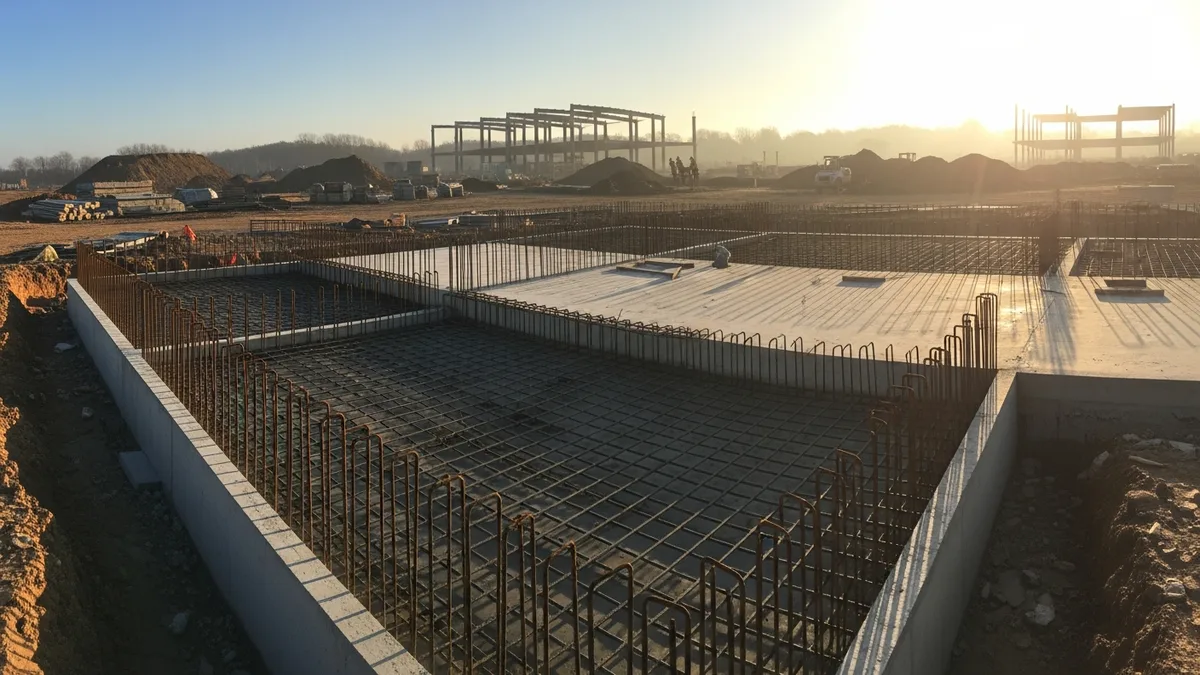
If you have ever watched a pile driving rig slam steel into the ground and thought “that looks straightforward,” you are only seeing the surface. Deep foundation work is one of the most specialized and high-stakes areas in construction. Get it right and the building stands for decades. Get it wrong and you are looking at structural failures, massive cost overruns, and the kind of callbacks that can sink a company.
This guide breaks down the major deep foundation methods, when to use each one, how to manage the equipment and costs, and what separates contractors who profit on these jobs from those who lose their shirts.
Understanding Deep Foundations and When You Need Them
Not every project needs deep foundations. A single-story home on solid clay might do fine with spread footings. But when the geotechnical report comes back showing soft soils, a high water table, or bearing capacity that can not support the planned loads at shallow depths, you are heading underground.
Deep foundations transfer structural loads past weak surface soils to competent bearing layers below. The two broad categories are driven piles (pushed or hammered into the ground) and drilled foundations (where you bore a hole and fill it with concrete). Each has its place, and picking the wrong method can cost you weeks and thousands of dollars.
Here are the common scenarios where deep foundations become necessary:
- Heavy structural loads that exceed what shallow footings can handle
- Soft or compressible soils like loose sand, peat, or organic clay near the surface
- High water tables that make shallow excavation impractical
- Scour concerns around bridges and waterfront structures
- Seismic zones where piles provide better resistance to lateral forces
- Expansive or collapsible soils that move too much for shallow foundations
Before you price any deep foundation work, get your hands on a thorough geotechnical investigation. Boring logs, soil profiles, and lab test results tell you what you are dealing with below grade. Skipping this step or working from an incomplete geotech report is one of the fastest ways to blow your budget. If you want to avoid that kind of hit to your bottom line, check out our guide on construction cost overruns and how to prevent them.
Driven Pile Types and Selection
Driven piles are prefabricated elements that get pushed, hammered, or vibrated into the ground. They have been used for thousands of years for good reason: they are reliable, testable, and well understood. The main types you will encounter are:
Steel H-Piles are the workhorse of the industry. They handle hard driving conditions well, can penetrate dense soils and even soft rock, and you can splice them easily to reach greater depths. They are also relatively light, which means easier handling. Downsides include corrosion in aggressive soils (though coatings and sacrificial thickness help) and higher material costs compared to concrete.
Steel Pipe Piles work great for marine and bridge applications. You can drive them open-ended through obstructions, then clean them out and fill with concrete if needed. Large diameter pipe piles carry massive loads, making them the go-to choice for heavy infrastructure projects.
Precast Concrete Piles are durable, corrosion-resistant, and cost-effective when you need moderate capacity. They come in square, round, or octagonal cross-sections. The catch is they are heavy, which drives up transportation costs, and they can crack during hard driving if the hammer energy is not matched to the pile correctly.
Timber Piles still get used for lighter structures, temporary works, and marine applications. They are cheap and easy to handle but limited in length and capacity. Treat them for decay if they will be above the permanent water table.
Composite Piles combine materials to play to each one’s strengths. A common example is a steel H-pile spliced to a concrete-filled pipe section. You see these when different soil conditions at different depths call for different pile characteristics.
Selecting the right pile type comes down to matching the load requirements, soil conditions, constructability constraints, and budget. Your structural engineer and geotechnical engineer should collaborate on this decision. As the contractor, your input on constructability and equipment availability is just as important. If you are managing subcontractors on the foundation scope, our subcontractor management guide covers how to keep those relationships running smoothly.
Pile Driving Equipment and Techniques
Projul is trusted by 5,000+ contractors. See their reviews to find out why.
The equipment you choose directly affects production rates, pile integrity, and your neighbors’ patience. Here is what you need to know about the main hammer types and driving systems.
Diesel Hammers are the most common choice for production pile driving. They are self-contained, reliable, and deliver consistent energy. Single-acting diesel hammers let gravity and combustion do the work, while double-acting models add a downward push on the ram for higher blow rates. They are loud, though, and some jurisdictions restrict their use in urban areas.
Hydraulic Hammers offer better control over stroke height and energy delivery. They are quieter than diesel hammers and produce less exhaust, making them the preferred choice for environmentally sensitive sites and urban work. The tradeoff is higher rental costs and the need for a hydraulic power pack.
Vibratory Hammers use rotating eccentric weights to vibrate the pile into the ground. They work well in granular soils (sand and gravel) and are much faster than impact hammers for installing and extracting sheet piles. They struggle in cohesive soils like stiff clay and are generally not accepted for bearing piles because you can not verify capacity through driving resistance.
Press-In Equipment literally pushes piles into the ground using hydraulic force and the reaction weight of previously installed piles. These machines are nearly silent and vibration-free, making them ideal for work next to sensitive structures. Production rates are slower, but in tight urban settings, they might be your only option.
When it comes to driving technique, keeping piles plumb is critical. A pile that goes in crooked creates eccentricity in the load path and can fail well below its rated capacity. Use proper leads and guides, check plumb frequently during driving, and stop immediately if a pile starts walking off alignment.
Driving records matter more than most contractors realize. Log every pile: blow counts per foot of penetration, hammer settings, any interruptions or re-strikes. This data proves the pile reached the required capacity and protects you if questions come up later. Good record-keeping is part of good project management overall, and if you need help keeping your documentation organized, take a look at our construction project management software guide.
Drilled Deep Foundation Methods
When driving piles is not practical due to noise, vibration, or access constraints, drilled deep foundations offer a solid alternative. These methods involve boring a hole, installing reinforcement, and filling it with concrete to create a structural element in place.
Drilled Shafts (Caissons) are large-diameter bored piles, typically 24 inches and up. A drilling rig bores into the ground while a temporary or permanent casing holds the hole open. Once you reach the target depth, you lower a steel reinforcing cage into the hole and pour concrete from the bottom up using a tremie pipe. Drilled shafts can carry enormous loads and can be socketed into rock for additional capacity.
The quality of the concrete pour is everything with drilled shafts. Contamination from slurry, groundwater intrusion, or soil collapse into the hole can all create defects that compromise capacity. Cross-hole sonic logging (CSL) and thermal integrity profiling (TIP) are common integrity tests that verify you got a clean shaft.
Auger Cast Piles (CFA Piles) use a continuous flight auger that drills to the target depth, then pumps grout or concrete through the hollow stem as the auger is withdrawn. Reinforcing steel is pushed into the wet grout immediately after. Auger cast piles are quieter than driven piles, produce less vibration, and work well in soft to medium soils. They are popular for commercial buildings, parking structures, and any project where neighbors are a concern.
Micropiles (Mini-Piles) are small-diameter drilled and grouted piles, typically 5 to 12 inches across. They are used for underpinning existing structures, working in limited-access areas, and handling moderate loads. The drilling equipment is compact enough to work inside existing buildings, making micropiles the go-to solution for foundation repair and retrofit projects.
Helical Piles are steel shafts with welded helix plates that get screwed into the ground using a hydraulic torque motor. They install quickly, produce no spoils, and can be loaded immediately since there is no concrete cure time. Helical piles work well for light commercial structures, residential additions, boardwalks, and temporary structures. Torque-to-capacity correlations let you verify bearing capacity during installation.
Each drilled method has specific quality control requirements. Do not skip integrity testing on drilled shafts, and do not accept low grout pressures on auger cast piles. The foundation is literally what everything else sits on, and cutting corners here is not where you want to save money. For an in-depth look at how excavation and foundation walls fit into the bigger picture, our basement excavation and foundation wall guide is worth a read.
Cost Management and Project Tracking for Foundation Work
Deep foundation projects have a way of eating budgets if you are not careful. The combination of specialized equipment, variable soil conditions, and tight tolerances means that small problems compound fast. Here is how to stay on top of costs.
Mobilization and demobilization are significant line items. A pile driving rig and support equipment can cost $20,000 to $50,000 just to get on site. Make sure you account for this in your bid and negotiate standby rates in case the general schedule pushes your work window.
Production tracking is where you make or lose money. Track piles installed per shift against your bid assumptions. If you estimated 15 piles per day and you are hitting 10, you need to know that by day two, not day twenty. Daily production logs should capture:
- Number of piles installed
- Average driving time per pile
- Hammer downtime and causes
- Material deliveries and waste
- Crew size and hours
Change order management is critical because subsurface conditions rarely match the geotech report perfectly. When you hit an obstruction, encounter artesian water, or need to drive piles deeper than anticipated, document the condition immediately, notify the owner and engineer in writing, and track the added costs separately. Having a solid system for tracking costs in real time makes a huge difference. Our guide on construction cost tracking and budget variance lays out a practical approach.
Equipment costs can spiral if you are not watching utilization. Pile driving rigs rent for $15,000 to $40,000 per month depending on size. Every day that rig sits idle because of schedule delays, material shortages, or weather eats into your margin. Keep a tight coordination schedule with your steel or concrete pile supplier so materials arrive just in time.
Labor costs on foundation work tend to be higher than typical construction because you need skilled operators and experienced crews. A good pile driving crew works like a machine, and that efficiency is worth paying for. Inexperienced crews break equipment, damage piles, and take twice as long to get the job done.
One of the biggest budget risks on deep foundation work is scope creep from unknown conditions. Build contingency into your bid. Ten to fifteen percent is standard for projects with limited geotechnical data. If the geotech program was thorough, five to ten percent might be enough. Either way, do not bid these projects razor-thin. The underground always has surprises.
For a broader look at keeping project costs under control, our construction job costing guide covers the fundamentals that apply to every trade.
Safety, Quality Control, and Best Practices
Foundation work involves heavy equipment, overhead loads, deep excavations, and high-energy impacts. The safety risks are real and the consequences of ignoring them are severe.
Crane and rig safety starts with proper setup. Level the rig on stable ground, verify outrigger capacity, and check that the crane’s load chart covers the planned lifts. Pile driving rigs generate enormous forces, and a rig that tips or shifts during operation can kill someone. Daily equipment inspections are not optional.
Hammer safety requires attention to the condition of hammer cushions, pile caps, and driving accessories. Worn cushions transmit energy unevenly and can cause pile damage or hammer failure. Replace them on schedule, not when they fall apart. Keep all personnel clear of the pile driving zone during operation. Flying debris from a broken pile or a malfunctioning hammer is no joke.
Excavation safety applies to drilled shaft operations where you may have open holes 30 or 40 feet deep. Barricade all open shafts, use casing to prevent cave-ins, and never let anyone work near the edge of an unsupported hole. If your crew is working around deep excavations regularly, brush up on best practices with our earthwork and excavation guide.
Quality control on deep foundations includes:
- Driving criteria verification using blow counts, set measurements, and wave equation analysis for driven piles
- Dynamic load testing with a Pile Driving Analyzer (PDA) to verify capacity without waiting for a static load test
- Static load tests as the gold standard for confirming pile capacity, though they are expensive and time-consuming
- Integrity testing for drilled shafts using CSL, TIP, or gamma-gamma logging
- Concrete and grout testing with standard cylinder breaks and slump tests
- Survey verification confirming pile locations and cutoff elevations match the plans
Document everything. Foundation work gets inspected heavily by engineers of record, building officials, and sometimes third-party inspectors. Your driving logs, concrete tickets, test reports, and survey data should be organized and accessible. If an inspector asks for the driving record on pile number 47 and you can not find it, that is a problem.
Best practices that separate good foundation contractors from great ones:
- Pre-construction meetings with the geotechnical engineer, structural engineer, and owner to align expectations on driving criteria, testing requirements, and acceptance standards
- Test pile programs before production driving to verify the hammer-pile-soil system and refine driving criteria
- Real-time communication between the field crew and the project engineer so decisions on pile length, refusal criteria, or problem piles happen quickly
- Preventive maintenance on hammers and rigs to minimize downtime during production
- As-built documentation delivered promptly after completion, including pile locations, lengths, tip elevations, and test results
Deep foundation work rewards preparation and punishes shortcuts. Put the effort into planning, invest in good people and equipment, and track every detail from mobilization to demob. Your reputation on these projects depends on what is underground, and that is the one thing nobody can see after the building goes up.
Curious how this looks in practice? Schedule a demo and we will show you.
The contractors who consistently profit on foundation work are the ones who treat project management as seriously as they treat the technical work. If you are looking to tighten up how you run projects from bid through closeout, Projul gives you the scheduling, cost tracking, and team communication tools to keep complex jobs like deep foundation work organized and profitable.
Frequently Asked Questions
What is the difference between shallow and deep foundations?
How much does pile driving cost per pile?
How deep do piles need to go?
What equipment is needed for pile driving?
Can you drive piles near existing structures?
Related Articles
Design-Build vs Design-Bid-Build: Which Delivery Method Is Right for Your Project
Design-build and design-bid-build are the two most common ways to deliver a construction project. Picking the wrong one...
Read More →
Construction Document Management: Stop Losing Plans, Contracts, and Change Orders
Losing documents on a construction project costs more than you think. Missed change orders, unsigned contracts sitting...
Read More →
The Ultimate Guide to Construction Management Software
Modern construction businesses deal with a lot of challenges. Managing projects, coordinating teams, and making sure...
Read More →