
Construction Retainage Tracking: Stop Leaving Money on the Table | Projul
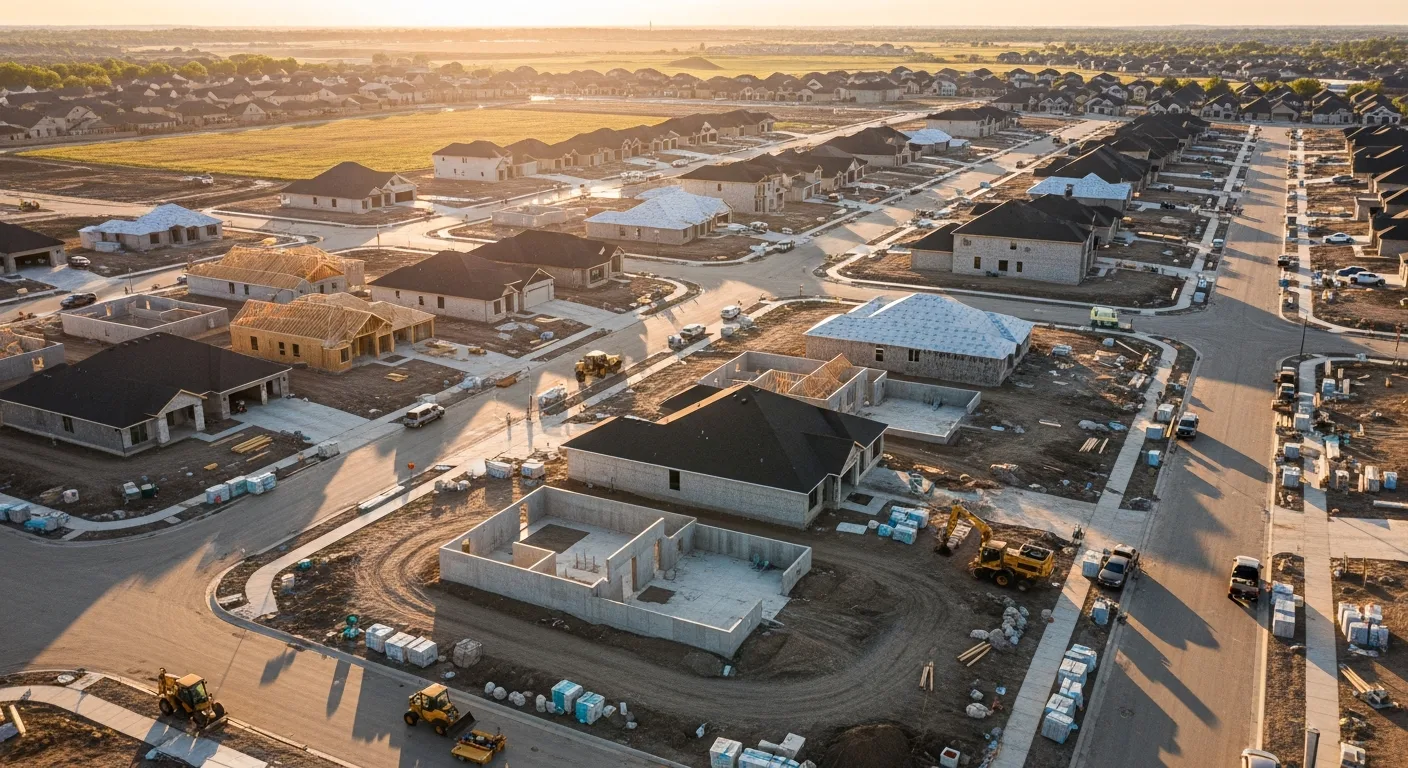
There’s a strange thing that happens in construction. You do the work. You submit your invoice. You get paid. But not all of it. Five to ten percent stays behind, held by the owner or GC as a promise that you’ll finish what you started.
That withheld money is called retainage. And it’s one of the most mismanaged line items in the construction industry.
For many contractors, retainage tracking is an afterthought. It sits in a column on a spreadsheet somewhere, or worse, it lives in the contractor’s head as a vague sense that “there’s money coming eventually.” Then projects close out, months pass, and that money never shows up because nobody followed up, nobody tracked the release conditions, and nobody filed the right paperwork.
This guide covers what retainage is, why it exists, how state laws affect it, how to track it properly, and how to make sure every dollar you’ve earned actually makes it into your bank account.
What Is Retainage and Why Does It Exist?
Retainage (also called retention) is a percentage of each progress payment that the paying party withholds as financial security. The idea is simple: if a contractor walks off a job or fails to complete punch list items, the owner has a financial cushion to hire someone else to finish the work.
It’s been standard practice in construction for over a century. The concept makes logical sense from the owner’s perspective. But from the contractor’s side, it creates a real cash flow burden, especially when retainage sits unreleased for months after your work is done.
How Retainage Flows Through a Project
On a typical commercial project, retainage flows like this:
- Owner withholds from the GC. On each progress payment, the owner keeps 5% to 10%.
- GC withholds from subcontractors. The GC applies the same retainage percentage (or sometimes higher) to sub payments.
- Subcontractors may withhold from their suppliers or lower-tier subs.
When the project reaches substantial completion, the retainage is supposed to flow back down the chain: owner releases to GC, GC releases to subs, subs release to their vendors.
In theory, this happens promptly. In practice, it often takes months. The owner might hold retainage until every single punch list item from every trade is complete. A painting sub who finished in month 3 of a 12-month project might wait 15 months for retainage release because the mechanical contractor’s startup commissioning isn’t done yet.
Typical Retainage Percentages
Standard Rates
- 5% is the most common rate on commercial projects, especially where state law caps retainage
- 10% is still used on many private commercial and residential projects
- 2.5% to 5% is typical on federal projects under FAR guidelines
Retainage Reduction
Many contracts include a provision to reduce retainage after a certain milestone:
- 50% completion: Retainage drops from 10% to 5%, or from 5% to 2.5%
- Substantial completion of your scope: Some contracts release retainage for individual trades when their work is complete, even if the overall project continues
If your contract doesn’t include a reduction clause, negotiate one. The difference between 10% and 5% retainage on a $500,000 subcontract is $25,000 in cash flow.
State Retainage Laws: Know Your Rights
Retainage laws vary significantly by state. Many states have enacted legislation to protect contractors and subcontractors from excessive or prolonged withholding. Here are the key areas where state laws differ:
Maximum Retainage Percentage
Several states cap the percentage that can be withheld:
- California: 5% maximum on public and private projects
- Texas: 10% maximum on public projects, with reduction to 5% at 50% completion
- New York: 5% on public projects
- Colorado: 5% on public projects
- Florida: 10% maximum on public projects, 5% after 50% completion
- Ohio: 10% maximum on public projects
Release Deadlines
Some states mandate how quickly retainage must be released after substantial completion:
- California: Within 60 days of completion for public projects
- Texas: GC retainage due within 30 days of owner payment; sub retainage due within 10 days of GC receipt
- Florida: Within 30 days of owner release for pass-through to subs
- Illinois: Within 60 days of acceptance of work
Interest on Late Retainage
A growing number of states require the paying party to pay interest on retainage held beyond the allowed period. This gives contractors a financial incentive to push for timely release and gives owners a financial reason not to sit on the money.
Prompt Payment Acts
Many states have prompt payment statutes that apply to retainage. These laws typically:
- Set maximum withholding periods
- Require interest on late payments (including retainage)
- Allow attorneys’ fees for contractors who have to sue to collect retainage
- Prohibit “pay-when-paid” clauses for retainage in some states
The bottom line: Learn the retainage laws in every state where you work. They may give you more protection than your contract does. If state law caps retainage at 5% and your contract says 10%, the state law controls.
The Real Cash Flow Impact of Retainage
Let’s run the numbers for a mid-size specialty contractor to see what retainage actually costs.
Scenario: Electrical Subcontractor
- Annual revenue: $4,000,000
- Average of 8 active projects at any time
- Average contract value: $350,000
- Retainage rate: 10%
- Average project duration: 6 months
- Average time from completion to retainage release: 4 months
Total retainage outstanding at any given time:
With 8 active projects at various stages, roughly $200,000 to $280,000 sits in retainage at any point. That’s money the contractor has earned through completed work but cannot access.
Cost of carrying that retainage:
If the contractor uses a line of credit at 8% interest to cover the cash gap, carrying $240,000 in retainage costs about $19,200 per year in interest alone. That’s pure overhead created by the retainage system.
If retainage were reduced to 5%:
The outstanding balance drops to $100,000 to $140,000. Interest cost drops to roughly $9,600. The contractor saves $9,600 per year, and that’s before considering the freed-up capital could be used for equipment, hiring, or growth.
This is why negotiating retainage terms matters. Every percentage point counts.
How to Track Retainage Properly
Most contractors track retainage poorly or not at all. Here’s a system that works.
Create a Retainage Tracking Report
Your report should include, for every active and recently completed project:
- Project name and number
- Client or GC name
- Total contract value (including approved change orders)
- Retainage percentage
- Total retainage withheld to date
- Retainage reduction triggers (e.g., reduce to 5% at 50% completion)
- Scope completion date (when YOUR work was done)
- Release conditions (substantial completion, punch list, closeout docs)
- Release conditions status (which ones are met, which are pending)
- Expected release date
- Actual release date and amount received
Update It Monthly
At minimum, review your retainage report every month. For each project:
- Has the retainage percentage been reduced per the contract terms?
- Are you tracking your scope completion separately from overall project completion?
- Have you submitted all required closeout documents?
- Is the GC or owner holding retainage beyond the contractual release period?
Flag Overdue Retainage
Define “overdue” based on your contract terms and state law. If your contract says retainage releases 30 days after substantial completion and it’s been 45 days, it’s overdue. Flag it. Follow up. Don’t let it sit.
The most common reason retainage goes uncollected is that nobody follows up. The GC doesn’t volunteer the payment. The owner doesn’t proactively release it. Someone has to ask, and that someone is you.
Common Retainage Problems and How to Solve Them
Problem 1: “The Project Isn’t Substantially Complete Yet”
Your scope was done in March. It’s August. The GC says they can’t release your retainage because the overall project isn’t substantially complete.
Solution: Negotiate individual trade release provisions in your subcontract. Push for language that says your retainage releases when YOUR scope is substantially complete and accepted, not when the entire project is done. This is increasingly common and many GCs will agree to it if you ask during contract negotiation.
Problem 2: Disputed Punch List Items
The GC withholds your entire retainage because of two minor punch list items worth $1,500.
Solution: Complete the punch list items immediately. Then follow up in writing confirming completion and requesting release of the full retainage balance. If the items are genuinely disputed, offer to have the withheld amount reduced to just the disputed portion while the rest is released.
Document everything. Take photos of completed punch list work. Get written confirmation from the GC’s superintendent that items are resolved.
Problem 3: The GC Got Paid But Hasn’t Paid You
The owner released retainage to the GC two months ago. The GC still hasn’t released yours.
Solution: Check your state’s prompt payment and retainage statutes. Many states require pass-through of retainage within a specific timeframe (often 7 to 30 days). Send a written demand citing the statute. If that doesn’t work, you may have grounds for a lien claim or bond claim.
Problem 4: Nobody Tracks It
Retainage amounts from 18 months ago are sitting on your books. Nobody remembers the project details. The GC’s project team has moved on to other jobs.
Solution: This is the most common problem and the most preventable. Track retainage from day one with a dedicated report. When a project closes out, immediately submit all required documents and start the retainage clock. Don’t wait for someone to remind you.
Problem 5: Retainage Clauses You Didn’t Read
Your subcontract says retainage isn’t released until 90 days after the owner pays the GC. The owner is in a payment dispute with the GC. Your retainage is now held hostage in a fight that has nothing to do with you.
Solution: Read every retainage clause before signing. Push back on “pay-when-paid” provisions for retainage. Many states prohibit them. If you can’t get the clause removed, at least understand the risk before you sign.
Negotiating Better Retainage Terms
The best time to negotiate retainage is before you sign the contract. Here are realistic asks that many GCs and owners will agree to:
Reduce the Percentage
Ask for 5% instead of 10%. If 5% is standard in your state, you’re simply asking for market terms. On private work where there’s no legal cap, frame it as a partnership: “We’d rather invest in quality labor for your project than carry unnecessary retainage costs.”
Add a Reduction Trigger
“Retainage reduces to 2.5% after 50% completion.” This is common and reasonable. It acknowledges that the risk of non-completion decreases as the project progresses.
Individual Trade Release
“Retainage for our scope releases within 30 days of our substantial completion and acceptance.” This prevents your money from being held hostage by other trades’ schedules.
Interest on Late Release
“Retainage not released within 30 days of substantial completion will accrue interest at 1.5% per month.” This gives the GC a financial reason to pay promptly.
No Pay-When-Paid for Retainage
“Subcontractor retainage releases based on subcontractor scope completion, regardless of owner payment status.” This protects you from upstream payment disputes.
You won’t get every ask on every contract. But you’ll get more than you think. The contractors who negotiate retainage terms successfully are the ones who ask. The ones who don’t ask always get the standard terms.
Software for Retainage Tracking
Spreadsheets work for tracking retainage on 3 or 4 projects. At 10 or more active projects, they start failing because they depend on manual updates and nobody has time to maintain them.
Construction management software like Projul handles retainage tracking as part of your normal billing workflow:
- Retainage calculates automatically on each progress invoice based on your contract terms
- Retainage balances show separately from regular AR so you always know total exposure
- Release tracking ties to project milestones so you know when retainage should be coming back
- Reports show total retainage outstanding across all projects at a glance
- Alerts flag overdue retainage so nothing ages silently in the background
The goal is to make retainage visible. When it’s buried in a general AR report or tracked in someone’s head, it gets forgotten. When it’s on a dashboard that you see every day, it gets collected.
The Retainage Collection Process
When retainage is due, don’t wait for it to show up. Follow this process:
30 Days Before Expected Release
- Verify all closeout documents have been submitted
- Confirm punch list is complete
- Send a letter to the GC noting your expected retainage release date and amount
- Ask if any open items need to be addressed
On the Expected Release Date
- Send a formal retainage release request with the invoice amount and backup documentation
- Reference the contract clause that triggers release
- Include any required lien waivers or releases
15 Days Past Expected Release
- Follow up by phone. Talk to the GC’s project manager and their accounting department.
- Ask for a specific payment date
- Document the conversation
30 Days Past Expected Release
- Send a formal demand letter citing contract terms and applicable state retainage statutes
- Note any interest accruing under the contract or state law
- Set a deadline for response (10 business days is reasonable)
45 to 60 Days Past Expected Release
- Consult with a construction attorney
- Evaluate lien rights (check if you’re still within filing deadlines)
- Consider bond claims on bonded projects
- File whatever protection is available before deadlines expire
The key is consistency. Treat every retainage receivable with the same urgency as a regular receivable. The only difference is the timeline.
What Retainage Really Costs You
Beyond the direct cash flow impact, retainage has hidden costs:
Opportunity cost. That $200,000 in retainage could be earning a return, funding equipment purchases, or covering payroll without a credit line.
Administrative cost. Tracking retainage, following up on releases, managing closeout documents, and chasing payments all take staff time. On complex projects, retainage administration can consume hours per month.
Risk cost. Retainage is only as safe as the entity holding it. If a GC goes bankrupt, your retainage may become an unsecured claim in bankruptcy. The longer retainage sits, the more exposure you have to this risk.
Credit cost. If you borrow to cover the cash gap created by retainage, you’re paying interest on money you’ve already earned. That interest is a direct reduction of your profit margin on the project.
Add it all up and retainage typically costs specialty contractors 1% to 3% of their annual revenue in direct and indirect costs. On $4 million in revenue, that’s $40,000 to $120,000 per year. Worth tracking carefully.
What to Do This Week
-
Pull a list of all outstanding retainage across every project, active and completed. If you can’t produce this list in 5 minutes, your tracking system needs work.
-
Check for overdue retainage. Any project where your scope is complete and retainage hasn’t been released per the contract terms. Follow up today.
-
Review your standard subcontract retainage clause. Does it protect you? Does it include reduction triggers and release timelines? If not, update it for future contracts.
-
Learn your state retainage laws. Know the maximum percentage, required release timelines, and available remedies. This is free protection that many contractors don’t know they have.
-
Set up a tracking system. Whether it’s a dedicated spreadsheet or construction management software that tracks it automatically, get retainage visible and managed.
Every dollar of retainage you fail to collect is profit you earned and gave away. Track it, follow up on it, and fight for it when necessary. That money is yours.
Frequently Asked Questions
What is retainage in construction?
What is the typical retainage percentage?
When does retainage get released?
Do all states allow retainage?
How does retainage affect cash flow?
Can a subcontractor negotiate retainage terms?
What happens to retainage if the GC does not pay?
How should I track retainage across multiple projects?
Related Articles

BIM Clash Detection: How to Catch Conflicts Before They Cost You on the Jobsite
BIM Clash Detection: How to Catch Conflicts Before They Cost You on the Jobsite Every contractor has a story about the...
Read More →
Asphalt Paving and Compaction Guide: Mix Types, Laydown Temperatures, and Quality Testing
Asphalt paving looks straightforward from a distance. A truck dumps material, the paver lays it down, and rollers...
Read More →
Construction Jobsite Wi-Fi & Connectivity Guide: Setting Up Reliable Internet in the Field
A practical guide to getting reliable internet on construction job sites. Learn about cellular hotspots, mesh networks,...
Read More →